
Over almost eight centuries of recorded history, Aussee has gone from a small settlement beside saltworks to a well-known Austrian spa town. Salt shaped its economy, its social order and its relations with the state authorities, and in the 19th century it also became the basis of the town’s healing traditions. Later the town lived through political upheavals, wars and the end of its old industry, yet it kept its historic centre and its special place in the life of the Styrian Salzkammergut.
Bad Aussee
Bad Aussee is a spa town in Austria with a population of 4,998, in the federal state of Styria, in the historic region of the Salzkammergut, not far from Grundlsee.
History of the Town
People appeared in this area long before any permanent settlements. Finds in the Salzofen cave in the Totes Gebirge mountains show that hunter-gatherers were present here in the Palaeolithic era, about 30,000 years ago. Later, Neolithic farming communities lived here and left behind stone axes, and in the Bronze Age trade routes already ran through the surrounding valleys. Archaeological research confirms that the local salt deposits were used in Roman times. Roman finds have also been discovered in the historic centre of modern Bad Aussee, including on the grounds of the Kammerhof.
Salt, which in the Middle Ages was highly valued for its ability to preserve food and for its use in various crafts, became the decisive factor in the development of the area. The first reliable written record of salt-making in the Ausseerland dates from 1147, when Ottokar III, Margrave of Styria, gave the Cistercian monastery of Rein two salt-boiling works near the Sandling mountain, in the area of present-day Altaussee.
At first, salt was produced close to where it was mined. But the process required an enormous amount of wood, which was used as fuel. As production expanded, the surrounding forests could no longer supply the necessary quantities, and at the end of the 13th century a significant share of the salt-boiling works was moved down the valley, to the point where the rivers Altausseer Traun and Grundlseer Traun meet. From there it was easier to bring in wood by water and to send the finished salt to buyers. It was around this production that the trading centre of Aussee took shape. The name of the settlement first appears in documents in 1246 in the form Awse, and in 1310 the spelling Úzsê is recorded. Its origin is explained in different ways; one version links the name to a Slavic word for a river mouth.
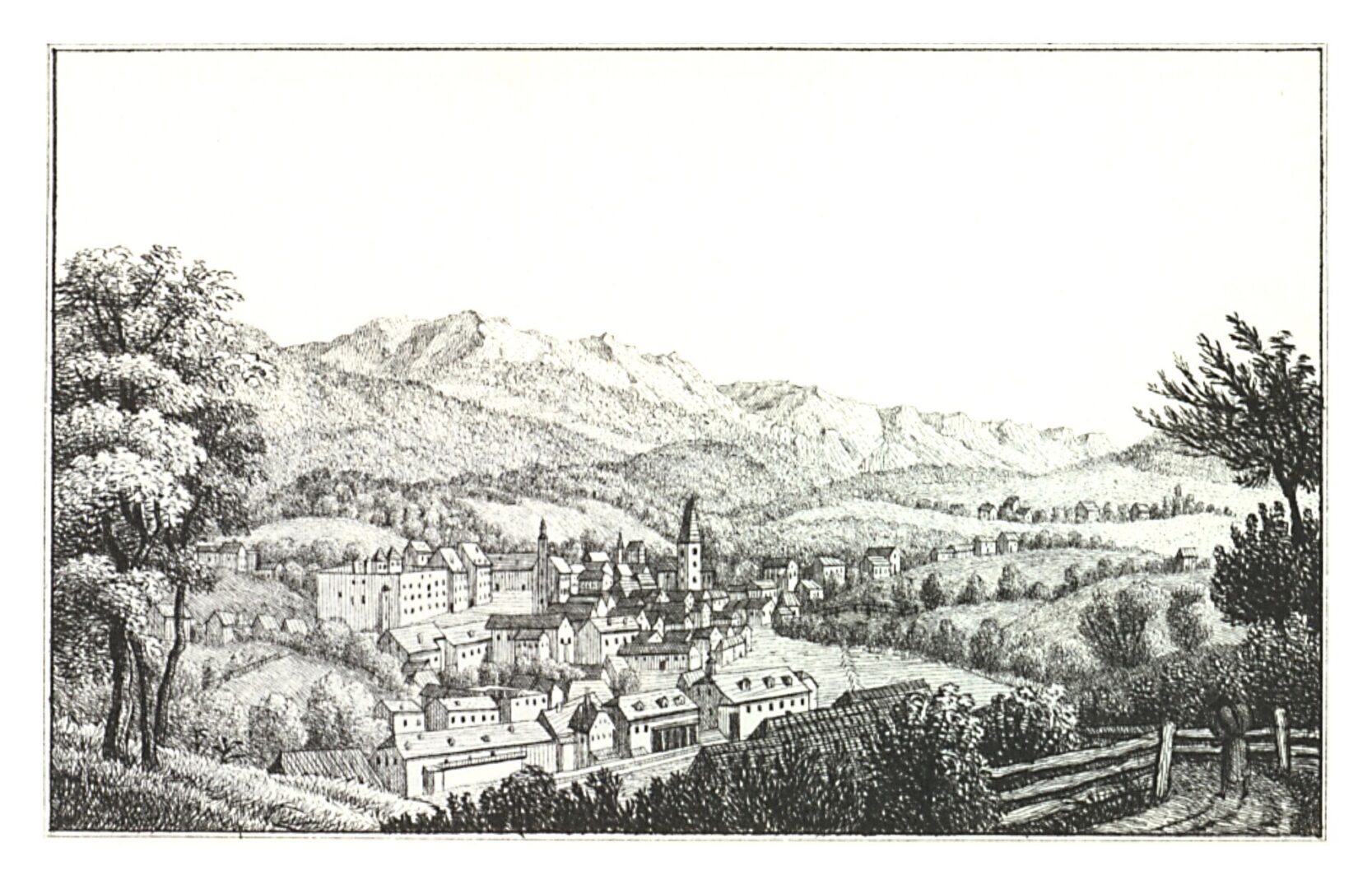
The relocation of salt-making helped the settlement grow quickly. Warehouses, workshops, and the houses of merchants and officials appeared near the production buildings. Aussee gained the status of a market settlement, and as early as 1309 documents mention a local judge and a clerk who used their own town seal.
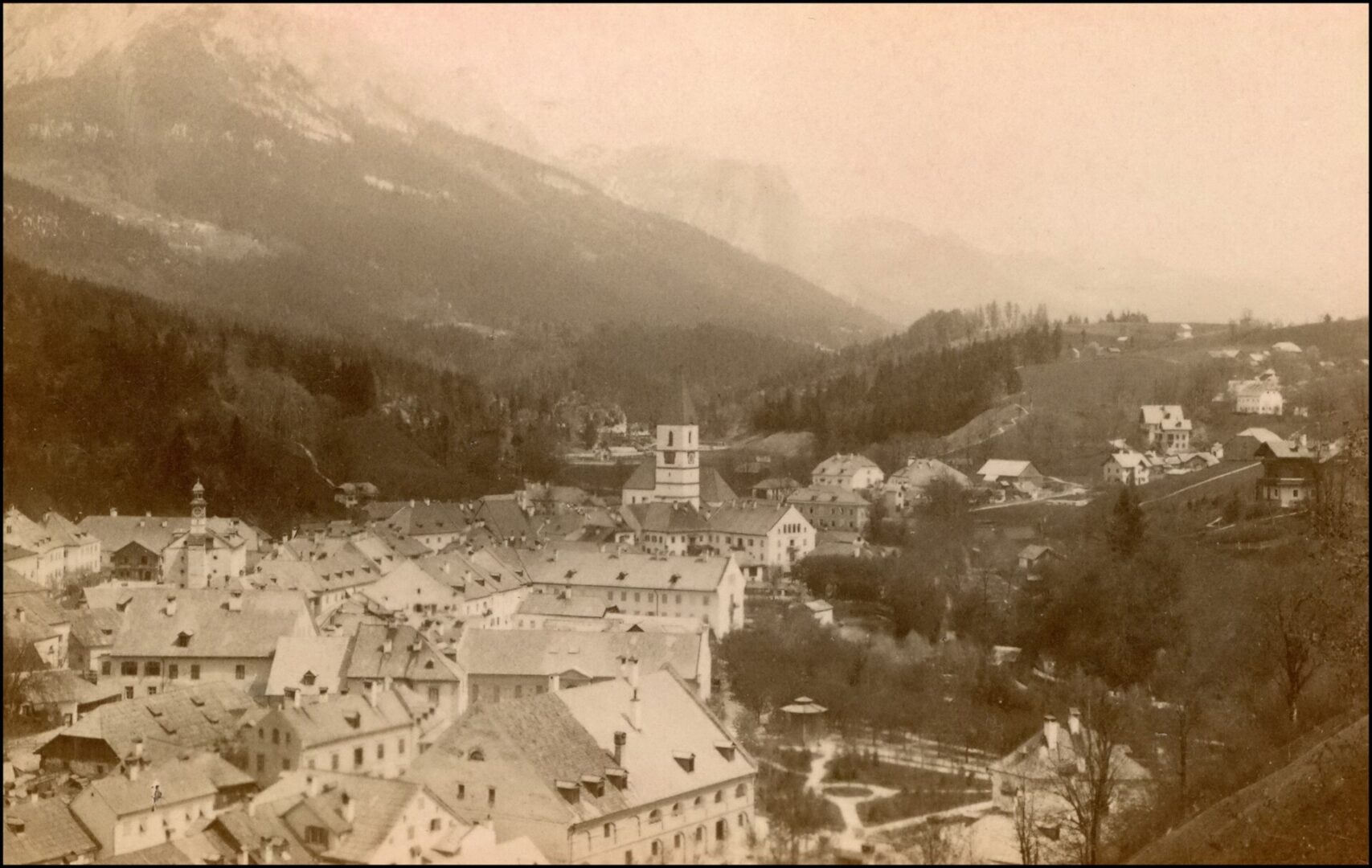
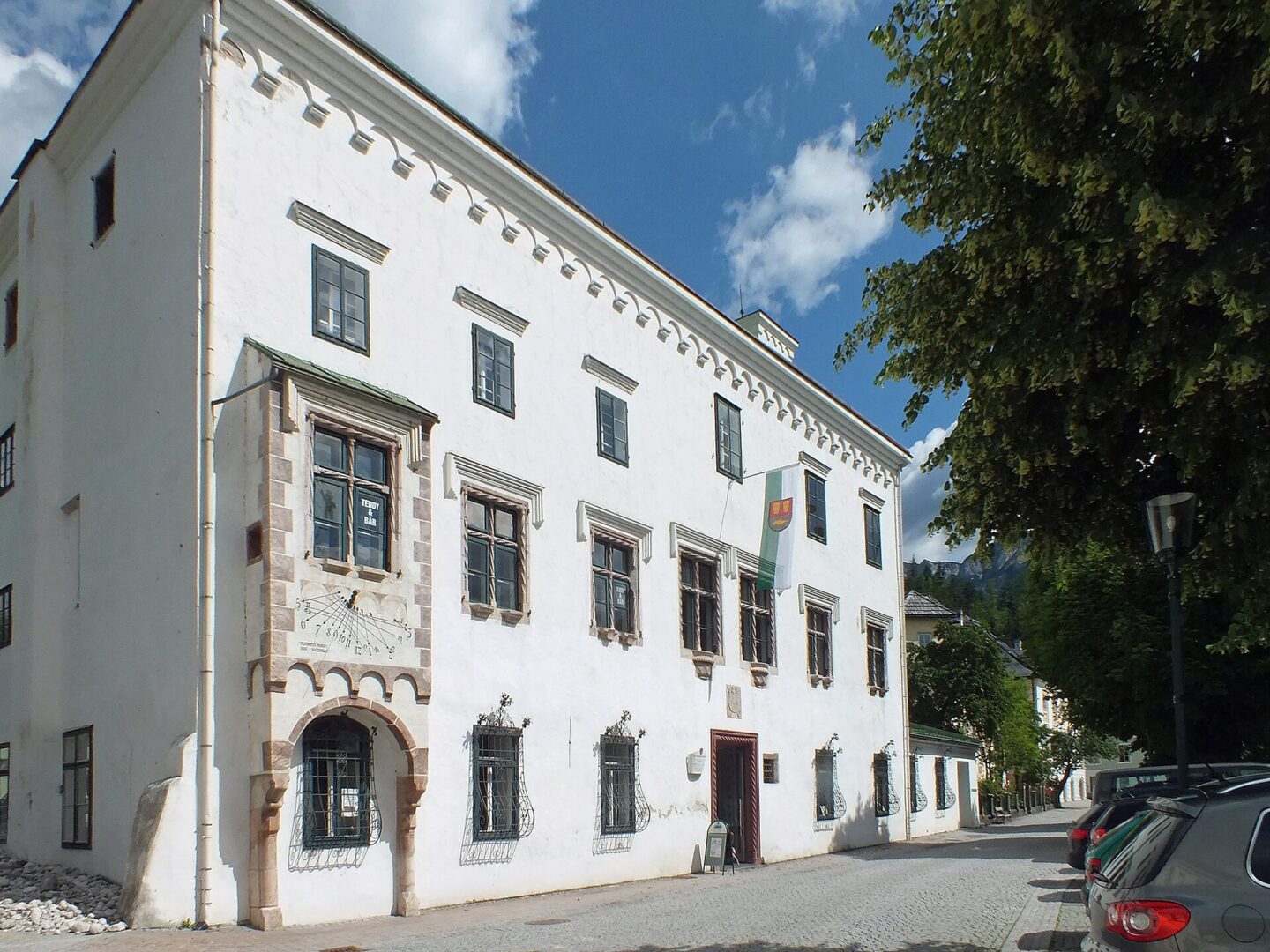
In time, Aussee developed into two parts: the Upper Market (Oberer Markt), where the church and the offices of the salt administration were located, and the Lower Market (Unterer Markt), where trade and craft workshops were concentrated. This division is still visible in the historic layout of the town. The Upper Market was home to the Kammerhof, the residence of the officials who ran the salt industry. The building is first documented in 1395 and was rebuilt many times afterwards.
In the 14th and 15th centuries, salt-making became the foundation of local prosperity. A special position was held by the so-called Hallingers, families that had received hereditary rights to produce and sell salt. There were 24 such families in all. At first they were tied to the direct work at the saltworks, but gradually they gained considerable economic independence and sought to run production independently of state officials. The growth of their influence caused discontent among the rulers, for whom the income from salt was of enormous value. Around 1450, Emperor Frederick III forced the Hallingers to sell their rights, after which production came under tighter state control. This is how the system of the salt monopoly took shape, which determined the region’s economy for the following centuries.
The development of social assistance was also connected with the Hallingers’ activity. The Hospital of the Holy Spirit existed on their funds, intended above all for elderly and sick saltworkers and those who could no longer work. Its existence is reliably confirmed by documents from 1395. Later Frederick III presented the hospital church with a valuable winged altarpiece, which has survived to this day.
The state authorities gradually strengthened their control not only over production but also over town government. In 1505, Emperor Maximilian I gave the people of Aussee a silver seal with a new coat of arms showing two salt containers and a char (a species of fish). The symbols reflected the main riches of the surrounding area: salt-making and fishing.
In the early 16th century, an important role in the life of Aussee was played by Hans Herzheimer, the manager of the salt industry. He maintained ties with educated circles in Central Europe and sent his sons to study in Wittenberg. During a trip to visit them in 1519, Herzheimer heard a sermon by Martin Luther and described his impressions in detail. His diary is considered one of the early records of a Styrian coming into direct contact with the ideas of the reformer.
Soon Protestantism spread widely in the Ausseerland. As early as 1523, with the support of Ulrich Storch, the manager of the saltworks, the first Protestant preacher appeared here. Over the following decades the Lutheran faith gradually took hold among a significant part of the population, including saltworkers and members of the local administration.
The religious changes were accompanied by economic reforms. The saltworks were run by officials appointed by the provincial ruler, and the rules for extracting, processing and selling salt became ever more detailed. Under the manager Christoph Praunfalk, the regulations of the salt administration, the rules for using the forests and the tax obligations were revised. The saltworks remained so important to the local economy that in 1595 the customs clerk Leo Pronner devoted a detailed poem to them.
But by the end of the 16th century the religious policy of the Habsburgs changed sharply. The Catholic rulers began the Counter-Reformation, seeking to restore the church’s former position. In Aussee, where most of the population held Protestant views, these measures provoked resistance. The conflict was especially acute over the hospital church of the Holy Spirit. The authorities tried to keep it in Catholic hands, even though the Protestant community had considerable influence. In 1595, after the intervention of the provincial ruler, the church was finally handed over to the Catholic side.
In the autumn of 1599, the forced return of the population to Catholicism began. On 1 and 2 November a special commission arrived in Aussee, accompanied by about 800 armed soldiers. People were made to renounce the Lutheran faith, and those who refused were threatened with persecution and expulsion. Some Protestant families left the region, while others continued to hold on to their beliefs in secret.
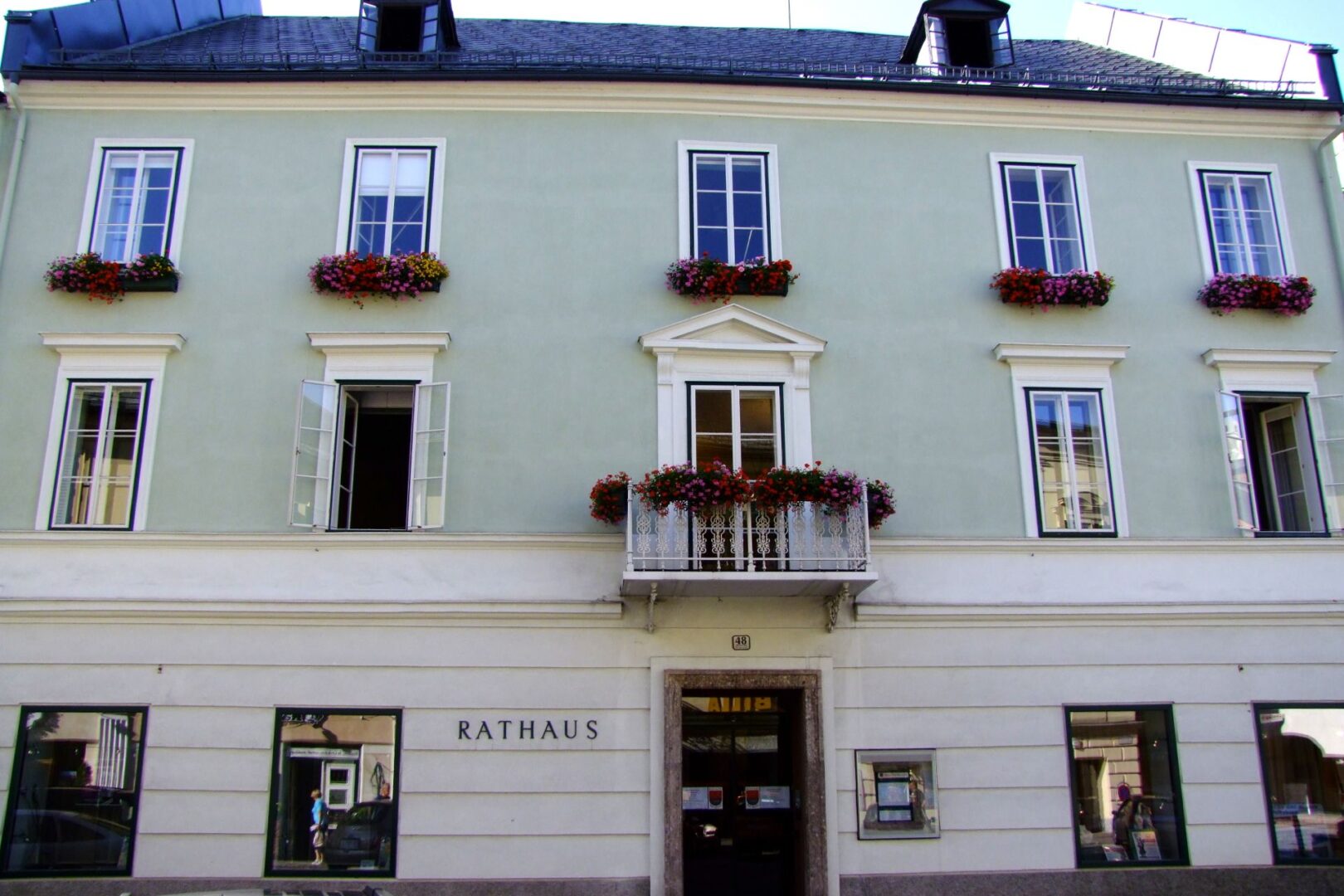
In the 17th century, state management of the salt industry continued to strengthen. An important administrative event was the acquisition of the town hall building in 1654. The town council was housed there, while the Kammerhof remained the centre of management of the saltworks. High-ranking officials lived around it, and the warehouses serving production stood nearby.
Despite the economic importance of salt, life in Aussee was not protected from disasters. The settlement repeatedly suffered from fires and epidemics, which disrupted the work of workshops and businesses. Especially destructive was the fire of 1752, which started in one of the salt-boiling buildings. The fire spread to residential buildings and destroyed the houses along Ischlerstraße. The rebuilding of the town was accompanied by the gradual reconstruction of production buildings and private houses. In the 18th century the Kammerhof was also renewed, gaining ceremonial rooms, including the Imperial Hall with its decorative paintings. The building continued to serve as the administrative centre of the salt industry, and its architecture reflected the wealth and importance of state production.
In the early 19th century, Aussee gradually became known far beyond Styria. Travellers came here more and more often for the mountain scenery, the lakes and the quiet rural life. Of great importance was the interest in the region shown by Archduke Johann of Austria, who was actively involved in the development of Styria and liked to travel in its mountain areas.
On 22 August 1819, near Lake Toplitzsee, the archduke met 15-year-old Anna Plochl, the daughter of the local postmaster. A relationship developed between them, but for a long time their marriage remained impossible because of their different social standing. Only after lengthy negotiations with the imperial family did Johann receive permission to marry. The wedding took place on 18 February 1829 in the chapel of the Brandhof estate. Anna was later given the title Countess of Meran.
The story of this marriage became widely known and helped make the Ausseerland more popular among the aristocracy and wealthy travellers. The region gradually turned into one of the favourite summer resorts in Austria. Country villas were built here, hotels appeared, and in summer people from artistic and literary circles came to stay. At the same time, spa treatment was developing. The use of salt baths had a long history in Aussee: as early as 1501, such treatments were prescribed to saltworkers. But the systematic development of the spa began in the 19th century. In 1850, rooms for steam salt baths and inhalations were fitted out in the Emperor Ferdinand saltworks building. Gradually, private medical institutions also appeared.
The administrative position of Aussee was also strengthened. In 1850 a district court, a tax office and a gendarmerie post were opened here. Thanks to this, the settlement kept its importance as a local administrative centre, serving not only its own residents but also the surrounding communities.
In 1864 a society was founded to look after walking paths, parks and places of rest. In 1857 the first guidebook to the medical institutions of Aussee appeared, and medical studies of salt treatments helped to attract new patients. In 1868 the Styrian authorities officially recognised Aussee as a spa town.
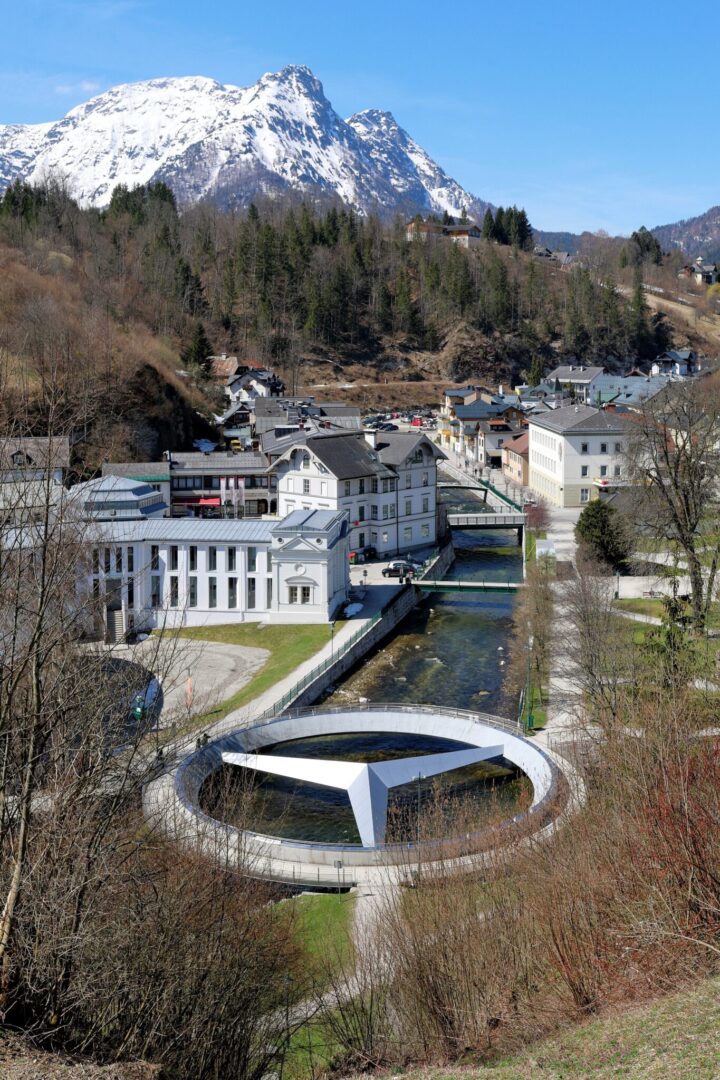
A particularly important event was the opening of the Salzkammergut railway in 1877. It connected Aussee to the Austrian railway network and made travel from Vienna and other large cities much easier. The railway also changed local industry: the salt-boiling buildings were gradually moved from the centre of the settlement to Unterkainisch, closer to the station, and the freed-up areas were turned into a spa park.
By the end of the 19th century, the number of visitors had risen sharply. If in 1850 only 43 spa guests were registered here, by 1895 their number had reached about 11,000. The settlement became a well-known summer resort for wealthy families, artists, musicians and writers. On the sites of the former production buildings, promenades and public buildings appeared.
At the same time, the Evangelical community was gradually reviving. After centuries of religious restrictions, Protestant services began to be held in Aussee again in 1899, at first in rooms of the spa building. In 1908 the construction of the Evangelical Church of Jesus was completed, which became an important sign of change in the religious life of the region. In 1911, in view of the spa’s renown and its medical importance, Aussee received the official right to use the prefix “Bad”, meaning “spa”. From then on, the present name Bad Aussee became established.
The First World War and the collapse of Austria-Hungary disrupted the usual life of the spa. In the post-war years, economic difficulties forced the local authorities to look for new visitors among the middle class, since the traditional aristocratic clientele could no longer provide the former level of income. The spa continued to operate, gradually adapting to the new conditions.
The salt industry was changing too. In 1926 the Kammerhof ceased to serve as the residence of the salt administration, ending the building’s centuries-long administrative history. Salt production itself, however, continued and remained an important branch of the regional economy.
After the Anschluss of Austria in March 1938, Bad Aussee came under the rule of the National Socialists. The annexation to Germany was accompanied by mass demonstrations by supporters of the new regime. Already on 13 March, Valentin Tarra, the head of the local gendarmerie post, was arrested on political grounds. Under the Nazi regime, persecution of the Jewish population and of opponents of the authorities began. In the Ausseerland, real estate belonging to Jewish owners was confiscated, including many summer villas of wealthy families. The spa region, which had previously attracted visitors of various backgrounds, was drawn into the system of National Socialist repression.
The administrative position of the town changed as well. The Ausseerland was removed from Styria and included in the Reichsgau Oberdonau, which corresponded mainly to Upper Austria. In 1942 the previously independent communities of Reitern and Straßen were added to Bad Aussee, as well as Obertressen, which had formerly belonged to Grundlsee.
In the last months of the Second World War, the Ausseerland took on special importance for the Nazi leadership. The mountainous area was regarded as part of the supposed “Alpine Fortress”, where the regime hoped to continue resisting the advancing Allies. High-ranking representatives of the SS and other state institutions took refuge in the region, including Ernst Kaltenbrunner and Adolf Eichmann. At the same time, there was an organised resistance to the National Socialists here. As early as 1940, Albrecht Gaiswinkler, a former health insurance fund employee, Valentin Tarra, a gendarme, and Hans Moser, an employee of the salt administration, formed an underground group. Gaiswinkler later ended up in France, where he made contact with the Resistance movement and the Allies, while his comrades continued their underground activity at home.
On the night of 8 to 9 April 1945, Gaiswinkler and three other Austrians parachuted into the Höllengebirge mountain area and managed to make their way to the Ausseerland. The underground fighters began preparing the liberation of the region, collecting information on the positions of German troops and passing it to the advancing American units.
The Resistance played an especially important role in saving works of art hidden by the Nazis in the salt mines of neighbouring Altaussee. Thousands of cultural treasures taken from different countries of Europe were stored there. When the Nazi leadership ordered the mines to be destroyed together with their contents, local saltworkers and members of the Resistance succeeded in thwarting these plans.
In early May, the underground fighters also took control of a radio station that had been evacuated to Bad Aussee, which began broadcasting under the name Radio Freiheit Ausseerland, “Radio Free Ausseerland”. After the arrival of American troops, local anti-Nazi groups took part in restoring order and disarming the remaining SS units. On 13 May 1945, with American support, one of the last such groups was disarmed.
The end of the war opened a new period in the history of Bad Aussee. The town found itself in the American occupation zone, and in the first post-war years many people who had left their homes during the fighting were staying here. The restoration of peaceful life was accompanied by the return of institutions, the resumption of trade and the gradual development of the spa economy.
On 1 July 1948, Bad Aussee, together with the Ausseerland, returned to Styria. The administrative changes made by the Nazis were reversed, and the town again became part of the historic province with which it had been connected for many centuries.
Post-war development increasingly depended on spa treatment and tourism. In 1960 the Narcissus Festival was held for the first time, and it later became one of the best-known annual events in the region. Winter tourism also developed gradually, making it possible to attract guests not only in summer.
In 1971 the town municipality bought the historic Kammerhof and adapted it for cultural purposes. A local history museum was set up there, devoted to the history of salt mining, archaeological finds, and local crafts and traditions. In this way, the former residence of the salt administration gained a new life as a public institution.
In the early 1980s, the centuries-long history of salt-making in Bad Aussee itself came to an end. The last local production stopped work in 1983–1984. Salt mining in neighbouring Altaussee continued, but the processing of brine gradually became concentrated in more modern plants outside the town. With the end of salt-making, the industry thanks to which Aussee had once come into being and grown rich disappeared. Spa medicine, however, continued to develop. As early as 1979, a specialised treatment facility of the social insurance system had opened here, and in the following decades the network of medical and rehabilitation institutions expanded.
In 1994 Bad Aussee gained a new administrative status. By a decision of the Styrian government, adopted on 22 November 1993, the market municipality officially became a town from 1 January 1994. Its historic coat of arms with the salt containers and the char was kept as a reminder of the settlement’s medieval origins.
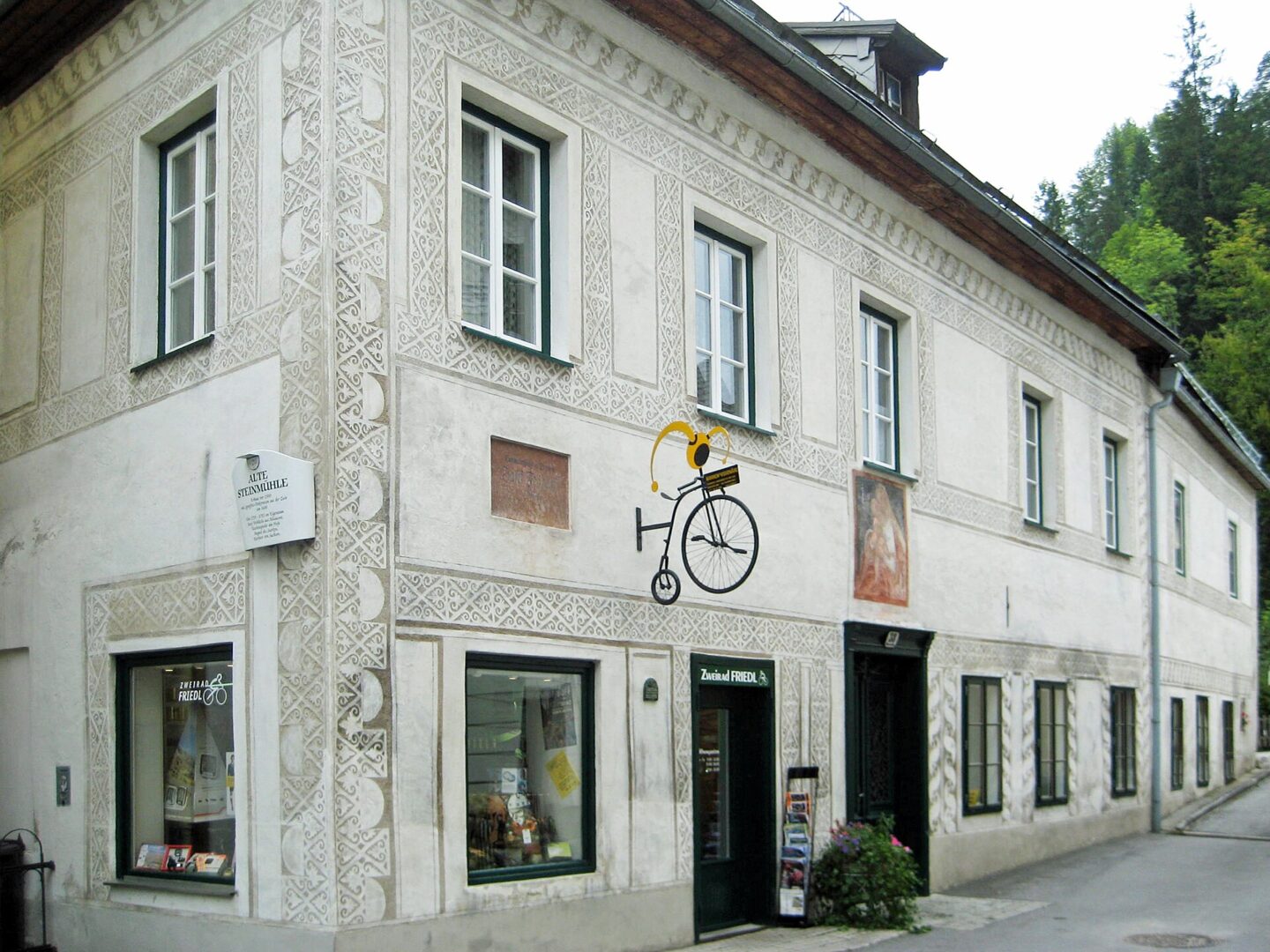
Today Bad Aussee remains the main urban centre of the Ausseerland. In its historic part, the parish church, the Kammerhof, old houses of merchants and officials, and the architecture of the 19th-century spa era have been preserved. These buildings reflect several quite different periods of local history: from salt production and Habsburg administrative rule to the development of a spa that gradually became known far beyond Styria.
You may also like these articles:
- Sziget 2026 — Part 2. Day 0
- The History of the Austrian Town of Straßburg
- An Emigrant’s Observations: How to Improve Your Chances of Getting Lucky as an Emigrant
- Lise Meitner: An Outstanding Researcher of the 20th Century from Austria
- Sziget 2026 — Part 1. The Beginning
- The History of the Austrian Town of Peuerbach
- An Emigrant’s Observations: My Strongest Motivation in My New Country Is the Fear of Returning to My Homeland
- New Restaurants in Vienna Opening in November 2026
- Josef Petzval: The Austro-Hungarian Mathematician Who Was Ahead of His Time
- Photo Report from Almost-Summer Malaga 2026
- The History of the Austrian Town of Bad Aussee
- Anti-Jewish Pogroms in Vienna, 9–10 November 1938
- The Most Beautiful Christmas Markets in Vienna
- Andrea Bocelli Live in Vienna: A Look Back at the Concert
- An Emigrant’s Observations: What “Home” Means After Nine Years Abroad
- An Emigrant’s Observations: My Nine Years in Austria
- An Emigrant’s Observations: Reverse Culture Shock
- My Beloved Vienna: By the Numbers, Not Just from the Heart
- An Emigrant’s Observations: A Fresh Look at the Exhausting Process of Adapting to Another Country
- Photo Report from Donauinselfest 2026. Part Two: Giant Rooks and Another Evening on the Island
- Photo Report from Donauinselfest 2026. Part One: My Ugly Clementine
- An Emigrant’s Observations: The Russian Language Without the “Russian World”
- Marilyn Manson Live in Vienna: A Look Back at the Concert
- An Emigrant’s Observations: Feeling Guilty About My Good Life
- An Emigrant’s Observations: What Surprises Me About the Austrian Attitude to Beer
- LP Live in Vienna: A Look Back at the Concert
- An Emigrant’s Observations: Anti-Putinism and the Imperial Lens
- An Emigrant’s Observation: How Big Is Our Small World?
- An Emigrant’s Observation: How Difficult Is It to Make New Friends?
- It’s My Birthday Today!
- My Life in Austria: July 2026
- An Emigrant’s Observations: My Toxic Homeland —Yesterday, Today and Tomorrow
- Ricchi e Poveri Live in Vienna: A Night of Music and Memories
- An Emigrant’s Observations: Simple Ways to Support Your Emotional Well-Being
- Eisenstadt in Pictures: A Day in a Small Austrian City
- Exploring Vienna’s Neubaugasse Flea Market
- Sofia Isella Live in Vienna: A Concert Review
- An Emigrant’s Observations: When Mistakes Become Toxic While Adapting
- An Emigrant’s Observation: Extreme Heat in Europe and Austria in 2026
- My Emigration to Austria: June 2026 Recap
About the project:
My name is Anatoly, and I am the author of Emigrants.life. In 2017, my family and I emigrated from Krasnodar to Austria. My wife and I work in marketing, and we created Emigrants.life to help people who are thinking about moving abroad.
Emigrants.life publishes daily news about life and everyday matters in Austria and Europe. Follow us on Facebook, Instagram and Twitter, or join our Russian-language Telegram channel.