
It’s incredible, but we finally made it! On 22 August 2026, Julia and I attended a concert by one of the most famous Italian tenors of our time, Andrea Bocelli. The performance took place at Vienna’s Ernst Happel Stadium as part of the Romanza 30th Anniversary World Tour, celebrating the 30th anniversary of the singer’s famous album.
Large stadium concerts have long been a regular part of Vienna’s musical life, but performances by classical singers on this scale are rare here. That is why Bocelli’s arrival attracted considerable attention from the Austrian press and his many fans. In this article, I would like to tell you a little about the singer himself, his remarkable journey to international fame, and his anniversary tour, and, of course, share our impressions of the concert.
Important: This article will include videos of the singer’s performance. They may not be of the highest quality, but they still capture the atmosphere of that evening, so I decided to keep them. I have also gathered more information about Bocelli himself and his tour because, when I sat down to write this article, I realised that I knew practically nothing about an artist whose music I had been listening to for many years. Time to put that right!
Andrea Bocelli: From a Tuscan Village to International Fame
Andrea Bocelli was born on 22 September 1958 in Lajatico, a small town in Tuscany near Pisa. He grew up in a farming family, and his musical abilities became apparent in early childhood. Andrea began learning the piano at the age of six, later mastered the flute and saxophone, and developed an interest in organ music. Gradually, however, singing became his greatest passion.
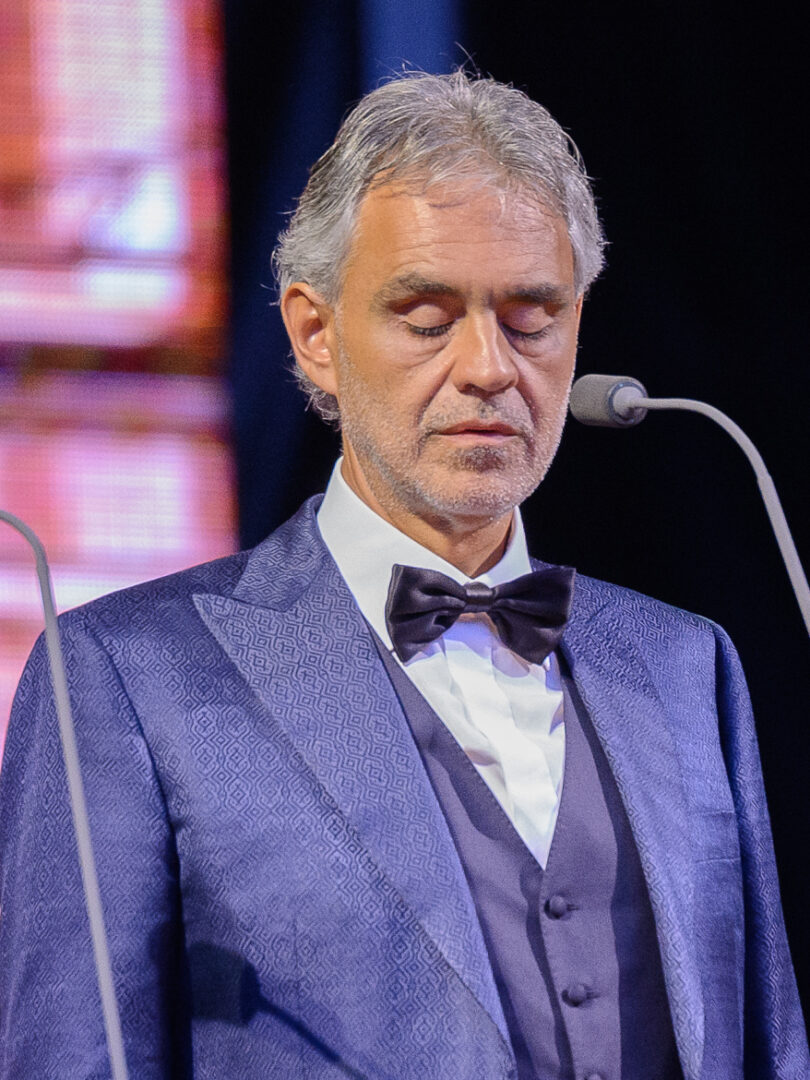
Bocelli was born with congenital glaucoma, which caused serious problems with his vision. At the age of 12, he suffered an injury while playing football and lost his sight completely. Despite this, he continued studying music. At the University of Pisa, he studied law, earned a law degree, and worked in the profession for a while. At the same time, Bocelli performed in local piano bars, partly to earn money for singing lessons. He later studied with the famous Italian tenor Franco Corelli, whom he had admired since his youth.
An important turning point in Bocelli’s life came in 1992. Italian musician Zucchero was looking for a tenor to record a demo version of Miserere, a song he was working on with Luciano Pavarotti. Bocelli recorded the vocal part, and his performance attracted the attention of the music industry. Soon afterwards, he began his professional singing career, and in 1994 he won the newcomers’ category at the Sanremo Music Festival with Il mare calmo della sera.
Just a year later, he returned to Sanremo with Con te partirò. The song finished fourth, but it was destined to become one of the most important pieces in Bocelli’s repertoire. His real international breakthrough came in 1996, when he recorded a new version with British singer Sarah Brightman. The duet, titled Time to Say Goodbye, was presented to the public during German boxer Henry Maske’s farewell fight. The song became an enormous hit, particularly in Germany, where it topped the music charts for several weeks, before gaining popularity in many other countries.
Bocelli’s repertoire includes many other pieces familiar even to people who rarely listen to opera. Among them are Vivo per lei, which he performed with Italian singer Giorgia, the moving Per amore, Romanza, Il mare calmo della sera, and Caruso, written by Lucio Dalla and dedicated to the famous Italian tenor Enrico Caruso.
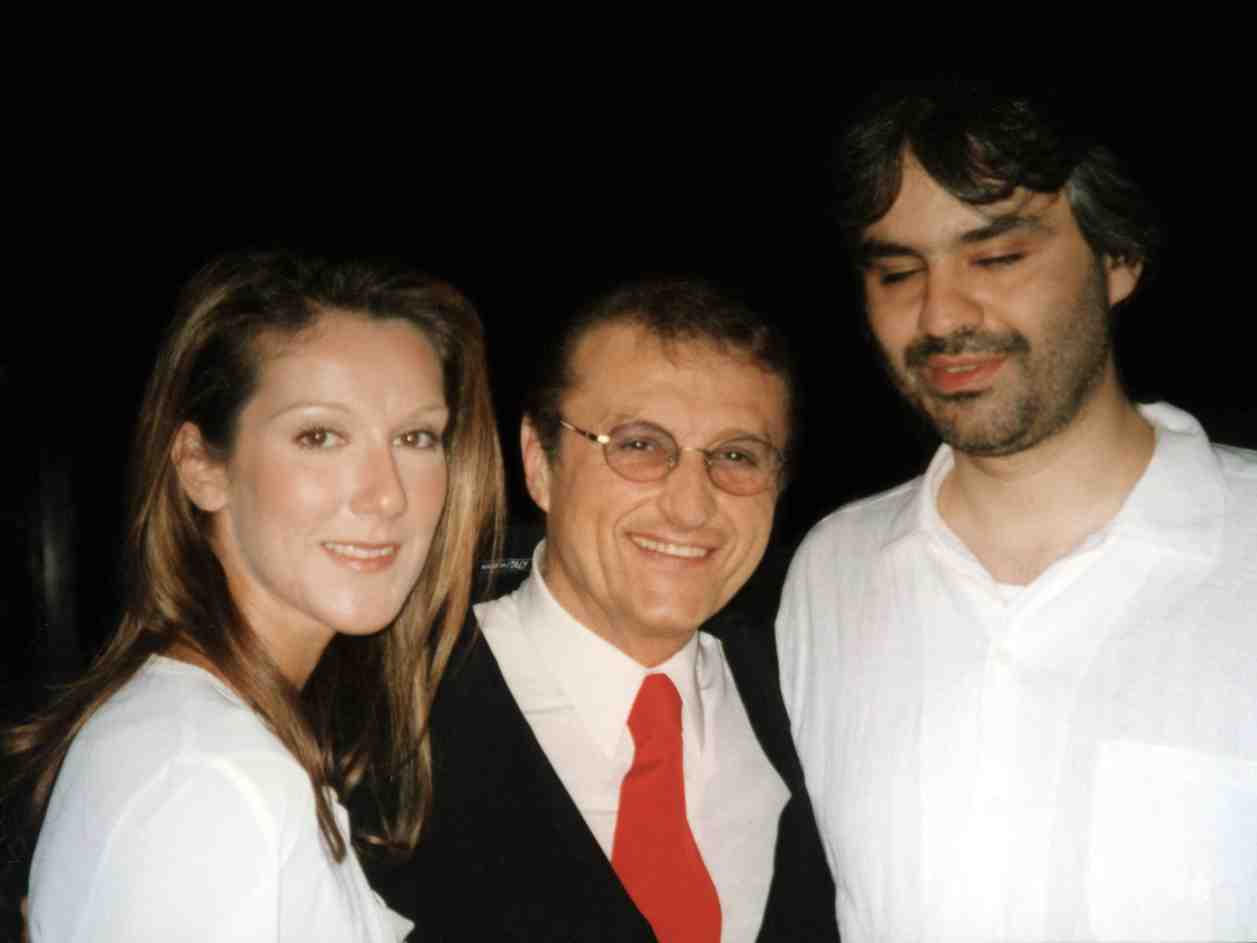
The Prayer, a duet with Canadian singer Céline Dion recorded in the late 1990s, also deserves special mention. The song achieved widespread international recognition, and the collaboration became one of the most recognisable examples of classical singing meeting contemporary pop music. Bocelli subsequently worked with performers from different genres and generations, including Ed Sheeran, Ariana Grande, Jennifer Lopez, and many other well-known musicians.
Alongside his success in popular music, his classical career also developed. Bocelli performed in opera productions, recorded works by Verdi, Puccini, and other composers, and collaborated with conductors Zubin Mehta, Lorin Maazel, and Seiji Ozawa. His repertoire spans music from many different periods, from classical operatic arias to contemporary ballads, allowing him to attract listeners with very different musical tastes.
Over the decades of his musical career, more than 90 million of his recordings have been sold. His numerous awards include Classical Brit Awards, World Music Awards, and a Golden Globe Award. In 2010, he also received a star on the Hollywood Walk of Fame.
Romanza: The Album’s 30th Anniversary and a Major Concert in Vienna
In 2026, Andrea Bocelli embarked on the Romanza 30th Anniversary World Tour. The occasion was the 30th anniversary of one of the most successful albums of his career, Romanza. Although the album was released internationally in 1997, the anniversary celebrations were scheduled for 2026.
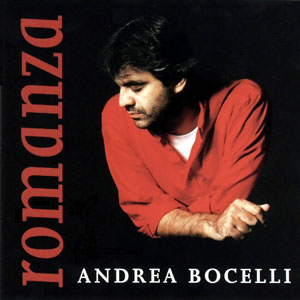
Romanza was a compilation of recordings Bocelli had made during the early years of his professional career. It brought together songs that were already well known and allowed international audiences to discover different sides of his music on a single album. Its commercial success was enormous. According to Universal Music, around 20 million copies of Romanza were sold worldwide. It became one of the most successful albums in the history of classical crossover, a genre combining elements of classical and popular music.
A special anniversary reissue was prepared and went on sale in September 2026. Alongside the familiar recordings, it included a previously unreleased extended version of Con te partirò. A deluxe edition was also produced for collectors, featuring archival photographs from the period when the album was created, additional materials, and commemorative items.
The anniversary programme formed the basis of a major international tour featuring concerts across Europe and North America. For the Vienna performance, the organisers chose the Ernst-Happel-Stadion, Austria’s largest football stadium, which regularly hosts concerts by internationally famous pop and rock stars. This time, the entire stadium was arranged with seating, including the football pitch. According to reports in the Austrian press, around 30,000 people attended the concert. Vienna was also the only stop on the anniversary tour in Austria, Germany, and Switzerland.
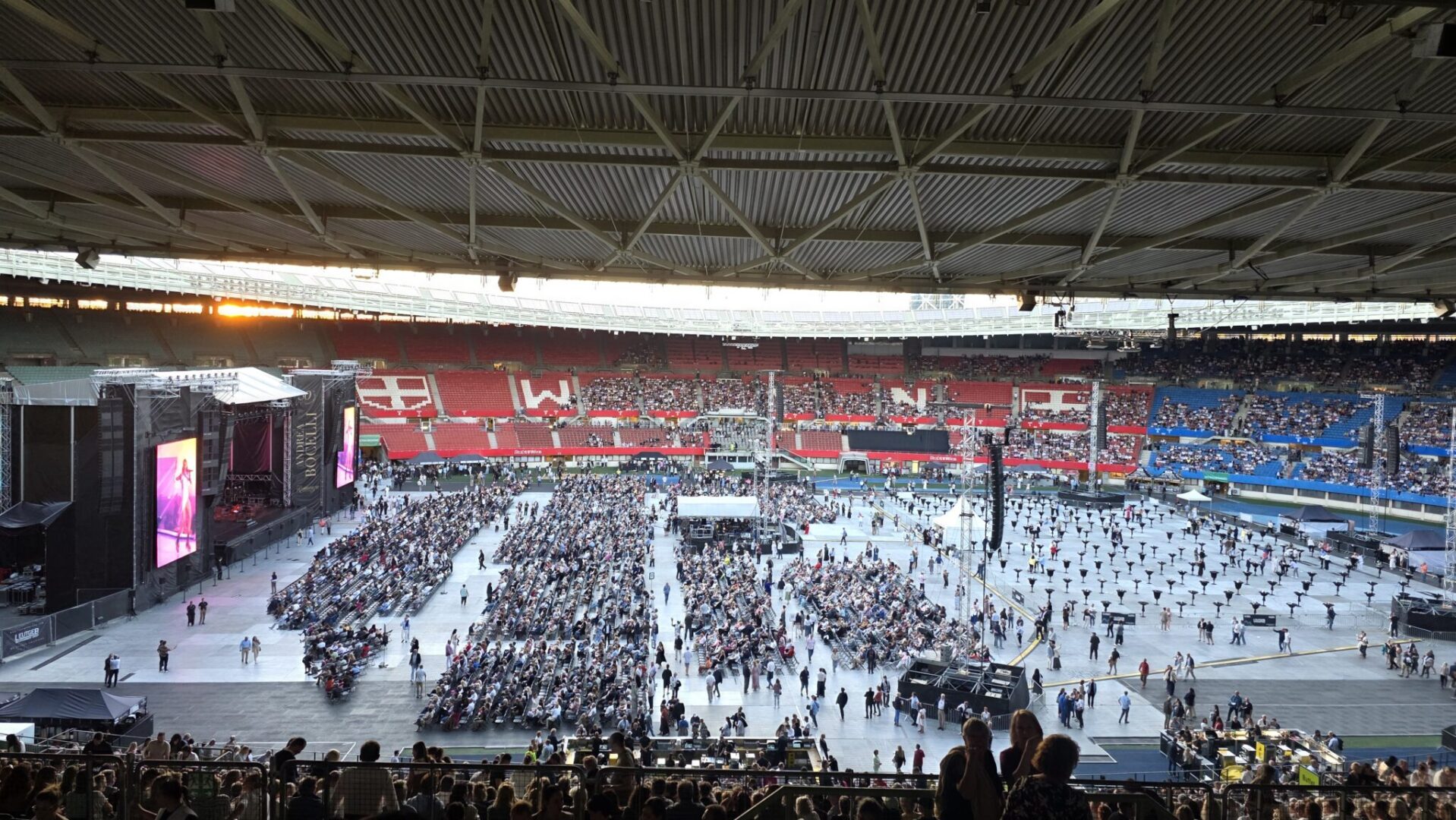
The event had an interesting historical parallel. In 1996, the famous Three Tenors — Luciano Pavarotti, Plácido Domingo, and José Carreras — performed at the same venue. Since their concert, the stadium had not hosted classical singers performing on such a grand scale. Thirty years later, Andrea Bocelli continued that tradition by bringing his anniversary programme to Vienna.
The organisers prepared a full musical production featuring the Slovak Symphonic Orchestra and Bachchor Stuttgart. The performance was conducted by Italian musician Carlo Bernini. The programme included operatic arias, Bocelli’s popular songs, pieces from the musical West Side Story, and music by Ennio Morricone. Some performances were accompanied by ballet.
Guest performers also took part in the concert. Among them was Romanian soprano Cristina Pasaroiu, who performed the famous aria Meine Lippen, sie küssen so heiß from Franz Lehár’s operetta Giuditta. Danish singer Andrea Lykke also participated in the programme, performing several duets with Bocelli.
One of the evening’s surprises was the appearance of the singer’s son, Matteo Bocelli. Together with his father, he performed Fall on Me, a song they had previously recorded for the album Sì. Matteo is already developing his own musical career, so the father-and-son performance became one of the most interesting moments of the anniversary programme.
The Vienna concert received considerable coverage in the Austrian media, although journalists’ opinions were mixed. The publication oe24 devoted a lengthy report to the performance, highlighting the variety of the programme, the orchestra’s work, the guest performers, and the particularly successful finale. Its journalists praised the production, which brought together opera, ballet, popular music, and film scores.
Vienna’s local television channel W24 also noted that the concert had attracted audiences from beyond Austria, with Bocelli fans travelling to Vienna especially for the occasion. A more critical assessment came from the newspaper Die Presse. Music critic Jens F. Laurson questioned the very idea of performing this kind of repertoire in a stadium. In his opinion, such a venue is poorly suited to conveying the subtleties of classical singing, while Bocelli’s popularity leads audiences and critics to judge him simultaneously by the standards of opera and mainstream entertainment. The critic also found fault with certain aspects of Bocelli’s vocal performance. Nevertheless, he acknowledged that the audience had enjoyed the concert, which was experienced primarily as a grand musical show.
Audience reviews were mixed as well. On the ticketing platform oeticket, some visitors complained about the acoustics, the insufficient volume of the singer’s voice during the first half, the small screens, and the organisation of certain seating areas. Other concertgoers, on the contrary, rated the performance highly and noted that the sound improved considerably after the interval.
Our Impressions of the Concert
Julia and I had dreamed of attending an Andrea Bocelli concert for many years. When we learned that his new tour would bring him to Vienna, we were incredibly happy. We had previously even considered travelling to Italy specifically to see him perform. We really wanted to hear Bocelli live while he was still touring, enjoy his remarkable voice, and see with our own eyes the man whose songs had accompanied us for so many years. Sometimes you realise that certain experiences really are worth spending money on. For me, Bocelli’s concert was exactly such an occasion.
What made it even better was that we did not have to travel anywhere especially for the concert. Ernst Happel Stadium is relatively close to our home, so we simply walked there through summertime Vienna and the Prater. Even on the way, we could sense that an unusual evening lay ahead. There were plenty of elegantly dressed people around us: men in smart suits and women in evening dresses.
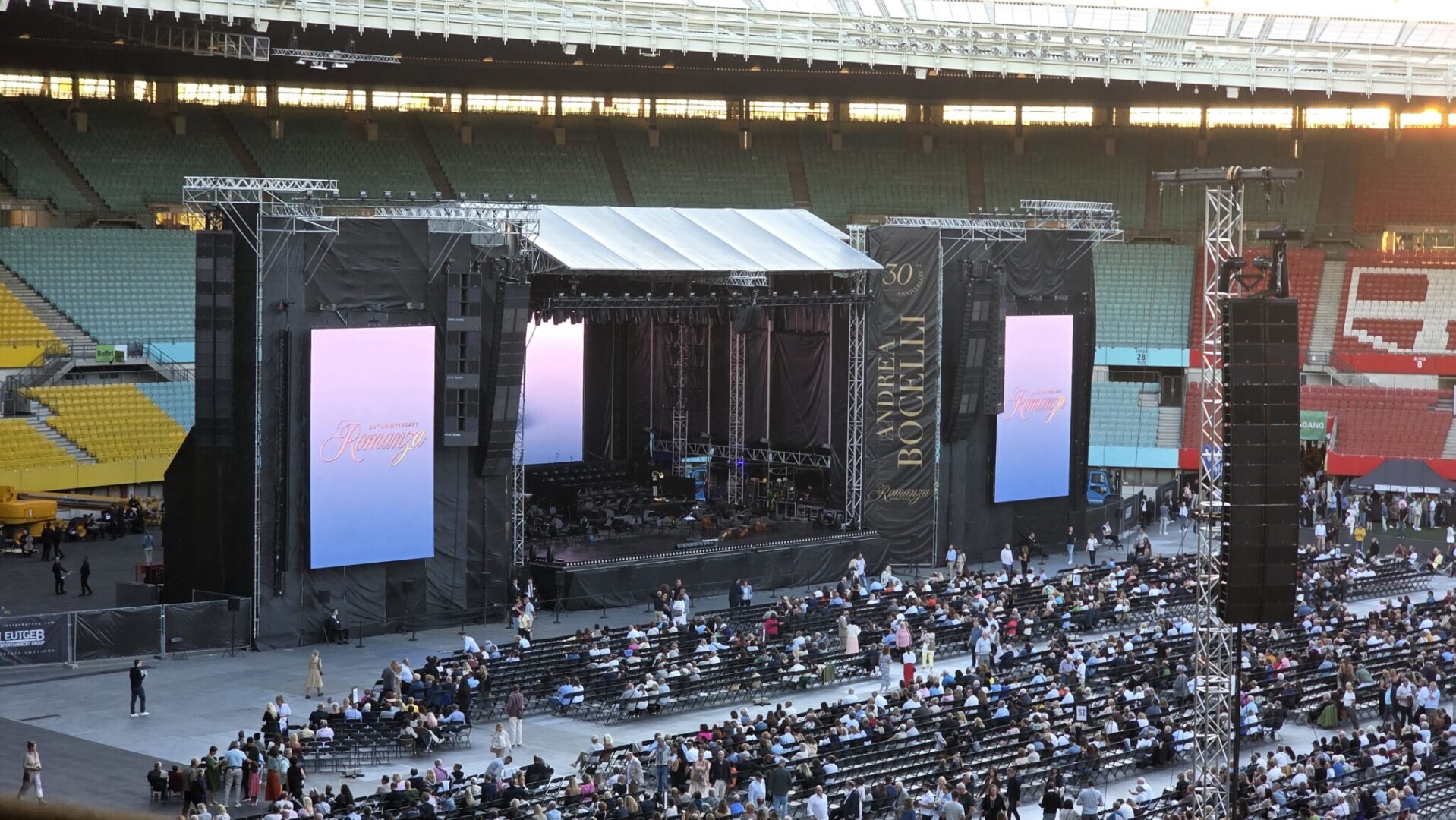
It created an interesting contrast with the stadium itself, which we are used to thinking of primarily as a venue for football matches. Yet here was a genuine musical gala, and the audience certainly looked the part. There were a lot of people, so we had to queue for a little while before entering. Once inside, however, we found our seats quite quickly. They were comfortable, and although we were a considerable distance from the stage, we had a good view of the entire stadium and could see Bocelli himself. Perhaps our angle was not ideal for filming videos, but it was perfectly suitable for watching the performance.
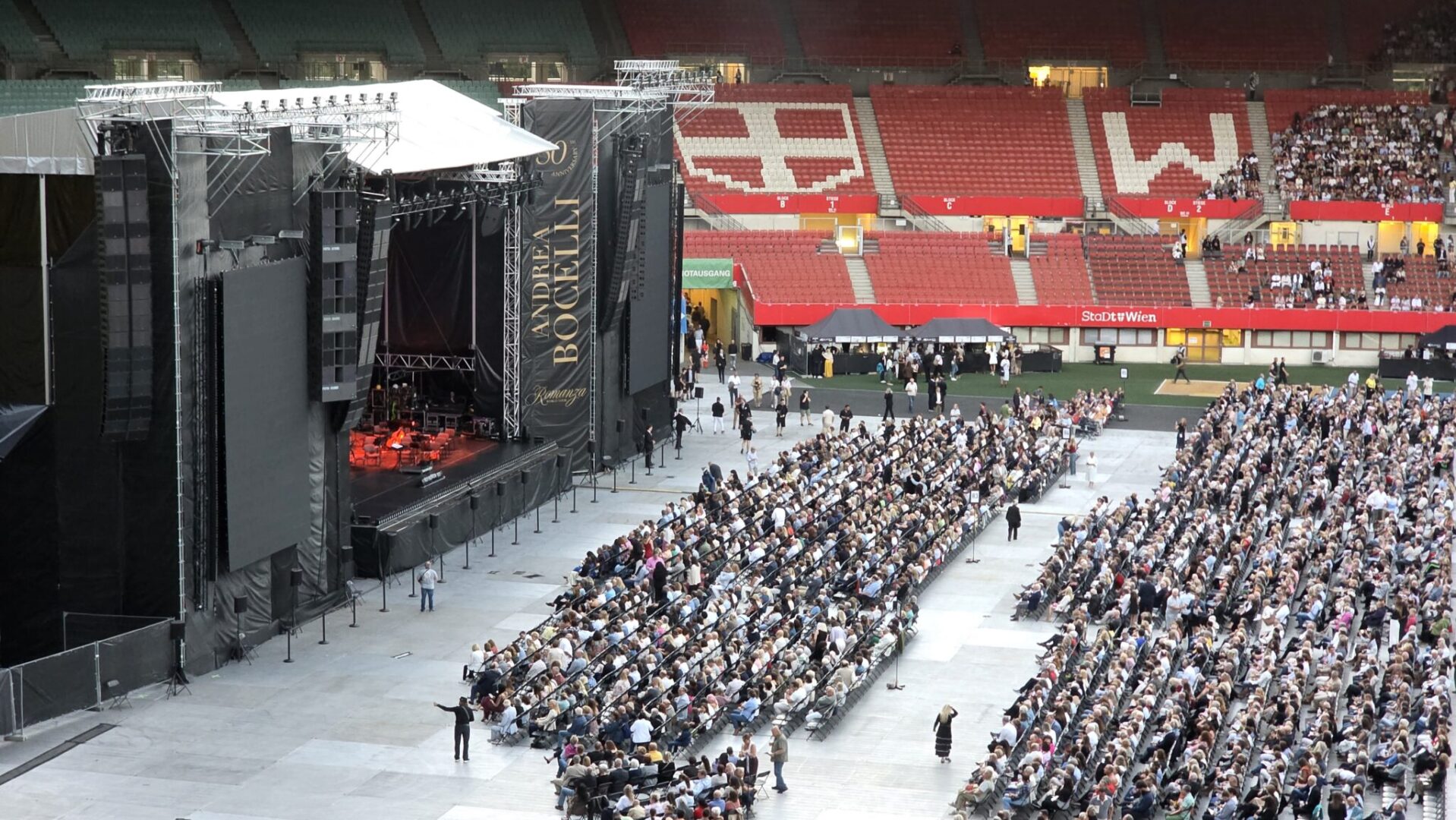
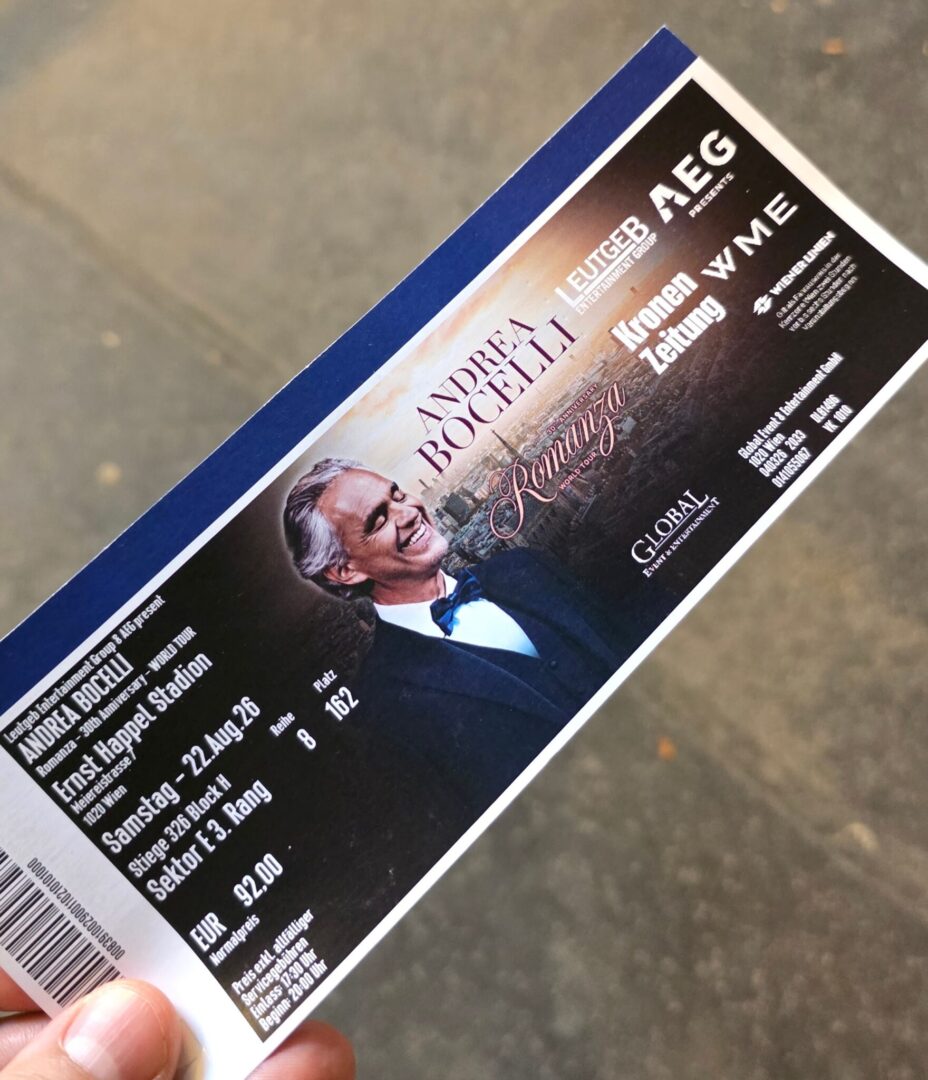
I was a little surprised by the absence of the usual concert merchandise. As far as I understood, VIP ticket holders received a selection of commemorative items, but there was no opportunity to buy anything featuring the tour’s branding at the venue. That was disappointing because I wanted to keep something as a souvenir of such a special concert. On the other hand, this was the first time we had deliberately ordered tickets to be delivered by post. So we now have real paper tickets that we can keep as a small reminder of the evening.
The concert itself started later than scheduled. The first half of the programme was predominantly classical, and I must admit that experiencing it in such a huge stadium was not easy. Opera requires a certain quality of sound, and in a large open-air venue like this, sound travels very differently from the way it does in a concert hall. At times, I felt that it lacked depth and clarity. Perhaps this was partly due to where our seats were located. Nevertheless, the performance was still an enormous pleasure.
Interestingly, despite the rather formal nature of the concert, the atmosphere inside the stadium remained quite relaxed and informal. During the breaks, you could go and buy drinks or food. Water, beer, wine, soft drinks, and even popcorn were available. In other words, sitting at an Andrea Bocelli concert with a glass of beer and some popcorn turned out to be perfectly normal. Photography and video recording, however, were prohibited. I must admit that I still secretly recorded a few short clips of my favourite pieces to keep as memories. Especially since quite a few people around us were also occasionally filming the performance on their phones.
But of course, the highlight of the evening was Bocelli’s performance itself. There is something absolutely extraordinary about his voice, his singing style, the way he reaches certain notes and conveys emotion. It is quite difficult to explain in words. Even after decades of performing, his singing leaves an incredibly powerful impression, especially when you hear him live and realise that the person standing before you is the very man whose recordings you have listened to so many times.
At the same time, the programme was arranged so that Bocelli periodically left the stage, allowing other performers to take his place. Perhaps his age and the need to rest between demanding vocal pieces played a role, but the concept of a grand musical production also involved guest artists. At certain moments, dancers appeared on stage, performing pieces reminiscent of classical ballet. There were solo performances by other singers, duets, and orchestral works. This made the concert varied, although personally, of course, what we looked forward to most was Bocelli’s return to the stage.
And it was an absolute joy for us to hear the pieces we had loved for so many years. I remember some of them from my childhood, when I enjoyed listening to this music with my grandfather, grandmother, and mother. It is amazing to realise that, after so much time, you can find yourself in a stadium in Vienna listening to melodies you have known since your youth, performed by Andrea Bocelli himself. Julia and I had dreamed about this for so long that at times the experience felt almost unbelievable.
The entire evening passed incredibly quickly. I particularly remember the finale, when the audience simply did not want to let the singer go. I think he was called back for an encore about three times, and each time he returned, thanked the audience, and continued singing. At one point, I even had the impression that the organisers were already trying to bring the concert to a gentle close, but Bocelli kept returning to the audience, who greeted him with prolonged applause. Perhaps it was just my imagination, but it was genuinely touching.
Overall, I really liked the atmosphere throughout the evening. Despite the enormous number of people, the audience behaved calmly and respectfully. We sat comfortably in our seats, nobody particularly disturbed anyone else, and people listened to the music, applauded, and showed their appreciation to the performers. There was a real sense of enjoyment all around us, and I was happy to be part of such an audience.
I think Julia and I will remember this concert for the rest of our lives. Some dreams stay with you for years, and when they finally come true, you realise just how important it was to experience them. We had an absolutely wonderful time, heard the music we love, and saw one of the greatest performers of our time.
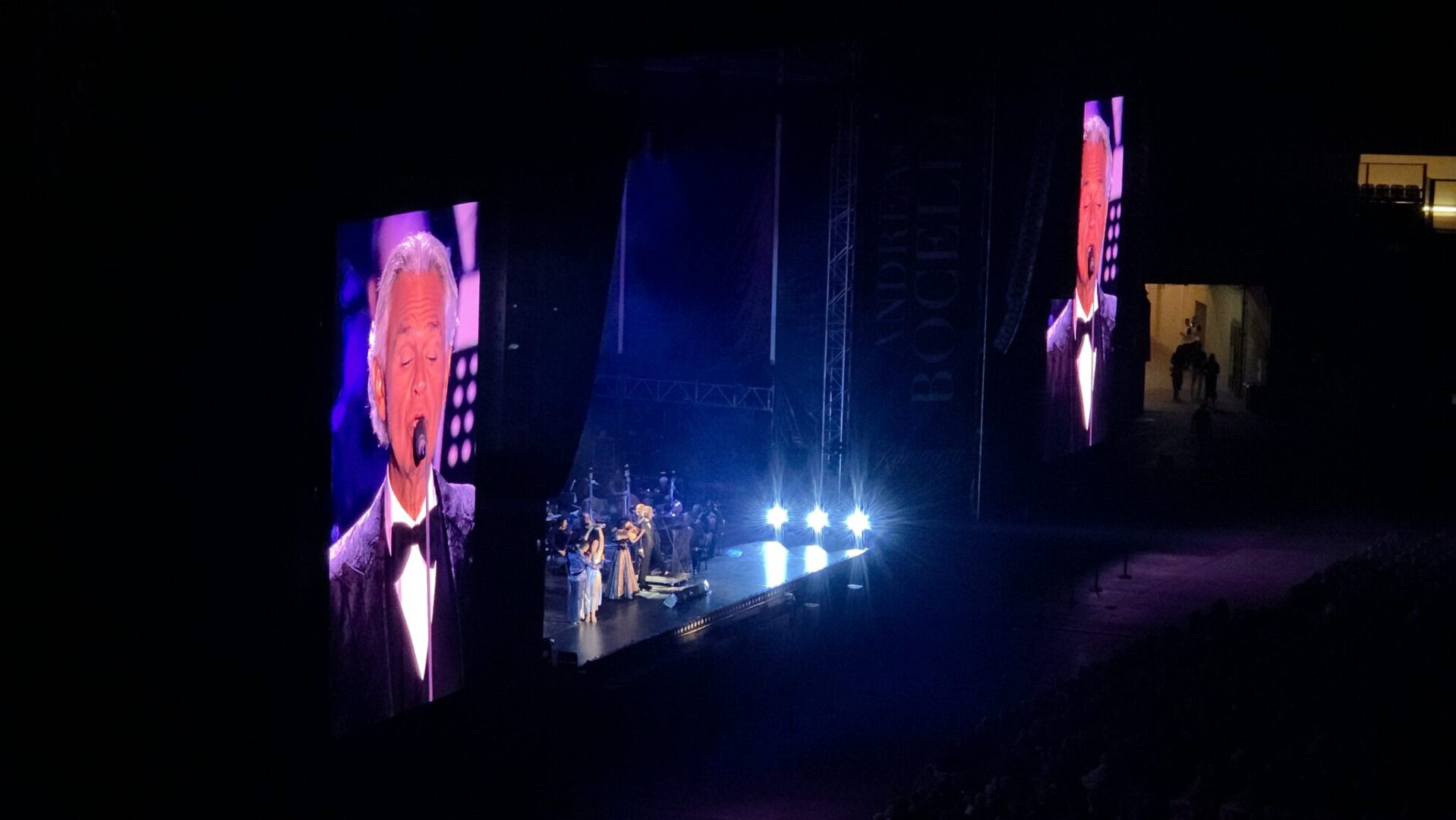
Thank you, Andrea Bocelli, for this extraordinary evening. And, as always, a huge thank you to Vienna for giving Julia and me the opportunity to attend concerts like this and enjoy music that means so much to us.
You may also like these articles
- An Emigrant’s Observations: What “Home” Means After Nine Years Abroad
- An Emigrant’s Observations: My Nine Years in Austria
- An Emigrant’s Observations: Reverse Culture Shock
- My Beloved Vienna: By the Numbers, Not Just from the Heart
- An Emigrant’s Observations: A Fresh Look at the Exhausting Process of Adapting to Another Country
- Photo Report from Donauinselfest 2026. Part Two: Giant Rooks and Another Evening on the Island
- Photo Report from Donauinselfest 2026. Part One: My Ugly Clementine
- An Emigrant’s Observations: The Russian Language Without the “Russian World”
- Marilyn Manson Live in Vienna: A Look Back at the Concert
- An Emigrant’s Observations: Feeling Guilty About My Good Life
- An Emigrant’s Observations: What Surprises Me About the Austrian Attitude to Beer
- LP Live in Vienna: A Look Back at the Concert
- An Emigrant’s Observations: Anti-Putinism and the Imperial Lens
- It’s My Birthday Today!
- My Life in Austria: July 2026
- An Emigrant’s Observations: My Toxic Homeland —Yesterday, Today and Tomorrow
- Ricchi e Poveri Live in Vienna: A Night of Music and Memories
- An Emigrant’s Observations: Simple Ways to Support Your Emotional Well-Being
- Eisenstadt in Pictures: A Day in a Small Austrian City
- Exploring Vienna’s Neubaugasse Flea Market
- Sofia Isella Live in Vienna: A Concert Review
- An Emigrant’s Observations: When Mistakes Become Toxic While Adapting
- An Emigrant’s Observation: Extreme Heat in Europe and Austria in 2026
- My Emigration to Austria: June 2026 Recap