
After moving to another country, many people deal with the most obvious practical matters fairly quickly. They find a place to live, sort out their documents, figure out public transport, and gradually get used to their new city. Everyday responsibilities take up so much energy that there is simply no time left for socialising. But this approach hides an important mistake that people moving to a new country often make.
We have to admit that building a social life can be much more difficult. Old friends are far away, colleagues go home after work, and local residents already have their own established circles of friends. As a result, someone can live in a new country for years, encounter hundreds of people every day, and still hardly develop any real friendships.

The usual advice in such situations is simply to leave the house, go to a bar, and start meeting people. I have said this myself many times. A bar really is one of the easiest places to socialise, especially in European countries. However, this option does not suit everyone. Some people do not like alcohol. Others feel uncomfortable among strangers. And for some, starting a conversation during a run, a football match, a yoga class, or a book discussion is much easier.
In 2026, there are quite a few apps and platforms that help people find these kinds of activities. Through them, you can join a sports session, a language exchange, or a book club, go to a concert with people you have never met, try making pottery, or meet other people over an ordinary dinner.
The main advantage of these services is that you do not have to start by looking for friends. You first find an activity that interests you. The social connections develop naturally around it. Today, I would like to introduce some of these services that are popular in Europe, particularly in Austria.
First, a Few Words About Safety
Important: Meeting people from the internet always requires some basic caution. For a first meeting, it is better to choose a public place where other people are around. It could be a café, a park, a gym, or the venue of an organised event.
It is worth checking the organiser’s profile and the history of previous events. On larger platforms, you can usually see reviews, photographs, and the number of participants. If a group was created only yesterday and immediately asks you to come to a private apartment, it is better to look for another option.
Before going to a meeting, you can tell someone close to you where you are going and when you expect to return. It is also sensible to keep your money, documents, and other valuables with you.
Be particularly careful with people who immediately start pushing investments, network marketing, questionable spiritual practices, or paid courses. A genuine book club usually discusses books. A running group invites people to run. If an ordinary invitation quickly turns into an attempt to sell you something, it is better to end the conversation.
Even a large app cannot guarantee that every participant is trustworthy. It simply gives you more information in advance and helps you choose a meeting that seems safe and straightforward.
Overall, Austria is a fairly safe country, but I still wanted to clarify this important point. Even one unpleasant incident in a million is one too many. At the same time, it is important to understand just how rare such incidents are, rather than use them to justify your fears. Sometimes you need to pull yourself together and get out of the house to adapt better to your new life.
Below is a list of apps worth installing on your phone and at least trying in real life.
Meetup

Website: https://www.meetup.com/
Meetup remains one of the best-known platforms for finding groups based on shared interests. You choose your city and the topics that interest you, and the platform shows you upcoming events nearby.
You can find walking groups, language exchanges, book clubs, and board game evenings. There are also groups for entrepreneurs, technology professionals, photographers, and art enthusiasts.
Vienna has a particularly large number of international English-speaking groups. This makes Meetup a convenient option for someone who does not yet speak German well and wants to start by meeting people in a more open international environment.
Eventbrite

Website: https://www.eventbrite.com/
Many people know Eventbrite as a ticketing platform. However, it can also help you discover a wide range of smaller events, such as tastings, concerts, or painting workshops.
You can also find open-mic nights, lectures, creative activities, and business networking events. Some are free, although advance registration may still be required.
Eventbrite is particularly suitable for people who prefer to start by attending a specific event. Whether they get to know other participants afterwards depends on them.
GemeinsamErleben and Spontacts

Website: https://gemeinsamerleben.com/
Website: https://spontacts.com/
These services are especially popular in German-speaking countries. Users suggest activities themselves and invite other people to join them.
Someone might organise a group walk. Another person might look for someone to go to the theatre with. You can also find invitations to restaurants, trips outside the city, and short hiking excursions.
These platforms can be useful for gradually becoming part of a German-speaking social environment. However, larger cities also have international groups.
BuddyMe

Website: https://buddyme.me/en-AT
BuddyMe originated in Austria and was created specifically to help people find others to spend their free time with.
In your profile, you can say that you are looking for company for sports, walks, or concerts. You will also find people who simply want to meet for coffee and have a conversation now and then.
The service focuses on friendship. This is important for people who do not want to use apps associated with dating.
Bumble For Friends

Website: https://bumble.com/en/the-buzz/bumble-for-friends
Bumble For Friends uses a familiar profile-based format. You browse other people’s profiles and choose those you would like to talk to.
This approach suits people who feel more comfortable getting to know one person at a time. After exchanging a few messages, you can arrange to meet at a café or go for a walk together.
Profiles allow you to see someone’s interests in advance and get an idea of whether you might enjoy spending time together.
Timeleft

Website: https://timeleft.com/
Timeleft offers a more unusual format. The service puts together a small group of strangers and organises a meeting for them.
Most often, it is a dinner. You enter your city, age, language, and a few interests. The app then selects the participants and tells you where to meet.
This format is convenient because you do not have to invite people yourself or spend a long time exchanging messages. You simply turn up at the arranged location and sit down at a table with the group.
InterNations

Website: https://www.internations.org/
InterNations brings together people living outside their home countries. In larger cities, the community organises regular gatherings and themed events.
You can meet entrepreneurs and professionals from different countries. There are also groups dedicated to walking, culture, music, and other interests.
InterNations is often seen as a more professionally oriented international community. However, professional contacts can gradually develop into ordinary personal friendships.
Couchsurfing

Website: https://www.couchsurfing.com/
Many people still associate Couchsurfing with finding free accommodation while travelling. However, the service also has local communities and events for city residents.
You can use it to meet travellers and emigrants who want to explore the city together, attend an event, or simply have a conversation.
The people using the platform come from very different backgrounds. Before meeting anyone, it is particularly important to read profiles carefully and choose public events with several participants.
Strava Clubs
Website: https://partners.strava.com/clubs
Strava is suitable for people who enjoy running, cycling, or other endurance sports.
The app has clubs based in specific cities. They share routes and organise group training sessions. Some groups meet every week.
This format makes meeting people much easier. During a run, you do not have to invent a topic of conversation. People naturally discuss the route, their training, and upcoming competitions.
Playtomic

Website: https://playtomic.com/
Playtomic helps people find courts and playing partners for tennis, padel, and other racket sports.
Through the app, you can sign up for an open game even if you do not already have a group to play with. The service brings together players of roughly the same ability and also allows you to join tournaments.
Padel is particularly good for meeting people because it is usually played in groups of four. After your first game, you can already arrange to meet for another one.
Eversports
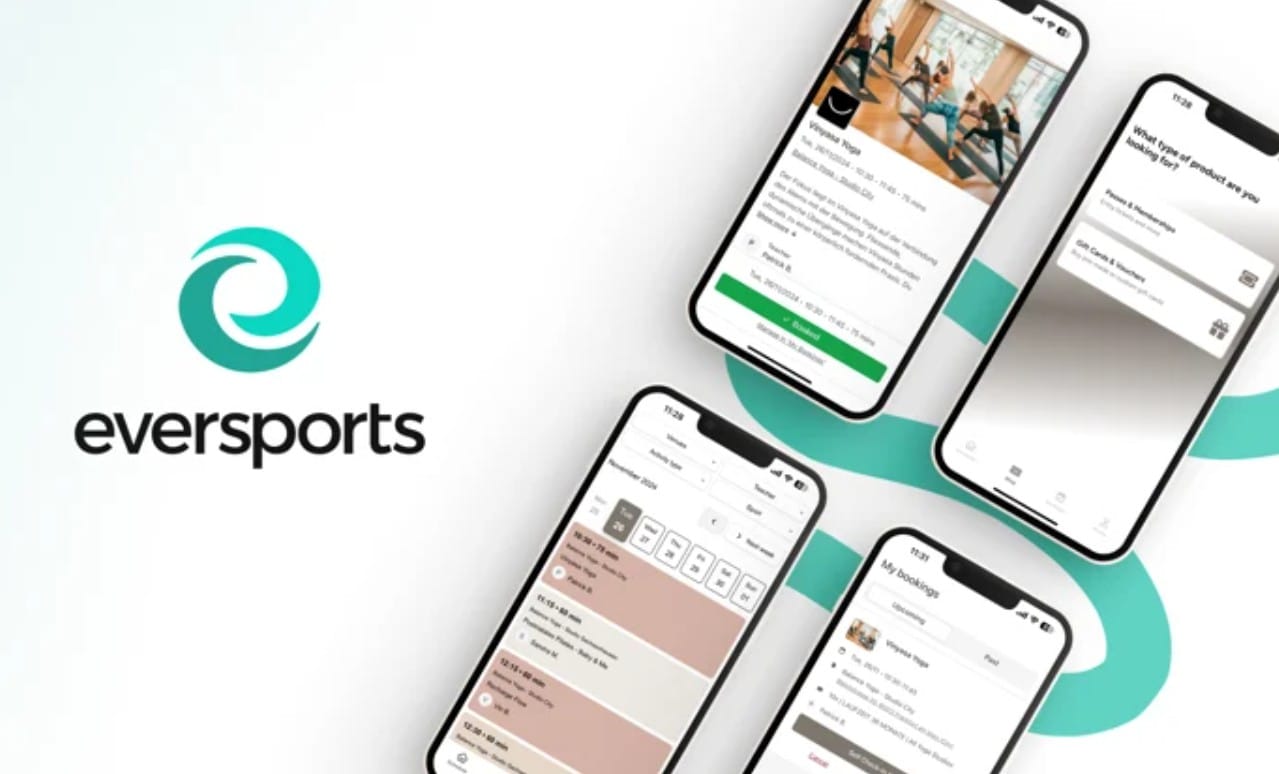
Website: https://www.eversports.at/
Eversports is widely used in Austria to find sports and fitness classes. Through the platform, you can book yoga, Pilates, dance classes, and group workouts.
You can check studio schedules in advance and choose classes offered in a language that suits you. Vienna has quite a few classes taught in English.
The app itself is designed for bookings, so it does not promise to find you friends automatically. But attending the same group regularly gradually helps you build a circle of familiar faces.
JUGAD
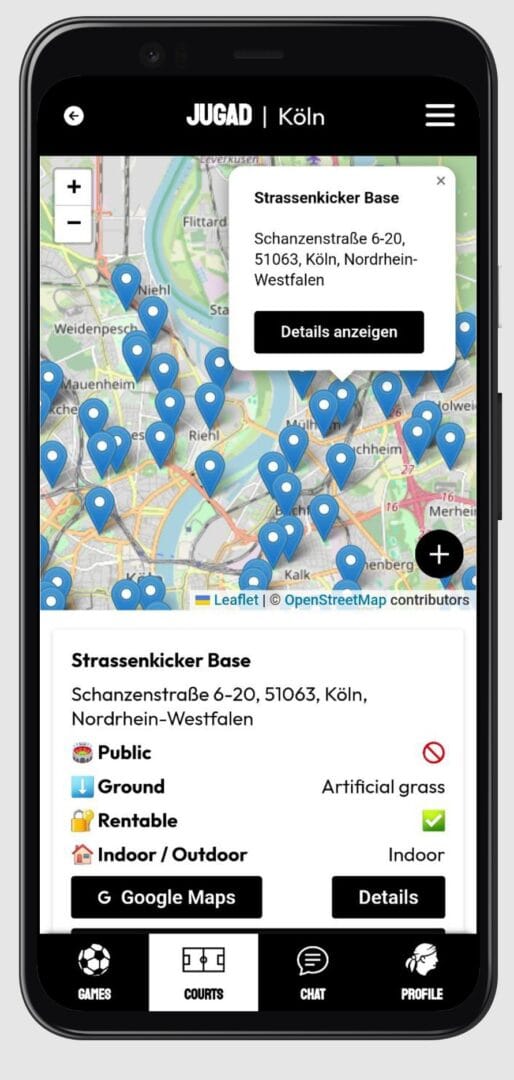
Website: https://jugad.eu/
JUGAD is aimed at people who want to play amateur football.
Through the service, you can join a match even if you have only recently arrived in the city and do not know any of the other players yet. You simply choose a suitable game and register.
Football brings people together quickly. After a few matches, players often end up with a shared group chat, a regular team, and invitations to other games.
Tandem and HelloTalk

Website: https://tandem.net/ru
Website: https://www.hellotalk.com/en/
Tandem and HelloTalk are designed for language exchange. You indicate which languages you speak and which ones you want to learn.
You can start by chatting in the app and later arrange to meet someone in your city. One person helps with Russian, while the other answers questions about German or English.
Language exchange provides a natural reason to start talking. However, it is important to agree in advance how much time you will spend speaking each language. Otherwise, the meeting can quickly turn into a free lesson for just one participant.
Peanut and Momunity

Website: https://www.peanut-app.io/
Website: https://momunity.com/
Peanut and Momunity are primarily designed for women, including pregnant women and new mothers.
After having a baby, a person’s social circle often becomes much smaller. Regular meetings with friends become more difficult, and most of the day revolves around a new schedule. These apps can help women find other mothers with children of a similar age.
Users arrange walks and activities together. They also share practical information about doctors, nurseries, and raising a child in a new country.
Meet5 and Stitch
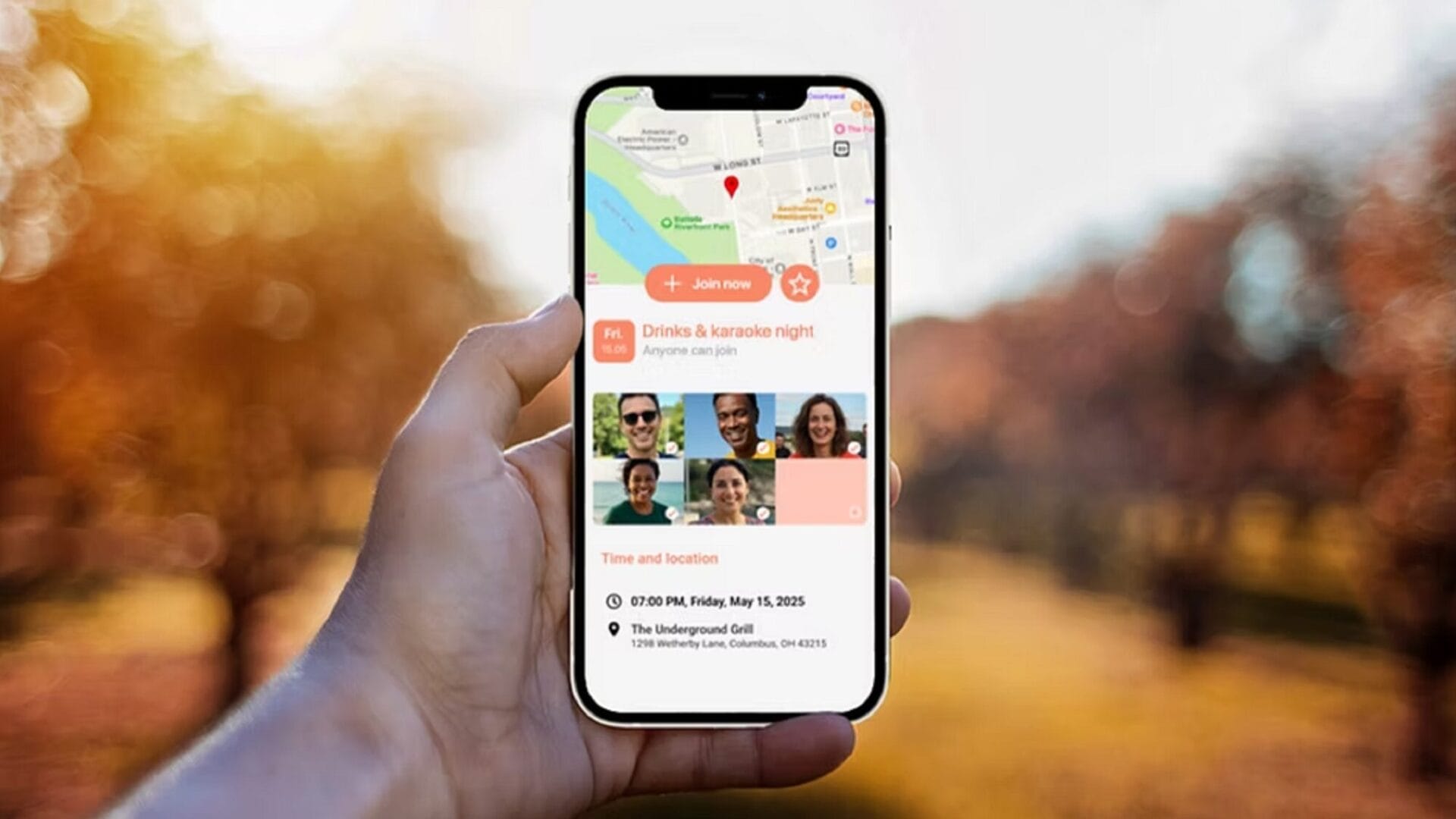
Website: https://www.meet5.com/
Website: https://www.stitch.net/
Meet5 and Stitch are aimed at middle-aged and older adults.
Meet5 helps organise small groups for café visits, walks, and attending events together. Stitch focuses more on people over 50 and includes communities based on shared interests.
These services can be particularly valuable for people who do not feel comfortable using apps aimed at younger users. They make it easier to find people of a similar age and with comparable life experiences.
How These Platforms Differ
Meetup is useful for finding existing groups. You choose a particular interest and join an event.
Eventbrite is better suited to one-off events. You find a lecture, concert, or workshop and meet people there. BuddyMe and Bumble For Friends allow you to start with one-to-one communication. This is a good option for people who prefer to meet one person first. Timeleft organises almost the entire first meeting for you. All you have to do is turn up for dinner and meet the group selected for you. Strava, Playtomic, Eversports, and JUGAD connect people through physical activity. Social connections develop through regular training sessions and games. Tandem and HelloTalk are suitable for people who also want to practise a language. Peanut and Momunity focus on the experiences of mothers. Meet5 and Stitch help older adults find company. InterNations focuses on the international community and often overlaps with professional networking. GemeinsamErleben and Spontacts are more closely connected with German-speaking communities and shared leisure activities.
Where Should You Start?
There is probably no point in installing every app at once. To begin with, you can choose two or three platforms that match your interests. For example, one service for sports and another for general social activities. Or a language exchange app together with Meetup. Then enter your city, set your interests, and enable notifications about new events.

You do not necessarily have to sign up for your first meeting straight away. Sometimes it is enough to spend a few weeks looking at what is happening nearby. Gradually, you will start recognising regular groups and familiar organiser names. Eventually, you may find an event you genuinely want to attend.
When living abroad, people are often so busy with work and everyday problems that they almost stop noticing everything else around them. These apps remind you that running sessions, concerts, games, and social gatherings are happening nearby. Somewhere, people are discussing books. Somewhere else, a football team is getting together. Someone is looking for company for a walk or a visit to an exhibition.
You can simply install a few services and start exploring. Perhaps one day, among all the ordinary notifications, you will see exactly the event that makes you want to leave the house. And that event may gradually lead to new acquaintances, interests, and a wider social circle.
An Important Reminder!
Socialising after emigration is just as important a part of looking after yourself as sleep, rest, and physical activity. Meeting people, going to a concert, or spending a few hours with a sports group has real practical value. These experiences give your brain a chance to step away from constantly solving problems and gradually help you feel that you have a normal life in your new country.
Researchers Jingyeong Song, Jonathan Corcoran, and Renee Zahnow analysed 43 scientific studies on the social lives of migrants and refugees. They concluded that social support, participation in community activities, and a sense of belonging were associated with better psychological well-being and greater life satisfaction after moving. The review also examined sports and other leisure activities. These activities helped people build connections with those around them and feel part of their new environment.

Anouk Smeekes, Maykel Verkuyten, and their colleagues studied 361 Syrian refugees in Turkey. People who managed to maintain a sense of belonging to social groups after moving were more likely to report greater life satisfaction and fewer depressive symptoms. Kristine Brance, Vasileios Chatzimpyros, and Richard Bentall later described a similar process among first-generation migrants. New communities provided people with support, meaning, and a sense of having their own place in a changed life.
That is why a free evening spent running, attending a book club, or talking with a group of people has value in its own right. You gradually create safe places, familiar faces, and new parts of your life around you. It is through these repeated encounters that a sense of home begins to develop. Constantly solving problems helps you get through today. Social connections help you want to stay in your new country and continue building your life there.
You may also like these articles:
- An Emigrant’s Observations: What “Home” Means After Nine Years Abroad
- An Emigrant’s Observations: My Nine Years in Austria
- An Emigrant’s Observations: Reverse Culture Shock
- My Beloved Vienna: By the Numbers, Not Just from the Heart
- An Emigrant’s Observations: A Fresh Look at the Exhausting Process of Adapting to Another Country
- Photo Report from Donauinselfest 2026. Part Two: Giant Rooks and Another Evening on the Island
- Photo Report from Donauinselfest 2026. Part One: My Ugly Clementine
- An Emigrant’s Observations: The Russian Language Without the “Russian World”
- Marilyn Manson Live in Vienna: A Look Back at the Concert
- An Emigrant’s Observations: Feeling Guilty About My Good Life
- An Emigrant’s Observations: What Surprises Me About the Austrian Attitude to Beer
- LP Live in Vienna: A Look Back at the Concert
- An Emigrant’s Observations: Anti-Putinism and the Imperial Lens
- An Emigrant’s Observation: How Big Is Our Small World?
- An Emigrant’s Observation: How Difficult Is It to Make New Friends?
- It’s My Birthday Today!
- My Life in Austria: July 2026
- An Emigrant’s Observations: My Toxic Homeland —Yesterday, Today and Tomorrow
- Ricchi e Poveri Live in Vienna: A Night of Music and Memories
- An Emigrant’s Observations: Simple Ways to Support Your Emotional Well-Being
- Eisenstadt in Pictures: A Day in a Small Austrian City
- Exploring Vienna’s Neubaugasse Flea Market
- Sofia Isella Live in Vienna: A Concert Review
- An Emigrant’s Observations: When Mistakes Become Toxic While Adapting
- An Emigrant’s Observation: Extreme Heat in Europe and Austria in 2026
- My Emigration to Austria: June 2026 Recap