
In 1938, Lise Meitner was one of the leading physicists in Europe. She had her own laboratory, decades of research behind her, and work that was approaching a major discovery. But one day Meitner was forced to board a train with only two small suitcases and leave the country that had become her home. Ahead of her lay a foreign language, uncertainty, and the need to start a life almost from scratch. She did not yet know that the most important discovery of her scientific career would be made far from the laboratory she had been forced to leave behind.
Lise Meitner
Lise Meitner (German: Lise Meitner, English: Elise Meitner) became one of the outstanding researchers of the 20th century. She made an enormous contribution to the development of nuclear physics and helped to explain the process of nuclear fission. Her scientific career, however, was closely tied to the tragic events of European history. In 1938, when Meitner was almost 60, she had to flee Nazi Germany and leave behind her laboratory, her colleagues and the life she was used to. She made her greatest discovery already in emigration, having practically lost the opportunity to do experimental work.
Childhood and education in Vienna
Lise, whose full name was Elise, was born on 7 November 1878 in the capital of Austria-Hungary and grew up in a large Jewish family in Vienna’s Leopoldstadt district. Her father, Philipp Meitner, worked as a lawyer, and her mother, Hedwig, née Skovran, raised eight children. Her parents held liberal views and regarded education as one of the main values in life, so they encouraged their daughters’ interest in science, despite the restrictions of the time.
At the end of the 19th century, Austrian women were still unable to receive a higher education on equal terms with men. After finishing ordinary school, Lise first passed the exam that qualified her to teach French, and then prepared on her own for the exams of the gymnasium course. In 1901, at the age of 22, she received her school-leaving certificate and enrolled at the University of Vienna, where women’s education had become available only a few years earlier.
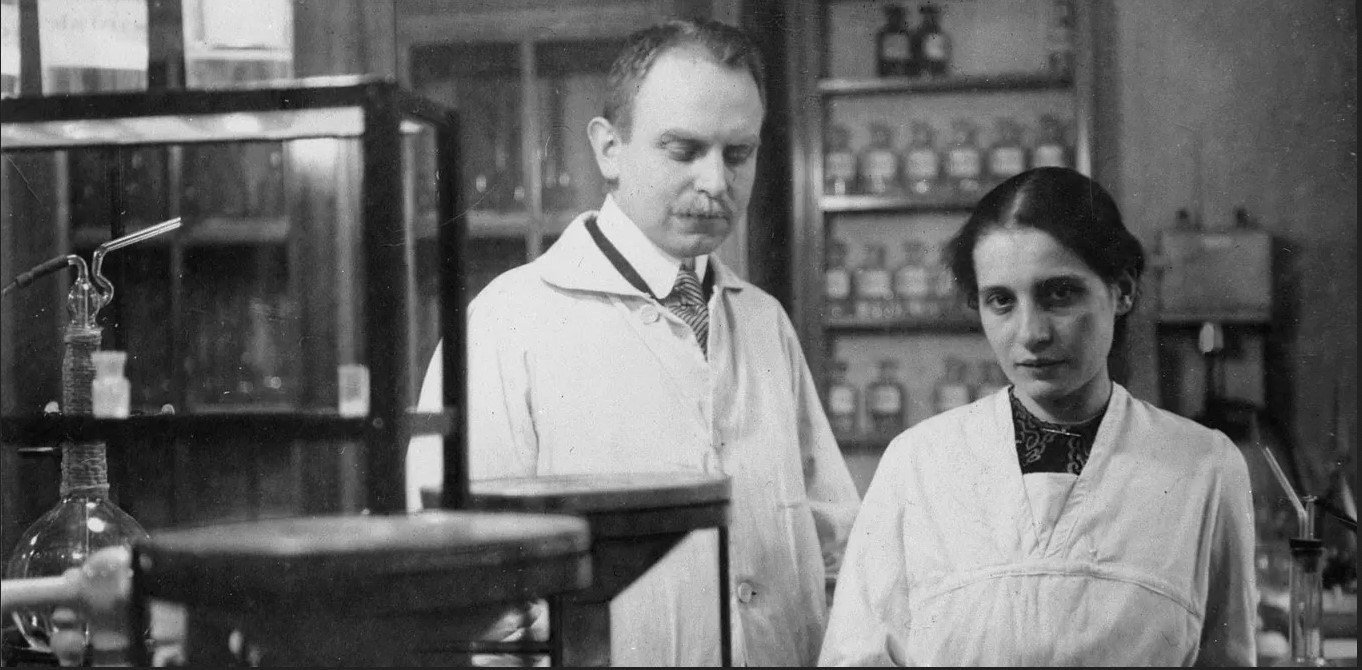
Meitner’s main passion was physics. Among her teachers was the famous Ludwig Boltzmann, whose lectures made an enormous impression on the young student. She later recalled his ability to explain the most complex laws of physics with such enthusiasm that his listeners began to see scientific research as a real adventure.
In 1906, Meitner defended her doctoral dissertation in physics, becoming the second woman in the history of the University of Vienna to receive such a degree in this field. Scientific opportunities for women in Austria, however, were still few. Unable to secure a place in Marie Curie’s laboratory in Paris, Meitner decided to continue her education in Berlin, where she went in 1907.
Berlin and the start of her scientific career
In Germany, Lise hoped to attend lectures by the famous physicist Max Planck and to carry out research on radioactivity. Soon, however, it became clear that even in one of Europe’s main scientific centres, women were far from always allowed to work on equal terms with men. In Prussia, women still had no right to enrol officially at universities. Meitner was allowed to attend some lectures, but her position at the chemical institute was much more difficult. Because women were not admitted to the main laboratory rooms, she had to work in a former carpentry workshop and use a separate entrance. At first she received no salary at all for her research.
It was in Berlin that Meitner met the young chemist Otto Hahn, who was also working on radioactive substances. Their scientific interests complemented each other perfectly: Hahn had outstanding skills in chemical analysis, while Meitner had a deep understanding of physical processes. Their collaboration, which began in 1907, lasted more than 30 years and became one of the most important in the history of nuclear physics.
Gradually, Meitner’s position improved. In 1912, she moved together with Hahn to the newly established Institute of Chemistry of the Kaiser Wilhelm Society in Berlin’s Dahlem district, and the following year she received an official scientific post. Her research on radioactive decay and the behaviour of atomic nuclei began to attract international attention.
The First World War temporarily interrupted her work. In 1915, Meitner trained and went to serve as an X-ray nurse in an Austrian hospital on the Eastern Front. Like many of her contemporaries, she shared patriotic feelings at the beginning of the war. In one letter, Meitner even congratulated Hahn on the success at Ypres, where German troops used poison gas on a large scale for the first time. She herself took no part in developing chemical weapons, and her attitude to the war and to the use of science for military purposes later changed considerably.
After returning to Berlin, Meitner resumed her joint research with Hahn. In 1917, they succeeded in discovering a long-lived isotope of protactinium, the element with atomic number 91. This discovery strengthened their international reputation, and Meitner herself soon headed the institute’s radiophysics department. In 1922, she gained the right to teach independently at the university, and in 1926 she became the first woman in Germany to be awarded the title of professor of physics.
By the early 1930s, Lise Meitner was among the leading European specialists in radioactivity. She had her own research group, a well-equipped laboratory and wide scientific connections. Berlin, where she had once come to study, had become her true home over the course of a quarter of a century.
Nazi Germany
After Adolf Hitler came to power in 1933, Meitner’s position began to change rapidly. Because of her Jewish origin, she was deprived of the right to teach at the university, but she could still continue her research at the Institute of Chemistry. Meitner remained an Austrian citizen, and for some time this status protected her from the harshest restrictions introduced for Jews in Germany.
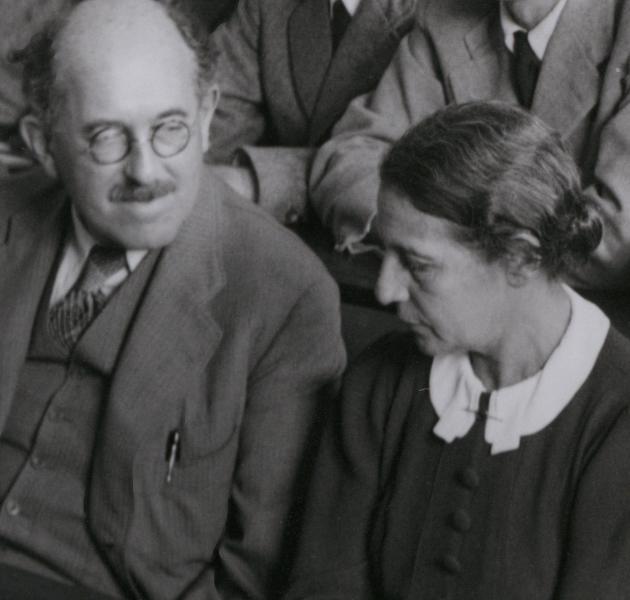
At first, like many others in the German scientific community, she underestimated the danger of the new regime. It seemed to her that the political upheaval might prove temporary and that scientific institutions would retain a certain independence. Even when acquaintances and colleagues began leaving Germany, Meitner kept working, unwilling to part with her laboratory and the results of many years of research.
In 1934, she proposed to Hahn and the young chemist Fritz Strassmann that they begin experiments on irradiating uranium with neutrons. The scientists hoped to discover new, still unknown chemical elements heavier than uranium. The research gradually became more and more interesting, and Meitner was completely absorbed in her work.
But in March 1938, Germany annexed Austria. For Lise, this event meant not only the disappearance of the country whose citizen she remained, but also the loss of her last legal protection. The Nazi racial laws now applied to her in full, and leaving Germany was becoming increasingly difficult. Friends and colleagues urged Meitner to save herself immediately, but the decision came hard to her. She would have to leave the country where she had spent most of her adult life, give up the leadership of her laboratory, and abandon research that was approaching its most important results. Gradually it became clear that further delay might end in arrest.
Escape from Germany
The preparations for her departure were carried out in secret. Otto Hahn, together with the Dutch physicist Dirk Coster and other colleagues, arranged a way for her to cross the German-Dutch border. It proved impossible to obtain official permission to leave, so the whole operation involved serious risk.
On 13 July 1938, Meitner left Berlin by train, accompanied by Coster. So as not to arouse suspicion, she took only two small suitcases with summer clothes and 10 German marks. Hahn gave her a diamond ring that had belonged to his mother, in case she needed to pay for help along the way. Border control turned out to be one of the most tense moments of the journey. Any check of her documents could have ended in detention, but thanks to Coster’s advance arrangements, Meitner managed to enter the Netherlands safely. From there she travelled through Denmark to Sweden, where, with the help of Niels Bohr and other scientists, she obtained a temporary position at the Nobel Institute for Physics in Stockholm.
For a woman of almost 60, who had spent most of her life in a secure position in the German scientific community, starting over proved extremely hard. In Berlin she had colleagues, students, a laboratory and equipment that she had spent decades building up. In Sweden, Meitner found herself a foreigner, dependent on the support of local researchers and practically deprived of the conditions she was used to for scientific work. The head of the institute, Manne Siegbahn, gave her a place but did not provide a proper experimental laboratory. Meitner complained to friends that she had to use one small room as both an office and a research space, with other staff constantly passing through it. Her relationship with the head of the institute was not easy, and the possibilities for continuing her earlier experiments remained very limited. It was especially hard to know that the uranium research was continuing in Berlin without her direct participation. Nevertheless, her scientific ties were maintained through correspondence with Otto Hahn, who continued to tell her about the results of the experiments. It was this correspondence that soon led to one of the most important discoveries of the 20th century.
A discovery made in emigration
In December 1938, Hahn and Strassmann found an unexpected substance among the products of irradiated uranium: barium. Its atomic nucleus was much lighter than that of uranium, so the results of the chemical analysis seemed to contradict the existing ideas about the structure of atoms. Hahn could not explain how such a light substance could have come from heavy uranium. He wrote to Meitner, setting out the results in detail and asking her to help him understand what was happening.
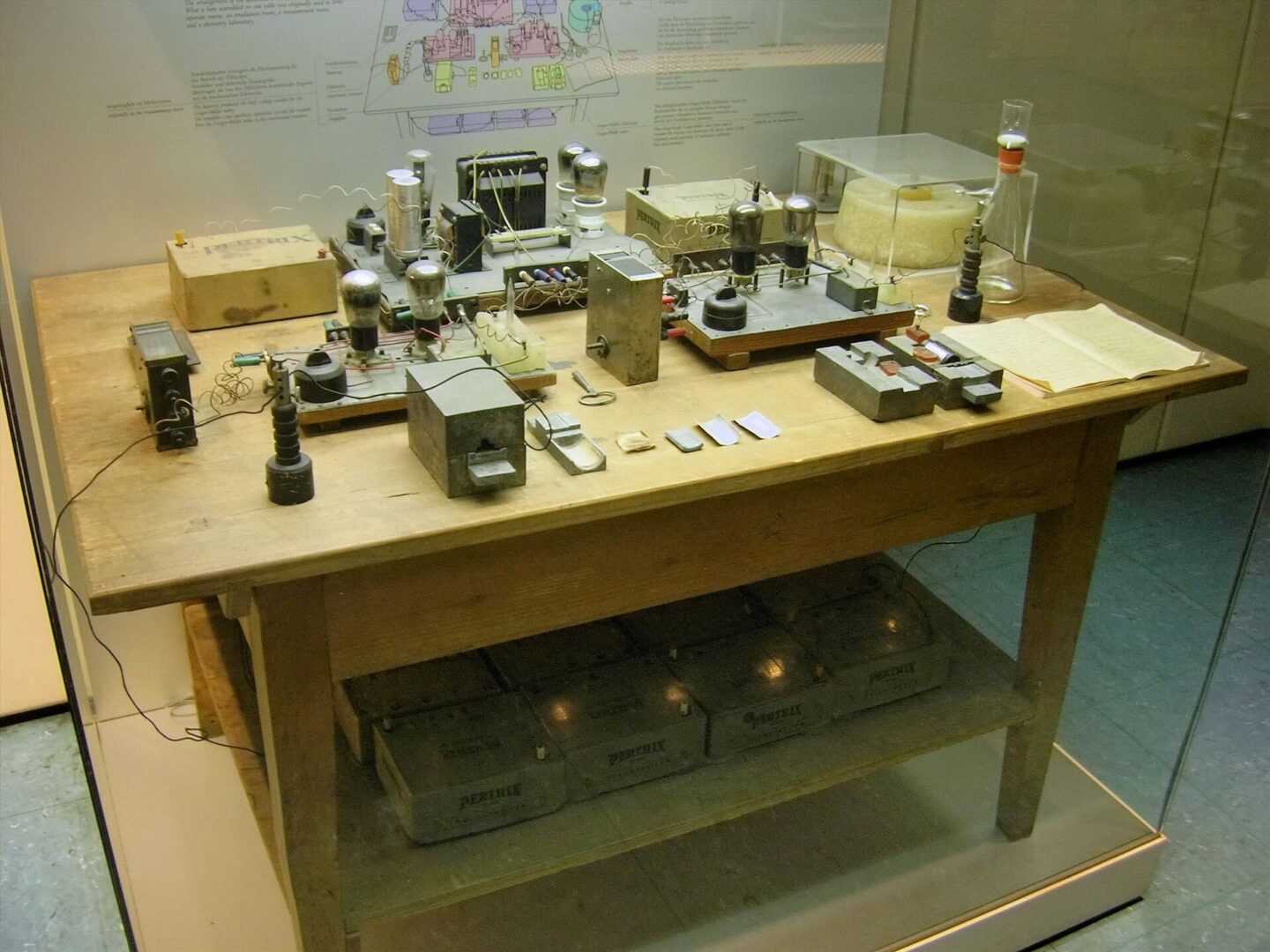
For the Christmas holidays, Lise went to stay with acquaintances in the small Swedish town of Kungälv, where she met her nephew Otto Robert Frisch, a young physicist who was working with Niels Bohr in Copenhagen. During walks through the snowy countryside, they discussed Hahn’s letter and tried to imagine what happens to an atomic nucleus when it collides with a neutron. Gradually they arrived at a conclusion that had until recently seemed almost unbelievable: the heavy nucleus of uranium can split into two lighter nuclei. Using their understanding of the structure of the atomic nucleus and Einstein’s famous formula linking mass and energy, Meitner and Frisch calculated that such a splitting should release an enormous amount of energy. At the beginning of 1939, their explanation was published in the British journal Nature. Frisch suggested calling the process they had identified nuclear fission, by analogy with the division of a living cell.
Thus the experimental detection of the products of fission belonged to Hahn and Strassmann, while Meitner and Frisch gave the physical explanation of the phenomenon and established its energy significance. Their work became the basis for the further development of nuclear physics and research into atomic energy.
What was special about this story was that Meitner took part in a major discovery when she was already outside Germany. She had lost the opportunity to work in her own laboratory, but she kept the knowledge, experience and connections that allowed her to complete research begun back in Berlin.
The war and the Nobel Prize
The discovery of nuclear fission quickly acquired a significance that reached far beyond scientific laboratories. It became clear that under certain conditions the energy released could be used to create a new weapon of extraordinary destructive power.
During the Second World War, the United States began developing the atomic bomb as part of the Manhattan Project. Meitner was invited to join the research, but she refused. By this time her attitude to war had become firmly pacifist, and she did not wish to take part in creating a weapon of mass destruction.
In Sweden, Meitner continued to work in physics, although her working conditions remained considerably more modest than before. Gradually she restored her professional connections, took part in scientific discussions and received invitations to give lectures abroad.
In 1945, it became known that the Nobel Prize in Chemistry for 1944 had been awarded to Otto Hahn for the discovery of the fission of heavy atomic nuclei. The names of Meitner, Frisch and Strassmann were absent from the list of laureates. The decision caused controversy that continues to this day. Meitner had taken part in the research that led to the discovery, and her subsequent work with Frisch explained the physical nature of nuclear fission. The Nobel Committee, however, recognised only the chemical side of the discovery.
Historians of science have since pointed out that Meitner’s forced emigration played a significant role in how scientific credit was distributed. She had been cut off from the Berlin research group at the very moment when the experiments were approaching a decisive result, and her contribution came to be seen separately from the work of her colleagues. Meitner herself acknowledged the importance of the experimental discovery by Hahn and Strassmann, but believed that her own role and Frisch’s work also deserved serious recognition. Over her scientific career she was nominated for the Nobel Prize dozens of times, yet she never became a laureate.
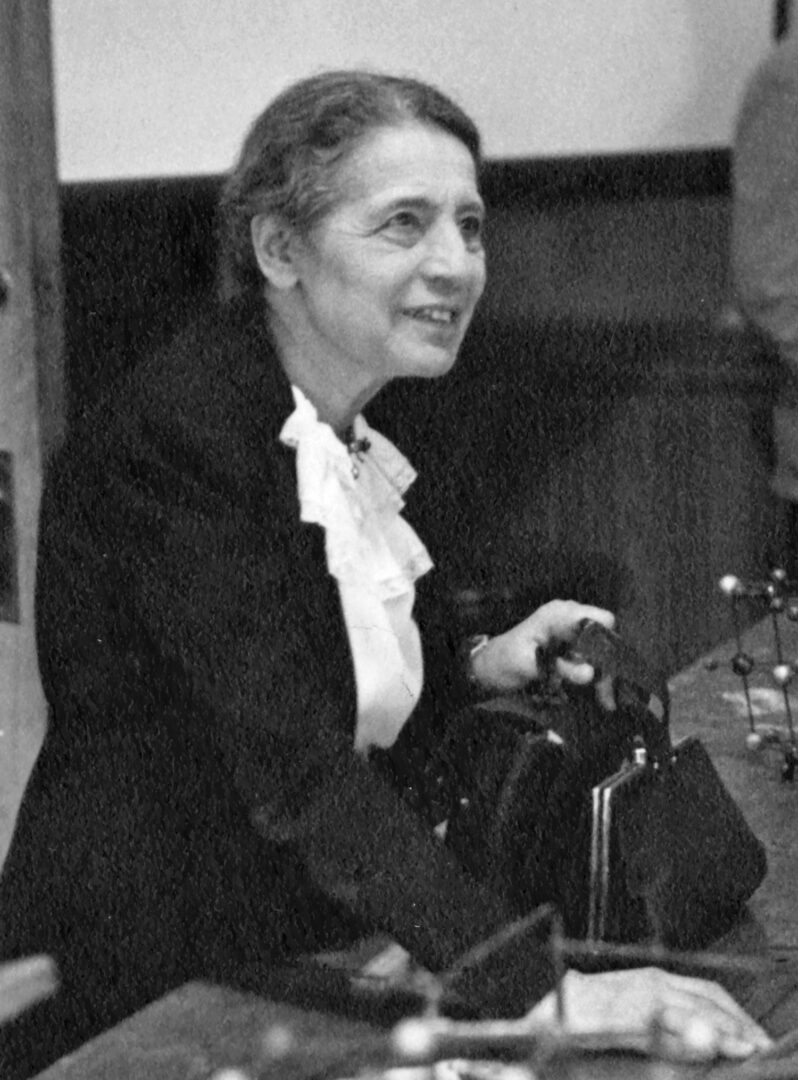
Another circumstance proved especially painful for her. After the end of the war, Meitner was critical of the conduct of the German scientific community, many of whose members had preferred to keep their posts rather than speak out against the lawlessness of the Nazi regime. Even in her relationship with Hahn, who remained a close friend, this subject caused painful disagreements.
A new life after the war
In 1946, Meitner went to the United States on a lecture tour, where she unexpectedly found herself at the centre of public attention. American journalists presented her as a woman who stood at the origins of the atomic age, and some even called her “the mother of the atomic bomb”. She found such a description irritating. She had deliberately refused to take part in developing weapons, and she thought it unfair to link her scientific work above all with the destructive consequences of the discovery.
By this time, Meitner had gradually managed to restore her position in the scientific world. In 1947, she received a research professorship in Stockholm and began working at the Royal Institute of Technology. Her conditions improved considerably compared with the first years of emigration, although her former research team no longer existed.
In 1949, Meitner took Swedish citizenship while also keeping her Austrian citizenship. Sweden became the country where she spent more than 20 years, but her scientific and personal ties continued to link her with Central Europe.
After the war, Meitner visited Germany many times, took part in conferences and met her former colleagues. She kept up her friendship with Otto Hahn, despite their disagreements over scientific recognition and the responsibility of German scientists during the Nazi years. She refused, however, to return to Germany to work permanently.
In the following years, her achievements received numerous awards. In 1949, together with Hahn, Meitner was awarded the Max Planck Medal; in 1955 she became a foreign member of the Royal Society of London; and in 1966 she received the American Enrico Fermi Award jointly with Hahn and Strassmann. The opening in 1959 of the Hahn-Meitner Institute for Nuclear Research in Berlin was especially symbolic, and both scientists attended the ceremony.
Her final years
In 1960, after the end of her active scientific work in Sweden, Meitner moved to Cambridge in England, where her relatives lived, including her nephew Otto Frisch. She was already 82, yet she continued to take part in the scientific community, meet colleagues and give lectures.
In old age, Meitner thought a great deal about the consequences of the discoveries to which she had devoted her life. She supported the peaceful use of atomic energy and spoke out against nuclear weapons, believing that scientific progress is inevitably bound up with researchers’ responsibility for the possible applications of their achievements.
Lise Meitner died on 27 October 1968 in Cambridge, shortly before her 90th birthday. She was buried in the English county of Hampshire, next to the grave of her younger brother Walter. On the gravestone, at the suggestion of her nephew Otto Frisch, appeared the inscription: “A physicist who never lost her humanity.”
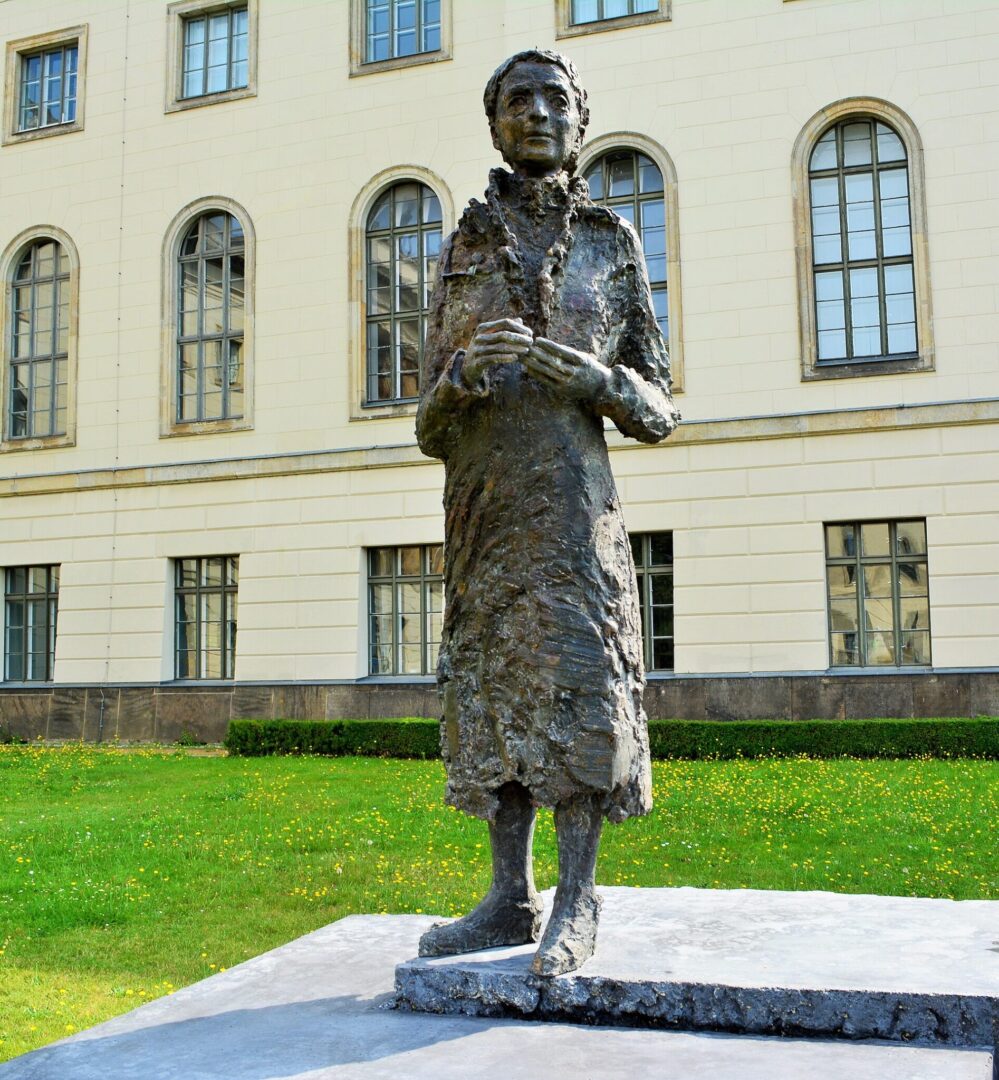
After Meitner’s death, her scientific contribution received further recognition. In 1997, the chemical element with atomic number 109, discovered earlier, was officially named meitnerium. Scientific institutions, streets, prizes, and craters on the Moon and Venus have also been named after her.
Lise Meitner spent most of her life far from Vienna, where she was born and educated. Berlin, which became the centre of her scientific career, she had to leave at the very peak of her professional abilities. In Sweden, Meitner was forced to look anew for her own place in the scientific world, and later she moved again, this time to Britain. Emigration deprived her of her familiar surroundings, her laboratory and the chance to continue many of her investigations independently. Yet it was in these circumstances that she managed to make a decisive contribution to explaining one of the most important physical phenomena of the 20th century. Her later life passed between several countries, none of which could fully replace the world that remained in pre-war Europe.
About the project:
My name is Anatoly, and I am the author of Emigrants.life. In 2017, my family and I emigrated from Krasnodar to Austria. My wife and I work in marketing, and we created Emigrants.life to help people who are thinking about moving abroad.
Emigrants.life publishes daily news about life and everyday matters in Austria and Europe. Follow us on Facebook, Instagram and Twitter, or join our Russian-language Telegram channel.