
For the past ten years, my relationship with my homeland has resembled that of two people trapped in a toxic relationship: one is a sadist, while the other wants to end all contact with him, but the sadist keeps finding him and continues the persecution. During the ten years of my own emigration and the twelve years of our family’s emigration, my homeland has constantly made our situation worse. Instead of even the most basic support, I face new problems every time. Because of them, I have to change my life, reconsider my priorities, and make decisions that would never have arisen under different circumstances. Today, I want to talk about a piece of news that appeared this week and how it may affect my life. It concerns a huge number of emigrants who left Russia because they do not support the country’s current government.
On 22 July 2026, the State Duma passed two related bills in both their second and third readings on the same day. Two days later, the package was approved by the Federation Council. At the time of writing, there had been no official announcement that Vladimir Putin had signed the legislation or that it had been published, but in modern Russia this is merely a formality.
The new rules will apply to people outside Russia whom the Russian authorities consider to be evading a criminal sentence or an administrative penalty. Before restrictions can be imposed, a court judgment or a decision on an administrative penalty must enter into force. Russian state bodies will then be able to declare the person an evader and add their name to a public register maintained by the Ministry of Justice.
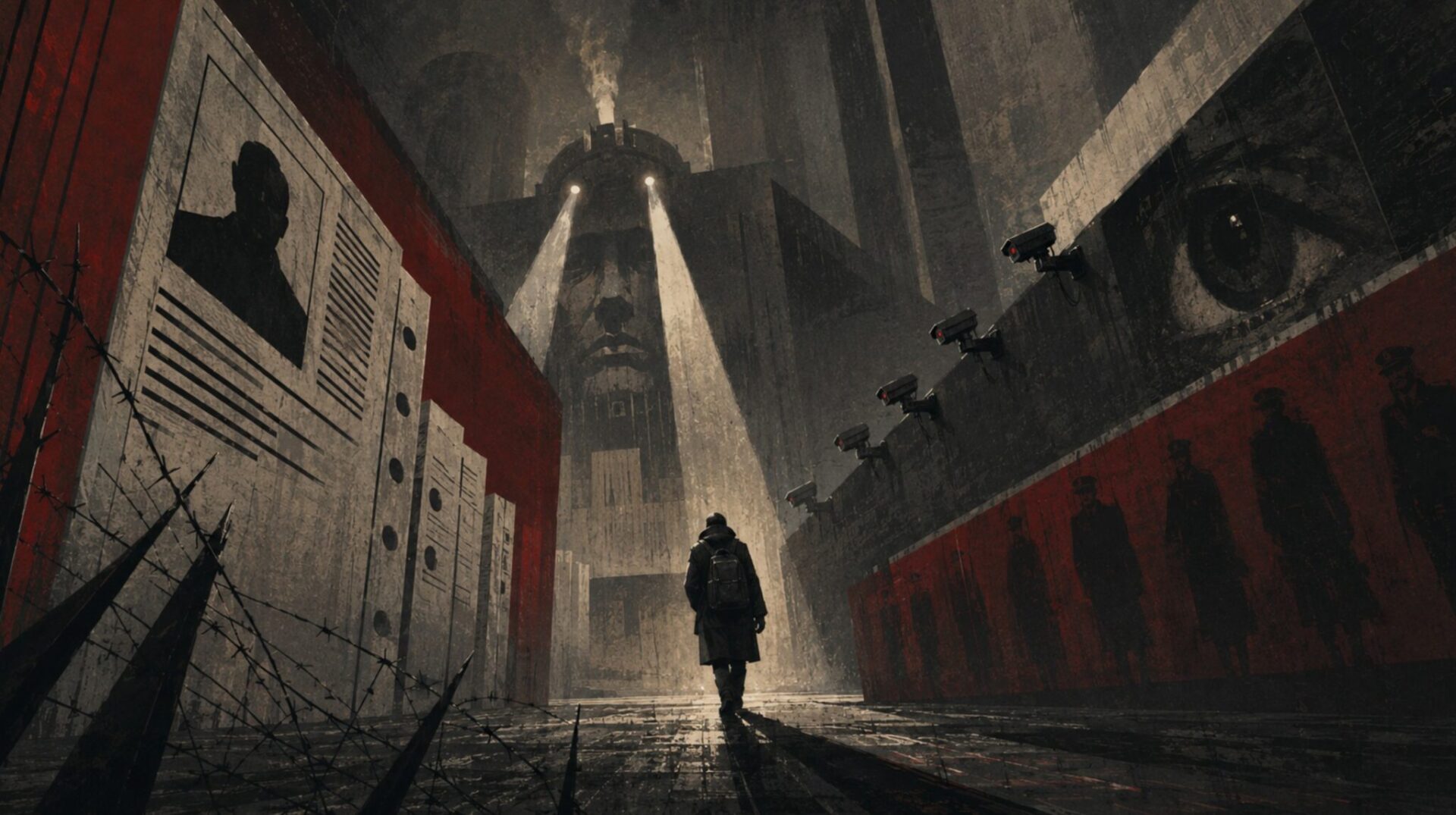
What makes this especially dangerous is that the grounds explicitly include laws that the Russian authorities constantly use against their political opponents. These include violations of the legislation on “foreign agents,” the “discrediting” of the army, calls for sanctions, and cooperation with “undesirable organisations.” The criminal part of the law is written even more broadly and allows restrictions to be imposed after a conviction under any article of the Criminal Code.
In total, the law provides for fourteen restrictive measures. A person may be refused a new international passport. A consulate will also refuse to accept an application to renounce Russian citizenship. Most consular and notarial services will become unavailable, making it almost impossible to issue a power of attorney or obtain necessary documents through a Russian diplomatic mission.
Russian banks will be required to block access to mobile banking applications and money transfers. Money and other property may be frozen, while any new funds received will be transferred to a special rouble-denominated account. The person will also be unable to obtain credit or take out a loan.
The restrictions will also affect property and vehicles. A person will be unable to register transactions normally, manage property through a power of attorney, or use an electronic signature. Access to government services online will be blocked. They may also be refused registration as an individual entrepreneur or a self-employed person.
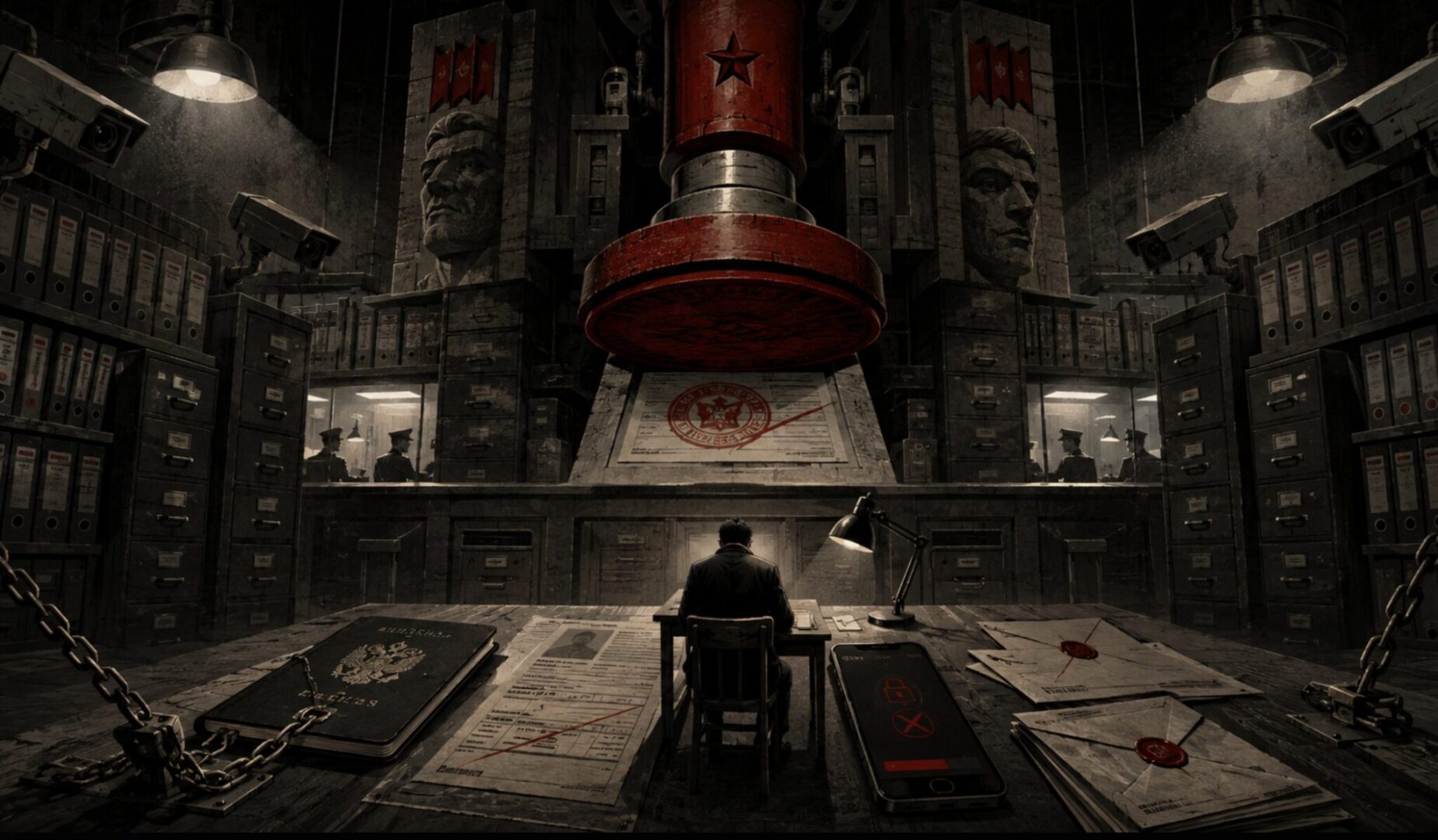
The word “temporary” in the name of this law sounds especially cruel and mocking. The restrictions have no fixed time limit. They may remain in force until the punishment is carried out, the decision is overturned, or the person returns to Russia. For a political emigrant whose return could lead to imprisonment, this regime may continue for the rest of their life.
When the full-scale war began in February 2022, I remember listening again to Erich Maria Remarque’s novel Flotsam. I thought about the people whom Germany had stripped of citizenship, leaving them alive but unable to obtain valid documents, settle in another country, or feel safe anywhere.
Many emigrants from Russia may now find themselves in a different but, in many ways, similar situation. It looks extremely difficult and tragic. I have no kind or positive words for what is now happening in Russia. The actions of the country’s authorities lie far beyond the boundaries of normal human or governmental behaviour.
Remarque himself was stripped of German citizenship, and the theme of a lost homeland carried particular weight in his books. In the case of Russian emigrants, Putin’s government has invented another form of abuse. A person formally remains a Russian citizen, while at the same time being denied access to documents and prevented from renouncing that citizenship. The Russian passport becomes an instrument of personal punishment, revenge, and resentment against anyone who dared to leave and choose a life that suited them.
Like many dictators, Putin sees the country he rules as his personal property. He has also repeatedly presented the Russian language as something belonging to the state. Now, in his view, a passport becomes a promise of personal loyalty and devotion to this Führer. I never made him such a promise.
How miserable and deeply insecure does a person have to be to take revenge on people in this way? For many of those who managed to escape Russia, their passport remains the last tool through which the Russian authorities can still reach them. Putin is using it.
To me, everything that is happening resembles an ex-husband who continues abusing his wife after a separation, or parents who deliberately ruin the lives of their adult children because they refused to obey. What matters here is the urge to cause harm. Ruin a person’s life by any means available. Create another problem for them. Make it clear that even after leaving, they are still within reach.
This is the reality in which we live. I am happy that we managed to escape earlier. At the same time, every new law shows how low an aggressive and deeply insecure person can fall after gaining almost unlimited power.
For me, laws like this are a direct threat. I run a blog, openly express my views, help refugees from Ukraine, and take part in the work of various political and civil society organisations. This activity has always involved a certain level of risk for me. It is my civic position, and I have no intention of abandoning it.
The Russian authorities are now trying to deprive me of rights that Vladimir Putin never personally granted me. Russia does not belong to him. Russian citizenship is not his personal gift either. He has already taken my homeland from me and deprived me of the possibility of returning there safely. Now he is trying to take away my remaining rights while preserving formal power over me.
There is another fact that makes the position of Russian emigrants especially difficult. The coldness of European bureaucracy sometimes creates additional problems for us. Many people arrive from Russia with an education, professional experience, their own money, and knowledge of foreign languages. They are capable of becoming useful members of society quite quickly. Yet European authorities continue to demand certificates and documents that can only be obtained through a Russian embassy or consulate.
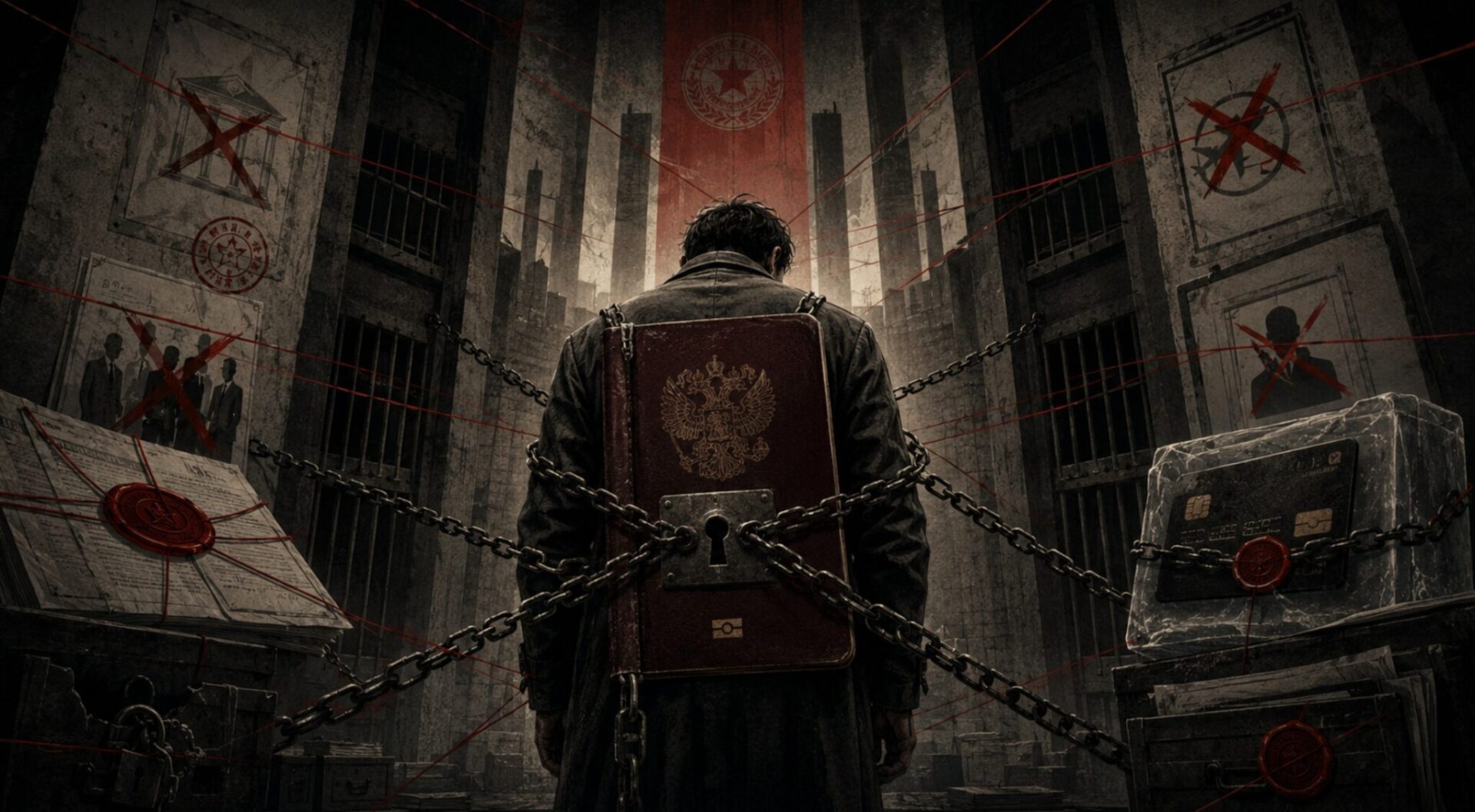
For example, as part of the standard procedure for obtaining Austrian citizenship, a person may be required to renounce their Russian citizenship. To do that, they must apply to their country’s consulate and go through the procedure established by the Russian authorities. Once the new law comes into force, anyone included in the special register will lose even the possibility of submitting such an application.
European countries could treat people in this situation with greater understanding. They could recognise that obtaining a required document is sometimes impossible for political reasons. This often does not happen, which makes the situation even harder.
At the same time, I understand that European countries do not have the kind of relationship with me that a person has with their homeland. I cannot demand parental care from them. Russia, however, is traditionally called the motherland. So I have another question. Why is this mother so aggressive? Why does she hate her own citizens and continue persecuting them after they leave?
For me, this will always be a difficult and painful question. At present, no criminal case has officially been opened against me. I have not been added to the register of “foreign agents,” and for now I remain relatively safe. Yet the very possibility of depriving a person of basic services connected with their citizenship looks completely abnormal in 2026. It is even more frightening to see how calmly the rest of the world accepts such decisions by the Russian state.
I am certain that emigrants will survive. In Remarque’s novel, people without documents constantly found ways to keep moving. Modern emigrants will also look for ways around the system, help one another, and invent solutions. Every new obstacle initially seems impossible to overcome. Then it becomes a difficult problem, and later still it remains in the past.
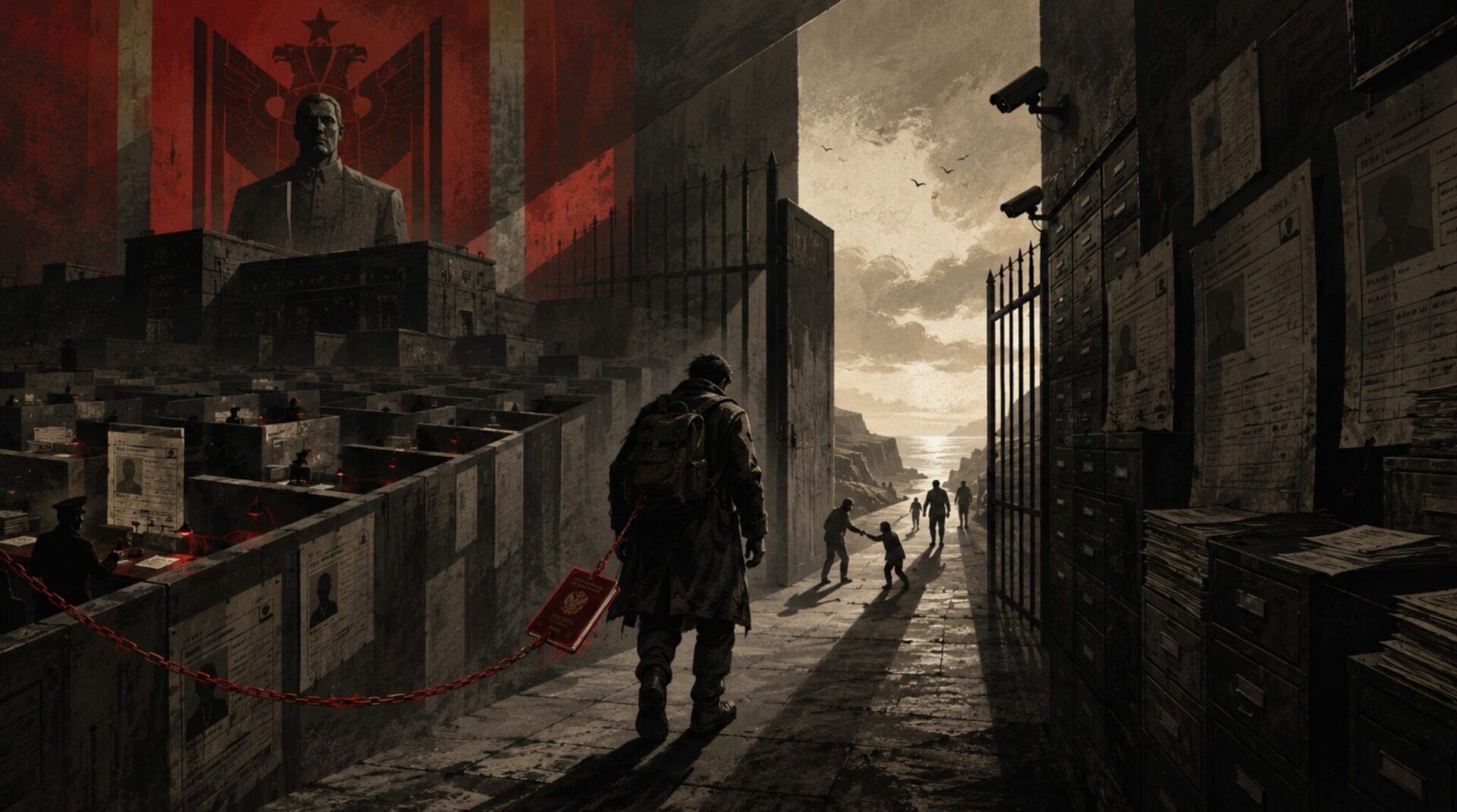
Nazi Germany stripped people of citizenship and turned them into exiles without rights. Putin’s Russia has chosen a different mechanism of persecution. It keeps a person’s Russian citizenship in place, blocks access to the rights connected with it, and at the same time prevents them from renouncing that citizenship. The person is kept legally dependent on the state they were forced to leave. This is what makes the situation especially despicable. Putin does not let his own citizens go. He continues taking revenge on them for leaving, for disagreeing, and for trying to choose their own path.
I once thought it might be interesting to feel like a character in some great novel. I never imagined that one day my life would begin to resemble a novel by Remarque. But this is how emigration works. Every new challenge first seems enormous, then becomes part of the daily struggle, and over time turns into another chapter you have managed to survive.
This is how we live.
You may also like these articles:
- Marilyn Manson Live in Vienna: A Look Back at the Concert
- LP Live in Vienna: A Look Back at the Concert
- An Emigrant’s Observations: Anti-Putinism and the Imperial Lens
- It’s My Birthday Today!
- My Life in Austria: July 2026
- An Emigrant’s Observations: My Toxic Homeland —Yesterday, Today and Tomorrow
- Ricchi e Poveri Live in Vienna: A Night of Music and Memories
- An Emigrant’s Observations: Simple Ways to Support Your Emotional Well-Being
- Eisenstadt in Pictures: A Day in a Small Austrian City
- Exploring Vienna’s Neubaugasse Flea Market
- Sofia Isella Live in Vienna: A Concert Review
- An Emigrant’s Observations: When Mistakes Become Toxic While Adapting
- An Emigrant’s Observation: Extreme Heat in Europe and Austria in 2026
- My Emigration to Austria: June 2026 Recap