
The history of Peuerbach spans several completely different eras. A medieval trading centre fortified by the Counts of Schaunberg, it became the site of one of the most important battles of the Upper Austrian Peasants’ War, and survived fires, religious persecution and many changes of ownership. Later, its importance was shaped by roads, the postal service and the development of local self-government. Yet Peuerbach has preserved the memory both of the dramatic events of 1626 and of the scientific legacy of Georg von Peuerbach, thanks to whom the name of this small town is known far beyond Austria.
Peuerbach
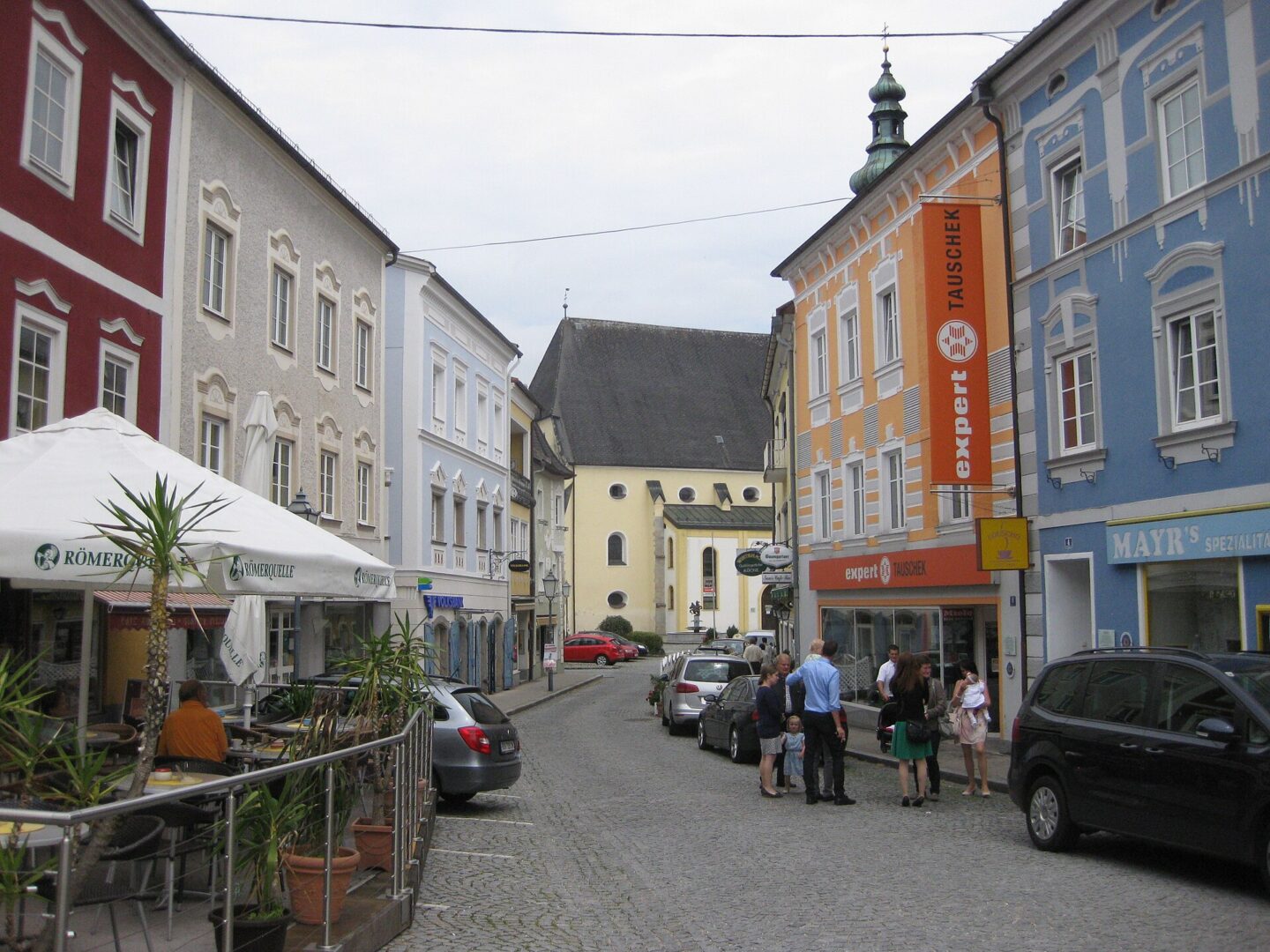
Peuerbach (German: Peuerbach) is a town with a population of 4,666, located in the federal state of Upper Austria, in the historical region of the Hausruckviertel. In the Middle Ages, Peuerbach was a fortified trading centre belonging to powerful noble families, and in the 17th century it found itself in the thick of one of the largest peasant uprisings in Austria.
The history of the town
People lived in this area long before the medieval settlement appeared, as shown by a stone axe found near the village of Teucht. At the end of the 6th century, the Bavarians began to settle here, and the origin of the name Peuerbach is linked to them. Its early form, Boierpah, possibly meant “settlement of the Bavarians”, although there is another theory, according to which the name comes from the Old High German word bibar, “beaver”.
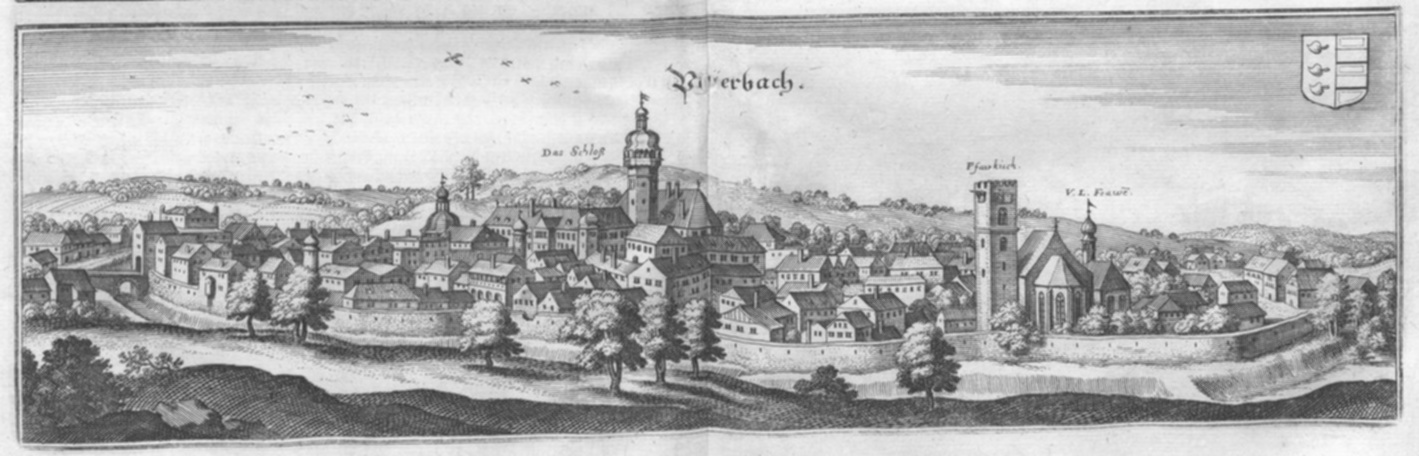
Peuerbach is first mentioned in the documents of the Monastery of St Nicholas near Passau, between 1100 and 1120. Among the witnesses of one of the charters are Razilie von Peuerbach and his brother Ernst. At that time the area belonged to the eastern part of the Duchy of Bavaria, but in the 12th century it gradually passed under the rule of the Austrian princes. The development of the settlement was helped by its position on the trade routes between Linz, Passau and Regensburg. In 1280, Otto von Offenhausen confirmed Peuerbach’s market privileges, the oldest known in the territory of today’s Grieskirchen district. The local inhabitants received the right to hold markets and an exemption from some of their obligations, while visiting merchants had to offer their goods first of all to the people of Peuerbach.
In the 14th century, the settlement came under the rule of the Counts of Schaunberg, one of the most influential noble families of Upper Austria. Under Count Ulrich I, around 1367, Peuerbach was surrounded by a moat and a defensive wall, and between 1370 and 1371 a castle was built. It was also the centre of a large judicial district, which, according to the land register of 1371, included hundreds of peasant farms. In documents from 1366–1386, Peuerbach was repeatedly referred to as a town. However, the Schaunbergs’ drive for independence led to a conflict with the Habsburgs. During the so-called Schaunberg Feud, around 1380, Duke Albrecht III besieged and captured Peuerbach. It is assumed that it was after these events that the settlement lost its town status, while keeping its market rights. Even so, it remained a prominent place in the region: on the Klosterneuburg Map of Central Europe, created around 1421, Peuerbach is marked alongside the largest towns of Upper Austria.
On 30 May 1423, Georg Aunpekh, better known as Georg von Peuerbach, one of the outstanding European astronomers and mathematicians of the 15th century, was born here. In 1446 he entered the University of Vienna, later travelled in Italy, got to know humanist scholars and began to teach astronomy in Vienna. His work Theoricae novae planetarum (“New Theories of the Planets”) became an important university textbook on astronomy. Peuerbach also worked on the design of scientific instruments and on applying trigonometry to the study of the heavenly bodies. His pupil was the famous Regiomontanus, who continued his teacher’s research after Peuerbach’s death on 8 April 1461.
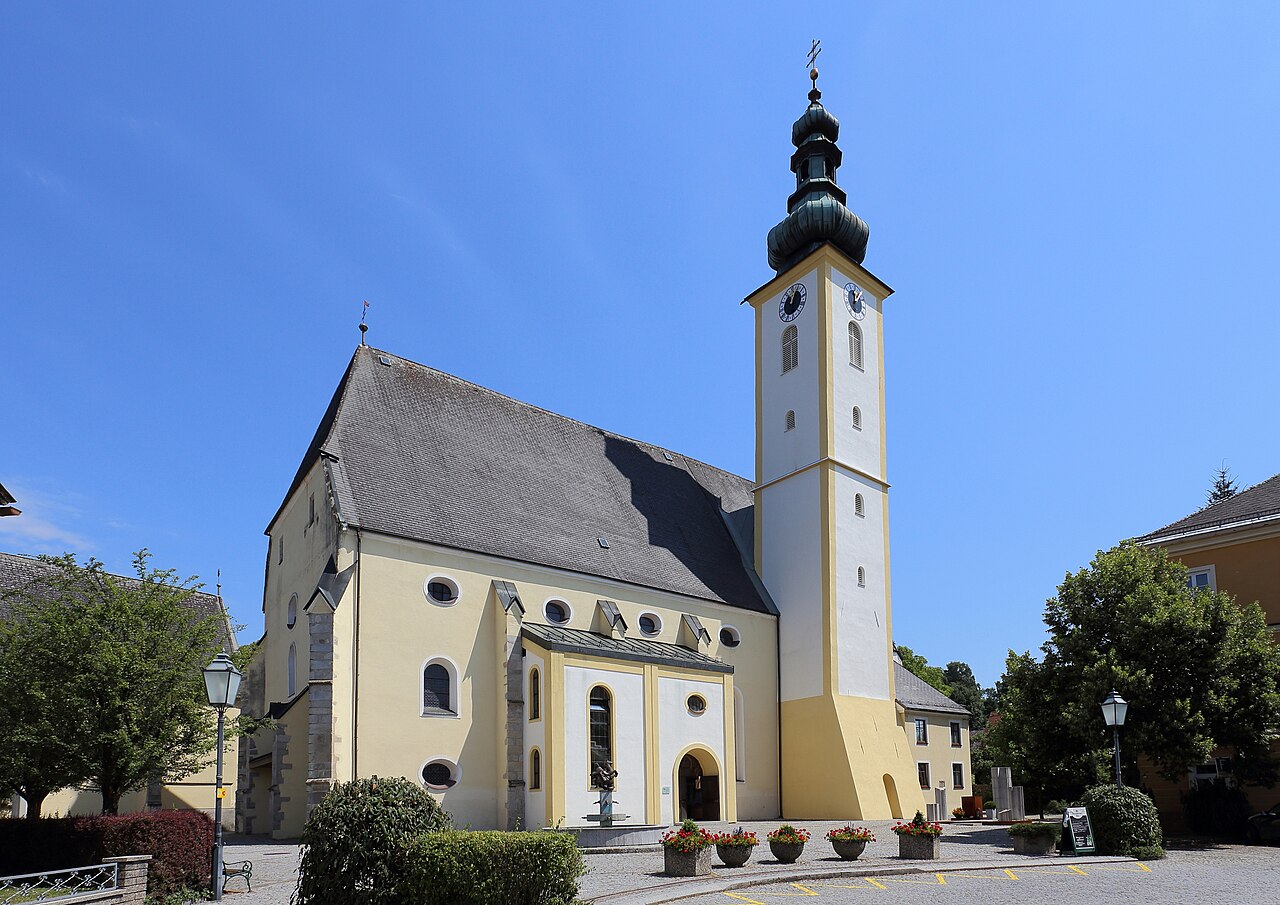
In the late Middle Ages, the settlement continued to develop. The parish church of St Martin, first mentioned in 1211, acquired a massive Gothic tower, and in 1439 a chapel of St Erasmus, St Wolfgang and Mary Magdalene was added to it. Around 1500, the late Gothic Church of Our Lady, known as the Little Church, appeared. The trade route remained an important part of the local economy: from 1501, a mounted courier connection with the Imperial Diet in Regensburg passed through Peuerbach, later turning into a regular postal route.
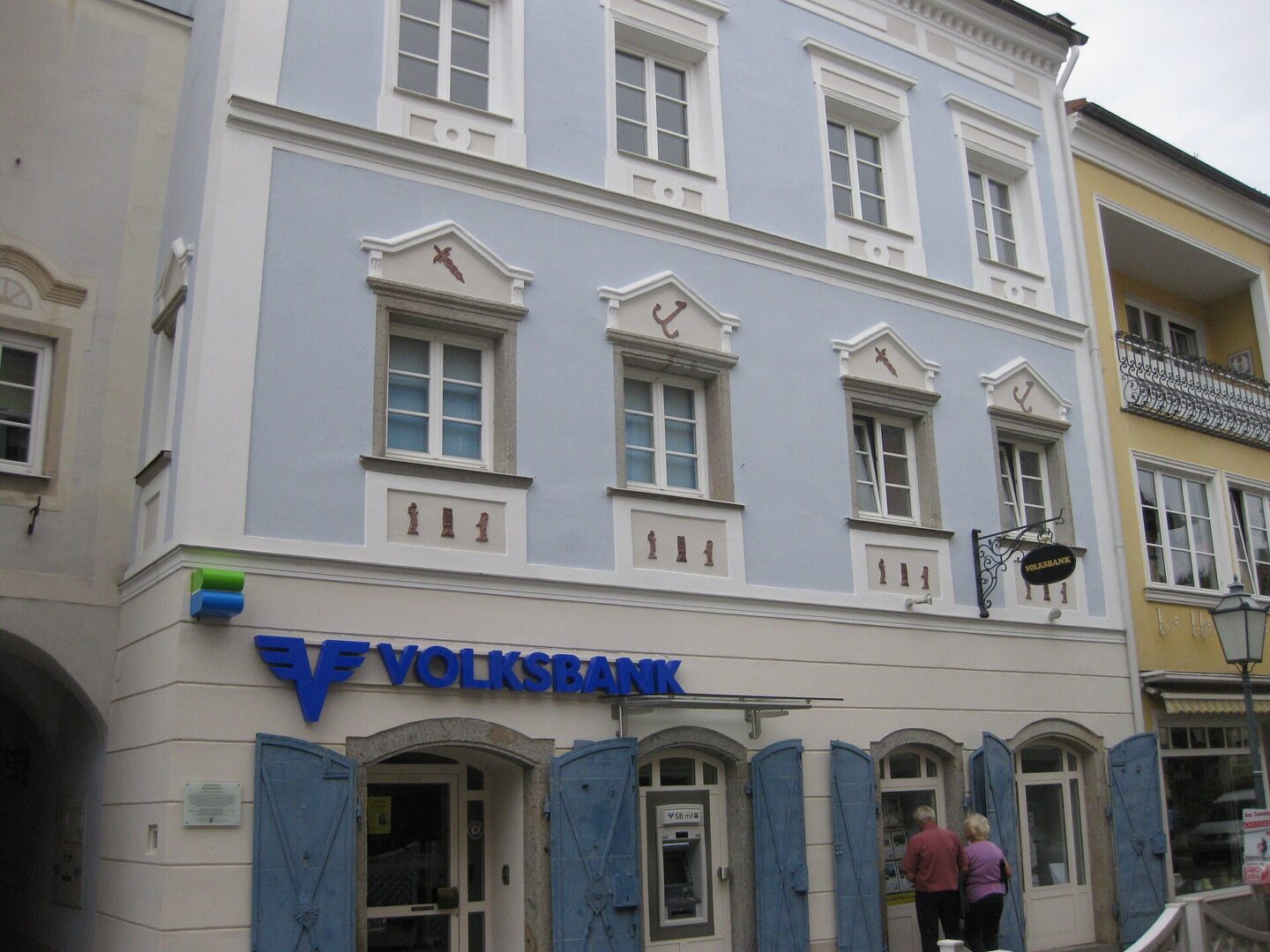
In the 16th century, the people of Peuerbach, like most of the population of Upper Austria, embraced the ideas of the Reformation. From approximately 1525, Lutheran services were held in the parish church. Meanwhile, in 1559, after the Schaunberg line died out, the local estates passed to the Starhemberg family. On 7 September 1571, a severe fire destroyed a large part of the settlement and the castle, and with it burned the library, the archive and the arms collection of Gundaker von Starhemberg. The rebuilding lasted about 3 years. The castle was reconstructed in the Renaissance style and given a ceremonial portal dated 1574, which has survived to this day.
In 1593, Georg Achaz von Starhemberg sold Peuerbach to Achaz von Hohenfeld, the owner of neighbouring Aistersheim. The new lord ordered a land register to be drawn up and increased the obligations of his dependent peasants. In 1595, more than 1,000 people gathered near the castle demanding a reduction in payments. After the intervention of a commission of the provincial authorities, the owner had to make concessions. This conflict showed how tense relations between peasants and feudal lords had become even before the great uprising of the following century.
With the beginning of the Thirty Years’ War, the tensions grew. In 1620, Emperor Ferdinand II pledged Upper Austria to Duke Maximilian I of Bavaria. His governor Adam von Herberstorff began to pursue a harsh policy of returning the population to Catholicism. In October 1624, the emperor ordered Protestant preachers and teachers to be expelled, and in April 1625 a Catholic priest, Elias Stumber, was appointed in Peuerbach. A significant part of the inhabitants continued to hold to the Lutheran faith and saw the new demands as coercion.
Particular outrage was caused by the reprisals against peasants after the uprising near Frankenburg in May 1625. On Herberstorff’s orders, those arrested were made to throw dice, deciding in this way who was to die. During this “Frankenburg Dice Game”, 17 people were executed. When the authorities demanded that Protestants either finally convert to Catholicism or leave the country, the accumulated discontent grew into an uprising.
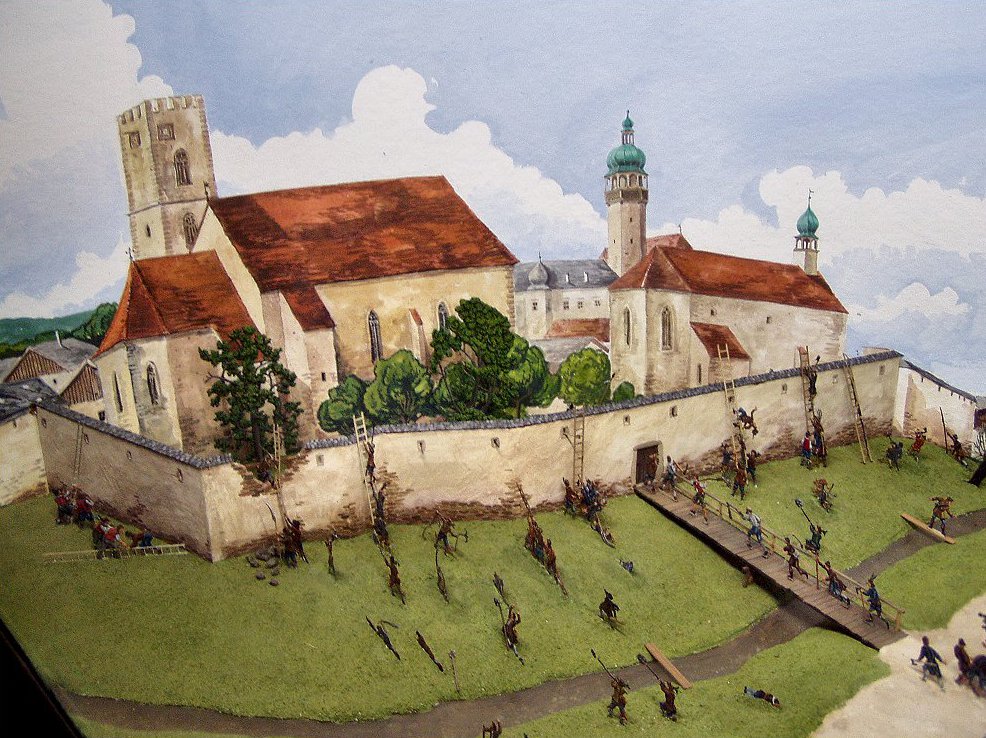
On 17 May 1626, an armed clash between peasants and Bavarian soldiers took place near Lambach. The rebels began to seize settlements and castles, and on 20 May they approached Peuerbach, where there was a garrison of about 250 men. The soldiers occupied the town gates and the fortifications near the church, but during the assault a fire broke out and quickly spread to the houses. A large part of the settlement burned down, the parish church was destroyed and the castle was badly damaged. The garrison tried to take shelter behind its walls, but the protesters took the fortress.
The very next day, 21 May, one of the first major battles of the Upper Austrian Peasants’ War took place near Peuerbach. Herberstorff marched against the insurgents with infantry, cavalry and artillery, but the peasants set up an ambush at Ledererwiese, not far from the village of Nussbaum. A small detachment lured the Bavarians into a disadvantageous position, after which the main force attacked them from the flank. The governor’s troops suffered a heavy defeat, and Herberstorff himself managed to escape to Linz.
The victory allowed the peasants to occupy most of Upper Austria and begin the siege of Linz. Among the leaders of the movement, Stefan Fadinger stood out in particular. But in the autumn of 1626 the uprising was suppressed, and its participants were subjected to cruel punishments. Peuerbach took a long time to recover from the destruction: in 1643, 26 plots on which houses had stood before the war were still unbuilt. According to local legend, the small Church of Our Lady survived thanks to the intercession of the Mother of God. In 1644, a commemorative painting dedicated to the peasant war appeared in it.
After the uprising, the castle changed hands several times. In 1635 it was acquired by Count Johann Baptist von Werdenberg, in 1669 the estate passed to Johann Georg von Kauten, and then to Count Georg Ludwig von Sinzendorf. In 1680, the latter was found guilty of abuse of power and other crimes, after which his property was confiscated. Four years later, Emperor Leopold I sold Peuerbach to the court chancellor Dietrich Heinrich von Strattmann. His family combined several neighbouring estates; after the family line died out in 1760, they were inherited by Count Ludwig Ernst Batthyány.
While the owners of the castle changed, the trade route continued to bring income to Peuerbach. In 1640 a permanent postmaster appeared here, and from 1663 the settlement was part of the postal route Wels – Passau – Regensburg. In 1749, the station received the rare privilege of a hereditary postmastership. Rulers also passed through Peuerbach: in 1683 Emperor Leopold I came here, fleeing the Ottoman advance on Vienna, and in September 1745 Maria Theresa made a brief stop on her way to the coronation of her husband, Francis Stephen of Lorraine. For her arrival, the roads were repaired and the paving of the market square was renewed.
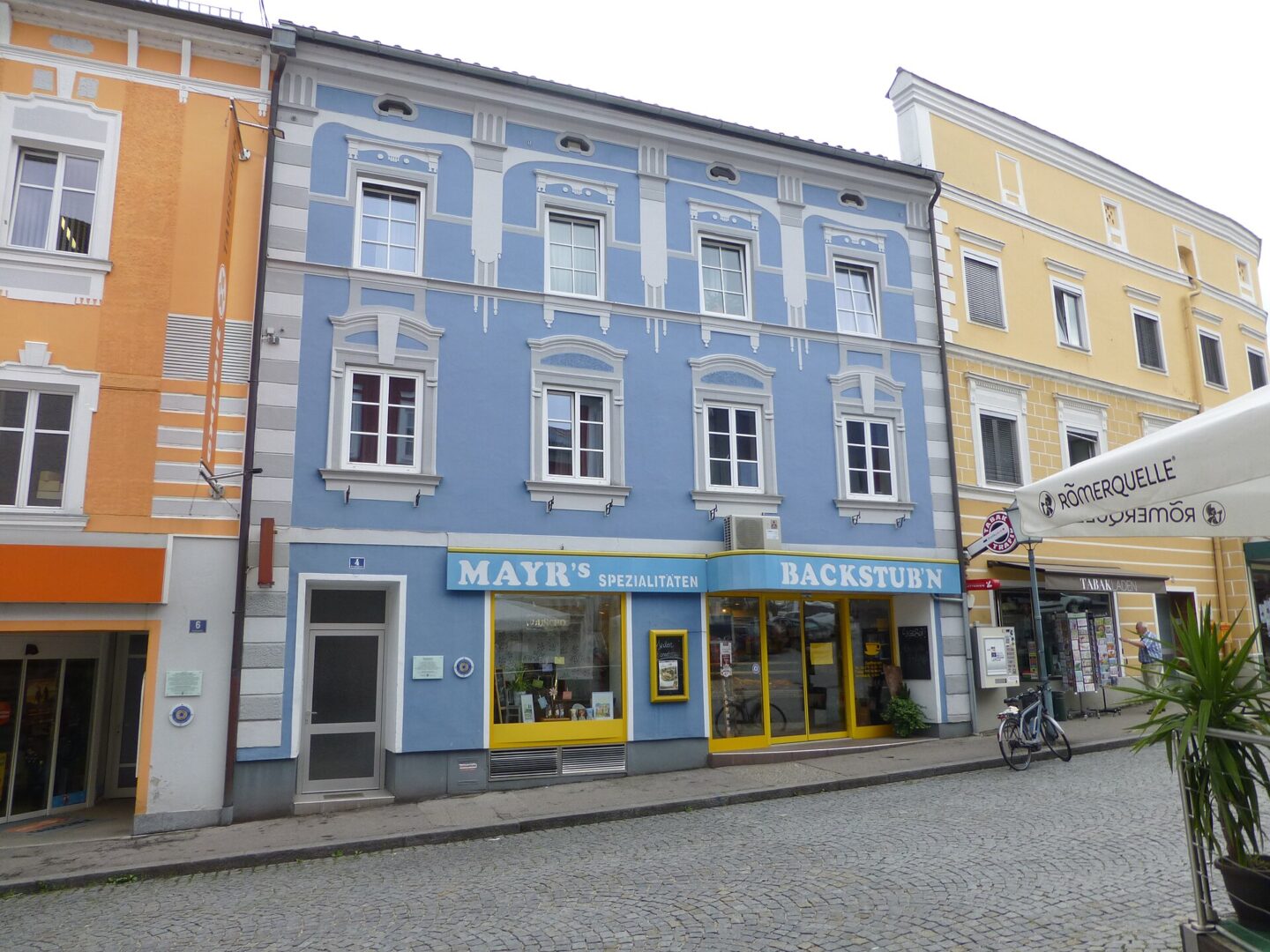
Everyday life remained vulnerable to disease and misfortune. In 1676 the settlement went through a plague epidemic, and in 1729, during a festive service, a false alarm of fire caused a crush in the church. 5 people died and many were injured. During the War of the Austrian Succession, in 1741, the troops of the Elector of Bavaria, Charles Albert, and his French allies passed through Peuerbach.
By the end of the 18th century, the castle was gradually falling into decay. In 1777, the owners ordered the demolition of its tower, almost 40 metres high, the repair of which would have cost too much. In 1825 the castle passed to Prince Julius von Montenuovo, and in 1831 he ordered the main residential wing to be pulled down. A new building was supposed to be erected, but the work never began. The building materials were used for a brewery in neighbouring Steegen.
The beginning of the 19th century brought the population new trials. During the Napoleonic Wars, armies repeatedly passed through Peuerbach, and the inhabitants had to supply the soldiers with food and house them in their homes. In 1809, Emperor Francis I stopped here on his way from Schärding after the defeat of the Austrian troops at Eckmühl. In 1812, a smallpox epidemic took the lives of 30 children, and in 1816–1817 the local population suffered from famine caused by crop failures.
The revolution of 1848 put an end to the old system of manorial lordships. Feudal lords lost their judicial and administrative power over dependent peasants, and in 1850 the independent municipalities of Peuerbach, Bruck, Waasen and Steegen came into being. Bruck and Waasen merged in 1871. Peuerbach itself became the centre of a judicial district, and from 1852 a gendarmerie post was stationed here.
The economic importance of the old road gradually declined. After the opening of the Wels–Passau railway in 1861, a large part of the traffic moved to the new route. Peuerbach kept its role as a trading centre for the surrounding villages, but its post station lost its former significance. On the other hand, in 1882 the municipality bought the old castle from the entrepreneur Leopold Schatzl, who had purchased the former Montenuovo estate a year earlier. After several centuries, the castle passed from private ownership into the hands of the local people.
Transport links improved at the beginning of the 20th century. On 18 December 1908, an electric local railway opened, connecting Peuerbach with Weizenkirchen and the station of Neumarkt-Kallham. From 1912, the Linz railway made it easier to travel to Eferding and Linz. The extension of the line to Neukirchen am Walde and Engelhartszell, discussed later, was never carried out because of a lack of funds.
The First World War and the collapse of Austria-Hungary changed the political conditions, but Peuerbach remained a small regional centre living from trade, crafts and agriculture. After the Anschluss of Austria in March 1938, it became part of Nazi Germany and was included in the Reichsgau Oberdonau. The name of Ferdinand von Sammern-Frankenegg, who worked here as a lawyer from 1929, is connected with Peuerbach’s Nazi history. He later joined the NSDAP and the SS, held high positions in the Nazi police and took part in organising the mass deportations of Jews from the Warsaw Ghetto to the extermination camps. Sammern-Frankenegg died in 1944 in the territory of present-day Bosnia and Herzegovina. After the war, his name appeared on a memorial to the victims erected in Peuerbach in 1954–1956. Only in 2020 did scholars publicly draw attention to the presence of a Nazi criminal among those commemorated. Afterwards, the town administration published a separate historical study devoted to his activities.
In the spring of 1945, American troops entered Peuerbach. In the post-war decades, the settlement was gradually rebuilt, and the former castle was adapted for public use. It housed cultural and educational institutions, including a museum devoted to the Peasants’ War of 1626.
On 5 December 1994, the government of Upper Austria once again granted Peuerbach the status of a town, which it had already had in the 14th century. Later changes concerned the municipal boundaries. In a referendum on 6 November 2016, the residents of Peuerbach and neighbouring Bruck-Waasen voted in favour of a merger, while the residents of Steegen voted against taking part in the reform. On 1 January 2018, the two municipalities officially merged under the name Peuerbach, and the following year a new coat of arms was approved, incorporating symbols of both historical municipalities.
In 2023, Peuerbach marked the 600th anniversary of the birth of its famous native son, Georg von Peuerbach. For the anniversary, a cultural programme, Communale Oberösterreich, was held here, and in the former castle a renewed museum opened with the exhibition “Cosmos. New Worlds – Georg von Peuerbach and His Legacy”. The previous exhibition devoted to the Peasants’ War was closed at the same time. Thus the building, constructed by the Counts of Schaunberg back in the 14th century and having survived numerous destructions, became a place that tells of the scientific legacy of a man born in medieval Peuerbach.
You may also be interested in the following articles from our “History of Austrian Cities” series:
About the project:
My name is Anatoly, and I am the author of Emigrants.life. In 2017, my family and I emigrated from Krasnodar to Austria. My wife and I work in marketing, and we created Emigrants.life to help people who are thinking about moving abroad.
Emigrants.life publishes daily news about life and everyday matters in Austria and Europe. Follow us on Facebook, Instagram and Twitter, or join our Russian-language Telegram channel.