
Emigration is a complex, ambiguous process in which luck and success play far from the least important role. It seems that luck cannot be controlled. And that’s true. But in 9 years of living in Austria I have come to understand that luck is something that surrounds us. For you to come across it, you need to take many different actions. They may not lead you to boundless happiness, but they will make your reality more interesting, better and happier. I have talked about some of these points in this article.
A New Country Outside Your Apartment Door
A person moves to another country, but after some time discovers that their life is limited to the familiar route of “home – work – shop”. The new city remains almost unfamiliar, or even alien. After a working day there isn’t always enough energy for meeting new people, and a conversation in a foreign language sometimes takes extra effort. At first it seems that you just need to rest a little and get used to a different life, but months pass, sometimes years, and beyond the familiar route there is still almost nothing going on. Where is a lucky chance supposed to come from in such a reality, if there is almost no room left for it?
Can You Learn to Be Lucky?

Imagine that someone asks you to teach them how to win the lottery. There is, of course, no guaranteed way. You can buy a ticket and win nothing, or you can unexpectedly win 50 or 100 euros. Of course, you can’t count on a million. But if you don’t buy a ticket at all, even this small chance of such luck disappears!
In emigration a similar principle works in all sorts of life situations. It is impossible to predict in advance which acquaintance will turn out to be important, or which invitation will lead to something interesting. Sometimes a chance conversation remains just an ordinary chance conversation, and sometimes it becomes the beginning of a friendship that lasts for many years, or of a new job. And you don’t have to count on an event that will turn your whole life upside down. A small piece of luck can also make life more pleasant.
Try Different Approaches
Persistence doesn’t necessarily mean repeating the same actions endlessly. If a person has banged their head against a wall ten times in a row, it is hard to accuse them of lacking perseverance. True, the effectiveness of such efforts is highly doubtful. If looking for a job by sending out CVs has brought no results for months, you can try another route: turn to specialist communities, make new acquaintances or take professional courses. The goal stays the same; only the ways of reaching it change.
In emigration such flexibility is especially important. A small idea that doesn’t require serious expense is better tested in practice than pondered for months. One way didn’t work? Try another.
It’s Not Only the Number of Attempts That Matters, but Also Your Environment
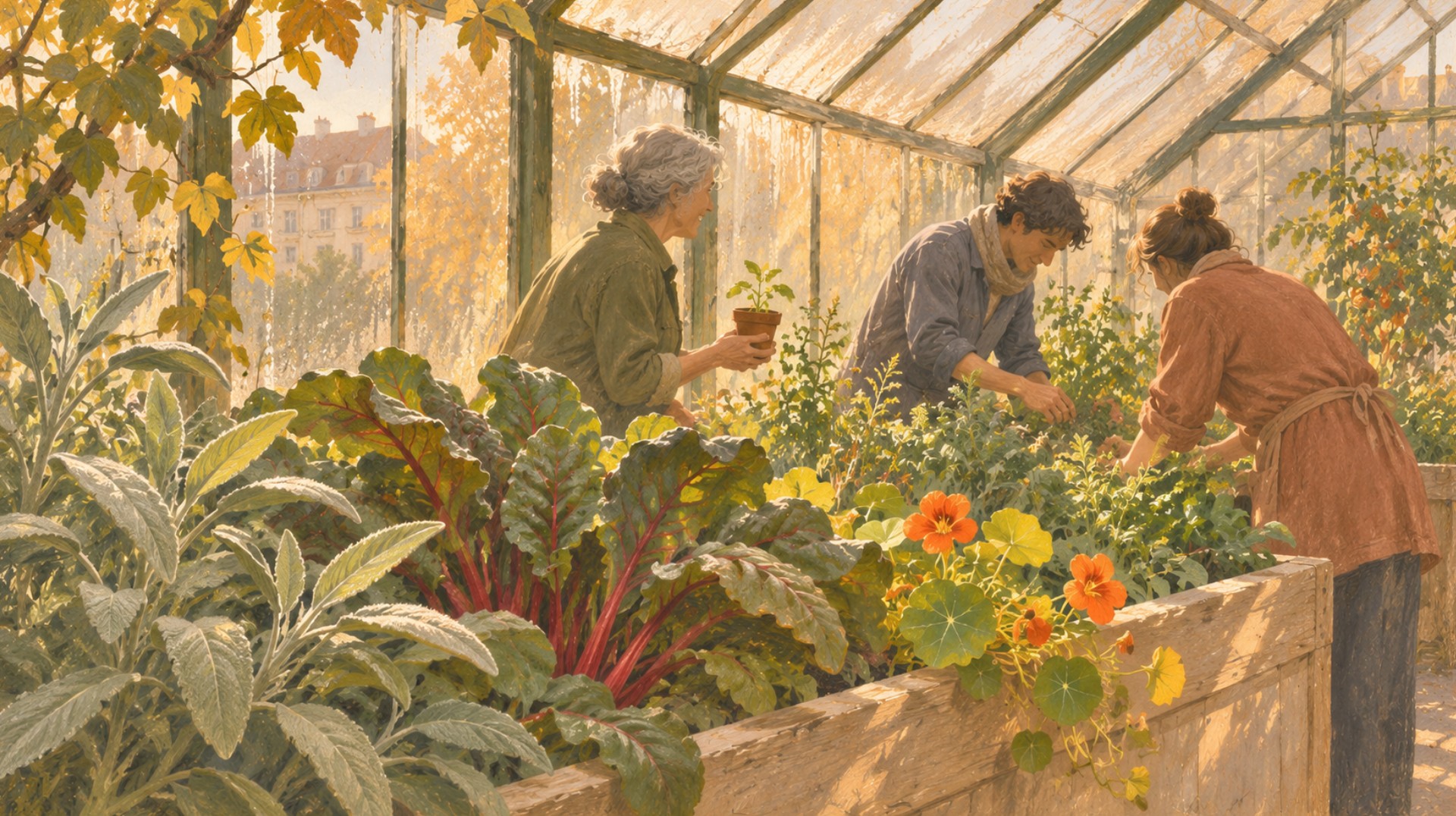
New opportunities and luck depend to a large extent on the environment in which we spend our time. Even if you already have a pleasant circle of friends, friendship with compatriots doesn’t prevent you in the slightest from also becoming part of other communities. Inexpensive tennis or fitness classes, professional associations, and local initiatives for protecting animals, the environment or cultural heritage help you gradually enter completely different spheres of communication. Each of them has its own people, interests and opportunities. It is useful to change even the most ordinary routes from time to time: go into unfamiliar places, attend new events or accept unexpected invitations.
Not Only Taking, but Also Giving
It is hard to maintain a good relationship with a person who constantly asks for help but never takes any initiative themselves. Especially if they are used to others paying for them in a bar or restaurant. Such behaviour fairly quickly starts to arouse wariness.
It is important to look for a way to be useful to those around you yourself, without waiting to be asked. You don’t need money or influential acquaintances for this. You can share your experience, support someone else’s idea or introduce two people who will find each other interesting. And you shouldn’t expect an immediate favour in return; let your luck decide for you when you will need it more.
Relationships that have already formed are also worth looking after. Changing jobs doesn’t oblige you to cut off contact with former colleagues. A reputation is built over the years, including from how well a person keeps their word and how they behave when they no longer need anything from those around them.
Let Others Find Out What You Can Do

In emigration you can have an education and many years of professional experience, yet remain a completely unknown person to most of those around you. Even a suitable conversation partner won’t guess about your abilities if you never talk about them. So you shouldn’t hide your knowledge and interests. Talk about the projects you are working on and share your observations in professional discussions.
You don’t have to wait until you become a recognised expert before talking about what you have newly learned. Have you mastered a technology, or read a study that changed your view of a familiar task? Share it. People can be interested not only in what you already know how to do, but also in what you are passionate about and what you are learning right now.
When you talk about your learning process, those around you can see not only the result you have achieved, but also how you think and how you approach unfamiliar tasks.
An Outsider’s Perspective Can Be an Advantage
An emigrant has one advantage that is easy to underestimate: they know how familiar things can be organised in another country. What local residents adapted to long ago sometimes seems inconvenient or needlessly complicated to a newcomer. And sometimes they discover that a service that worked perfectly well back home is practically absent here. This is how interesting business ideas can be born. Such experience can also come in handy when working as an employee, if you manage to offer your colleagues an approach that was successfully used in another country.
That said, before turning such an observation into a business idea, it is useful to work out why the local market is organised differently and whether there is really any demand for the solution you are offering.
A Chance Opportunity Still Has to Be Recognised

Luck may not be so obvious at the start of your journey. The discovery of penicillin began with a coincidence, but its significance was recognised by a well-prepared researcher. In emigration this is an especially important requirement for your flexibility. An unexpected offer or an unfamiliar way of working may at first seem unsuitable simply because it doesn’t match our ideas and plans. However, it is precisely enthusiasm, knowledge and curiosity that help us notice surprising connections and assess new ideas. Before rejecting an unfamiliar approach, try to understand what it is based on.
Don’t Rush to Be Disappointed
One unsuccessful meeting can be enough for a person to decide never to attend new events again. They didn’t like the company, couldn’t strike up a conversation with anyone, and a whole avenue of new acquaintances is closed for ever. Yet a first experience says little about what the next one will be like.
Optimism is useful in emigration because it helps you not to give up on new opportunities just because of a single disappointment. Openness is born precisely in the ease of trying, and that is what attracts good luck and good fortune so strongly.
Keep Your Strength and Your Right to Another Attempt

In emigration, the desire to improve your financial situation as quickly as possible sometimes turns into an endless chase for extra earnings. A person takes an evening shift, then another, and gradually there is almost no time left for anything else. There are no resources left for sport or meeting people, constant overwork affects their health, and life increasingly focuses on the nearest expenses and the next pay cheque. Even an interesting offer may go unanswered, because the person has neither the time nor the energy to take it up.
You can lose financial freedom in another way too: by putting all your savings into one promising idea. This is especially risky in emigration, where a mistake can cost too much. It is far more sensible to test your assumptions first, assess the risks and limit your investment. Even the most promising idea may not work, and it is important that a single failure doesn’t take away your desire to try again.
What Changes Over Years, Not in a Single Evening
Only years later does it become clear how much small decisions can change your life after a move. Acquaintances that were given little importance at first, new interests and new knowledge gradually become part of everyday life. Each of these events might have had no continuation, but some of them did turn out to be important. And it is far from always a matter of money or professional success. One day you may discover that a city where you once knew almost no one has become your own, and that people you met completely by chance have turned into close friends.
The main thing is to remember that luck more often finds those who go to meet it themselves. It also comes to those who help others become luckier. Introduce people to each other, do good, share your knowledge, and don’t be afraid to show those around you who you are and what you can do. And perhaps one fine day you will meet your luck without realising straight away that this was it.
You may also like these articles:
- The History of the Austrian Town of Straßburg
- An Emigrant’s Observations: How to Improve Your Chances of Getting Lucky as an Emigrant
- Lise Meitner: An Outstanding Researcher of the 20th Century from Austria
- Sziget 2026 — Part 1. The Beginning
- The History of the Austrian Town of Peuerbach
- Andrea Bocelli Live in Vienna: A Look Back at the Concert
- An Emigrant’s Observations: What “Home” Means After Nine Years Abroad
- An Emigrant’s Observations: My Nine Years in Austria
- An Emigrant’s Observations: Reverse Culture Shock
- My Beloved Vienna: By the Numbers, Not Just from the Heart
- An Emigrant’s Observations: A Fresh Look at the Exhausting Process of Adapting to Another Country
- Photo Report from Donauinselfest 2026. Part Two: Giant Rooks and Another Evening on the Island
- Photo Report from Donauinselfest 2026. Part One: My Ugly Clementine
- An Emigrant’s Observations: The Russian Language Without the “Russian World”
- Marilyn Manson Live in Vienna: A Look Back at the Concert
- An Emigrant’s Observations: Feeling Guilty About My Good Life
- An Emigrant’s Observations: What Surprises Me About the Austrian Attitude to Beer
- LP Live in Vienna: A Look Back at the Concert
- An Emigrant’s Observations: Anti-Putinism and the Imperial Lens
- An Emigrant’s Observation: How Big Is Our Small World?
- An Emigrant’s Observation: How Difficult Is It to Make New Friends?
- It’s My Birthday Today!
- My Life in Austria: July 2026
- An Emigrant’s Observations: My Toxic Homeland —Yesterday, Today and Tomorrow
- Ricchi e Poveri Live in Vienna: A Night of Music and Memories
- An Emigrant’s Observations: Simple Ways to Support Your Emotional Well-Being
- Eisenstadt in Pictures: A Day in a Small Austrian City
- Exploring Vienna’s Neubaugasse Flea Market
- Sofia Isella Live in Vienna: A Concert Review
- An Emigrant’s Observations: When Mistakes Become Toxic While Adapting
- An Emigrant’s Observation: Extreme Heat in Europe and Austria in 2026
- My Emigration to Austria: June 2026 Recap
About the project:
My name is Anatoly, and I am the author of Emigrants.life. In 2017, my family and I emigrated from Krasnodar to Austria. My wife and I work in marketing, and we created Emigrants.life to help people who are thinking about moving abroad.
Emigrants.life publishes daily news about life and everyday matters in Austria and Europe. Follow us on Facebook, Instagram and Twitter, or join our Russian-language Telegram channel.