
Emigration and adaptation are complicated processes, and I enjoy writing about them on my blog. I have lived in Austria for many years, and during that time I have collected several simple observations about life in a new country. They concern our emotional state, our relationships with other people, and our ability to gradually build a new life around ourselves. I wanted to bring these observations together in one short article.
1. Learn to step outside your own thoughts

When you live abroad, it is easy to become trapped in anxiety and keep replaying the same conversations in your mind. You return to an unpleasant event again and again, imagine future problems, and gradually train your brain to expect danger all the time.
Susan Nolen-Hoeksema, Blair Wisco, and Sonja Lyubomirsky examined this process in detail in their paper Rethinking Rumination. Constantly turning a problem over in your mind makes difficult emotions stronger, interferes with decision-making, and takes energy away from real action. It is therefore useful to notice when reflection has started going in circles and deliberately return your attention to the world around you.
2. Find some form of exercise – probably anything except chess
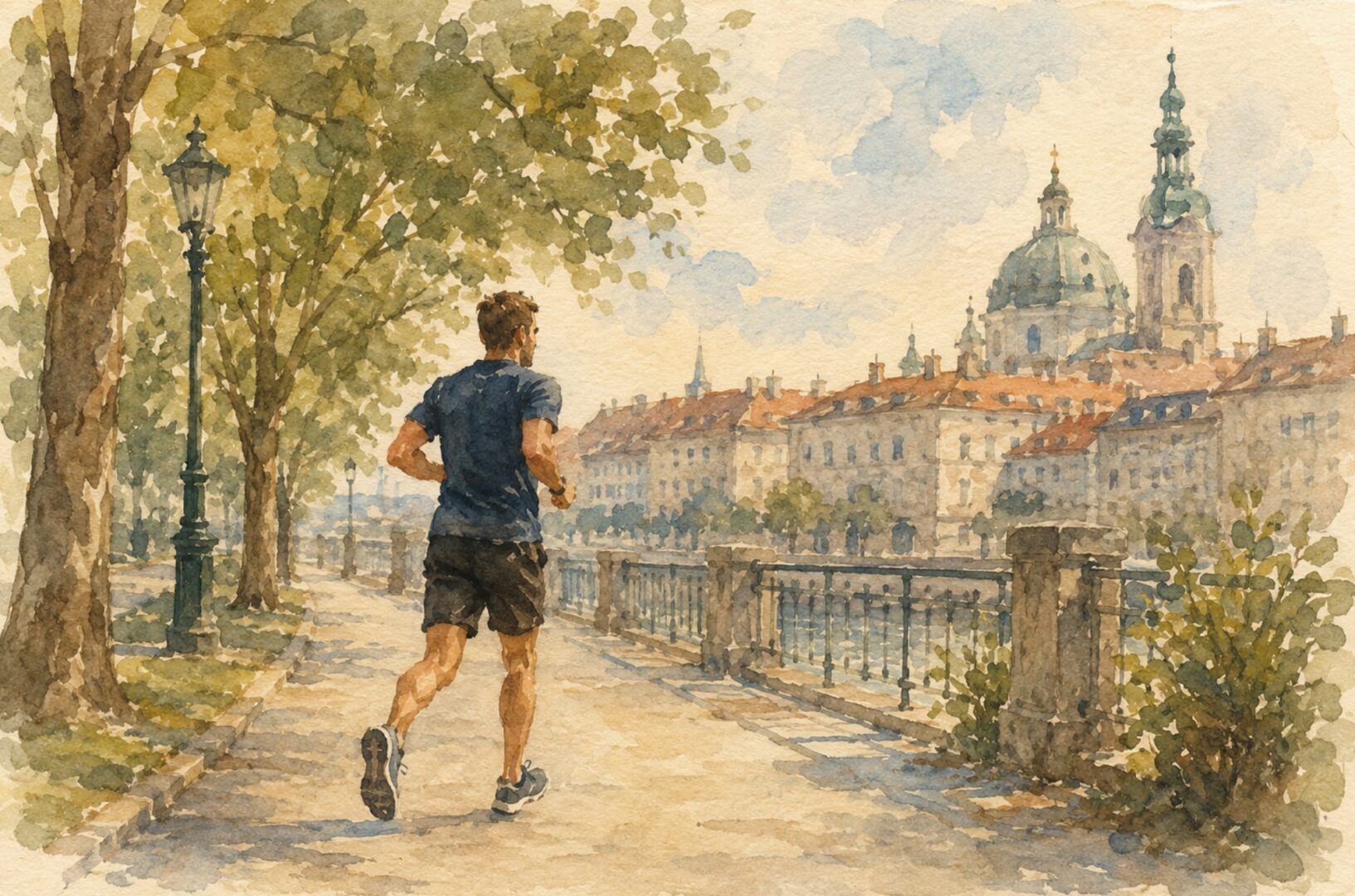
Your body needs physical activity during emigration. It can be the gym, running, swimming, cycling, or a long walk. Choose something you can realistically continue doing on a regular basis. Even simple walking can work, as long as it becomes a habit.
Michael Noetel and his colleagues analysed more than two hundred studies in Effect of Exercise for Depression. Walking, running, strength training, and yoga produced especially good results. Physical activity helps reduce emotional tension and gives people back the feeling that they can control at least one part of their lives.
3. Leave the house when things feel difficult

Sometimes your mood improves only after you have taken action. One evening, you might go to a bar. Another time, you might choose an exhibition or a concert. You can join a drawing class, go dancing, or find any activity where other people will be around. This matters far more than shutting yourself away and spending day and night studying a foreign language.
Sona Dimidjian and her colleagues studied behavioural activation in Randomized Trial of Behavioral Activation, Cognitive Therapy, and Antidepressant Medication. The idea behind this approach is quite simple. A person gradually brings back activities that offer contact with other people, pleasure, or the satisfaction of having completed something. Activity helps break the cycle in which a low mood keeps someone at home, while isolation makes that mood even worse.
4. Meet different people and widen your social circle

Over time, people within one social circle often begin to look at life in similar ways. New people bring different ideas. Sometimes a single conversation can help you see your own situation from another angle and discover a solution that had never occurred to you before. Hearing about other people’s problems also reminds you that you are not alone and that everyone goes through very different experiences while living abroad.
Kristin Brans, Vasileos Chatzimpiros, and Richard Bentall explored the connection between social groups and migrants’ psychological well-being in Social Identity, Mental Health and the Experience of Migration. A sense of belonging gives people support and helps them regain their place in the world. This is why it is useful to look for different social circles and gradually become part of several communities.
5. Allow yourself small, ordinary celebrations

A glass of beer in a bar can be part of socialising. Wine at an exhibition can also help people relax and start talking. In Europe, many new connections begin in these simple situations, where people spend time together without a complicated purpose or a carefully prepared plan.
Robin Dunbar and his colleagues examined moderate alcohol consumption in the context of social relationships in Functional Benefits of Modest Alcohol Consumption. The authors focused on the role of pubs as places where people meet regularly and form closer connections. The main value comes from taking part in a shared social life. The choice of drink remains personal.
6. Give work a defined place in your life

While living abroad, work can easily become the main measure of success. Then losing a job, having a serious conflict, or spending a long time looking for a new position begins to affect your entire sense of self-worth. It is important to have other parts of life that remain stable regardless of what happens at work.
That is why you really need two phones – one for work and one for your personal life – and ideally two computers as well. Without that separation, everything begins to feel like work, and work can swallow your life in the worst possible way.
In Self-Complexity as a Cognitive Buffer Against Stress-Related Illness and Depression, Patricia Linville wrote about the complexity of the way people see themselves. When a person’s identity includes several independent roles, stress in one area is less likely to take over their entire life. Relationships, personal interests, and individual projects therefore become important psychological supports.
7. Keep your interests and take part in the life around you

Continue listening to the music you loved before moving abroad. Maintain old relationships that still matter to you. Return to activities that once brought you pleasure. At the same time, look for new places and communities in the country where you now live.
Anouk Smeekes and her colleagues showed the importance of the connection between a person’s old and new social life in Social Identity Continuity and Mental Health Among Syrian Refugees in Turkey. Keeping important parts of your identity supports psychological well-being after moving.
Sara Alfieri and her colleagues studied the participation of young migrants in social and recreational activities in Engagement of Young Immigrants. Participants who were more involved in their local communities were more likely to feel that they belonged and to think more positively about themselves. You can run your own project, help people you know, or join a local initiative. Any meaningful personal contribution gradually makes the new country feel closer.
8. Notice how your life is changing

When you live abroad, it is easy to focus only on unresolved problems. That is why it is important to notice your own progress. Think about what frightened you a year ago but has now become an ordinary part of life. Notice new relationships, good decisions, and the moments when you managed an unfamiliar situation successfully.
Brittany Jakubiak and Brooke Feeney studied everyday progress towards personal goals in Daily Goal Progress Is Facilitated by Spousal Support and Promotes Psychological, Physical, and Relational Well-Being. Even small progress was connected with better well-being on the same day and the following day. These small changes help you see that you are moving forward.
Emigration requires active participation in your own life. A new country gradually opens up through movement, people, and personal attempts. Leave the house, stay curious, allow yourself pleasure, and notice everything that has already worked out. In this way, a life that truly belongs to you slowly begins to take shape.
9. Do not deprive yourself of good food

This is very important!
Finding something new to love or becoming interested in something unfamiliar can give you a great deal of energy and many new ideas while living abroad. That is why I will always talk about how important it is to try, make mistakes, and try again, whatever happens. Without this, emigration can feel like living as a guest in someone else’s home. But once you push through this stage, it becomes very difficult to give up the sense of happiness and comfort that follows.
You may also like these articles:
- An Emigrant’s Observations: What “Home” Means After Nine Years Abroad
- An Emigrant’s Observations: My Nine Years in Austria
- An Emigrant’s Observations: Reverse Culture Shock
- My Beloved Vienna: By the Numbers, Not Just from the Heart
- An Emigrant’s Observations: A Fresh Look at the Exhausting Process of Adapting to Another Country
- Photo Report from Donauinselfest 2026. Part Two: Giant Rooks and Another Evening on the Island
- Photo Report from Donauinselfest 2026. Part One: My Ugly Clementine
- An Emigrant’s Observations: The Russian Language Without the “Russian World”
- Marilyn Manson Live in Vienna: A Look Back at the Concert
- An Emigrant’s Observations: Feeling Guilty About My Good Life
- An Emigrant’s Observations: What Surprises Me About the Austrian Attitude to Beer
- LP Live in Vienna: A Look Back at the Concert
- An Emigrant’s Observations: Anti-Putinism and the Imperial Lens
- It’s My Birthday Today!
- My Life in Austria: July 2026
- An Emigrant’s Observations: My Toxic Homeland —Yesterday, Today and Tomorrow
- Ricchi e Poveri Live in Vienna: A Night of Music and Memories
- An Emigrant’s Observations: Simple Ways to Support Your Emotional Well-Being
- Eisenstadt in Pictures: A Day in a Small Austrian City
- Exploring Vienna’s Neubaugasse Flea Market
- Sofia Isella Live in Vienna: A Concert Review
- An Emigrant’s Observations: When Mistakes Become Toxic While Adapting
- An Emigrant’s Observation: Extreme Heat in Europe and Austria in 2026
- My Emigration to Austria: June 2026 Recap