
Today, capturing someone’s face in a photograph takes a single moment. But two centuries ago even an ordinary portrait was a real ordeal, and photography itself seemed almost a miracle. In 1840 the Viennese mathematician Josef Petzval found a solution to a problem that the best craftsmen of his day had struggled with. His invention changed the future of photography and brought in enormous sums of money. But for the inventor himself the story turned out quite differently from what he had hoped for. And the further the success of his invention developed, the more unexpectedly the mathematician’s own fate unfolded.
Josef Petzval
Josef Maximilian Petzval (in German, Josef Petzval; in Hungarian, Josef Maximilian Petzval) was a mathematician, physicist and inventor whose research changed the development of photography. The lens he created in 1840 cut the time needed to take a portrait from several minutes to a few dozen seconds, making photography far more accessible. Petzval spent most of his life in Vienna, where for 40 years he taught mathematics at the university and worked on optics, mechanics and acoustics. His academic career, however, was marked by bitter conflicts, and the commercial success of his main invention brought him far more disappointment than financial gain.
Childhood and education
Josef Petzval was born on 6 January 1807 in the town of Zipser Bela, now Spišská Belá in Slovakia, which at that time was part of the Kingdom of Hungary within the Austrian Empire. The boy grew up in a large family where an interest in music, mathematics and technology was part of everyday life. His father, Johann Friedrich, worked as a teacher, organist and church choir director, and was also involved in surveying and in building musical instruments and various mechanical devices. In 1824 he even received two patents, one for an improvement to pendulum clocks and one for a mechanical writing device. His mother, Susanna Kreuzmann, came from the family of a local teacher. Josef’s younger brother, Otto Balthasar, also inherited an interest in the exact sciences and later became a professor of mathematics in Pest.
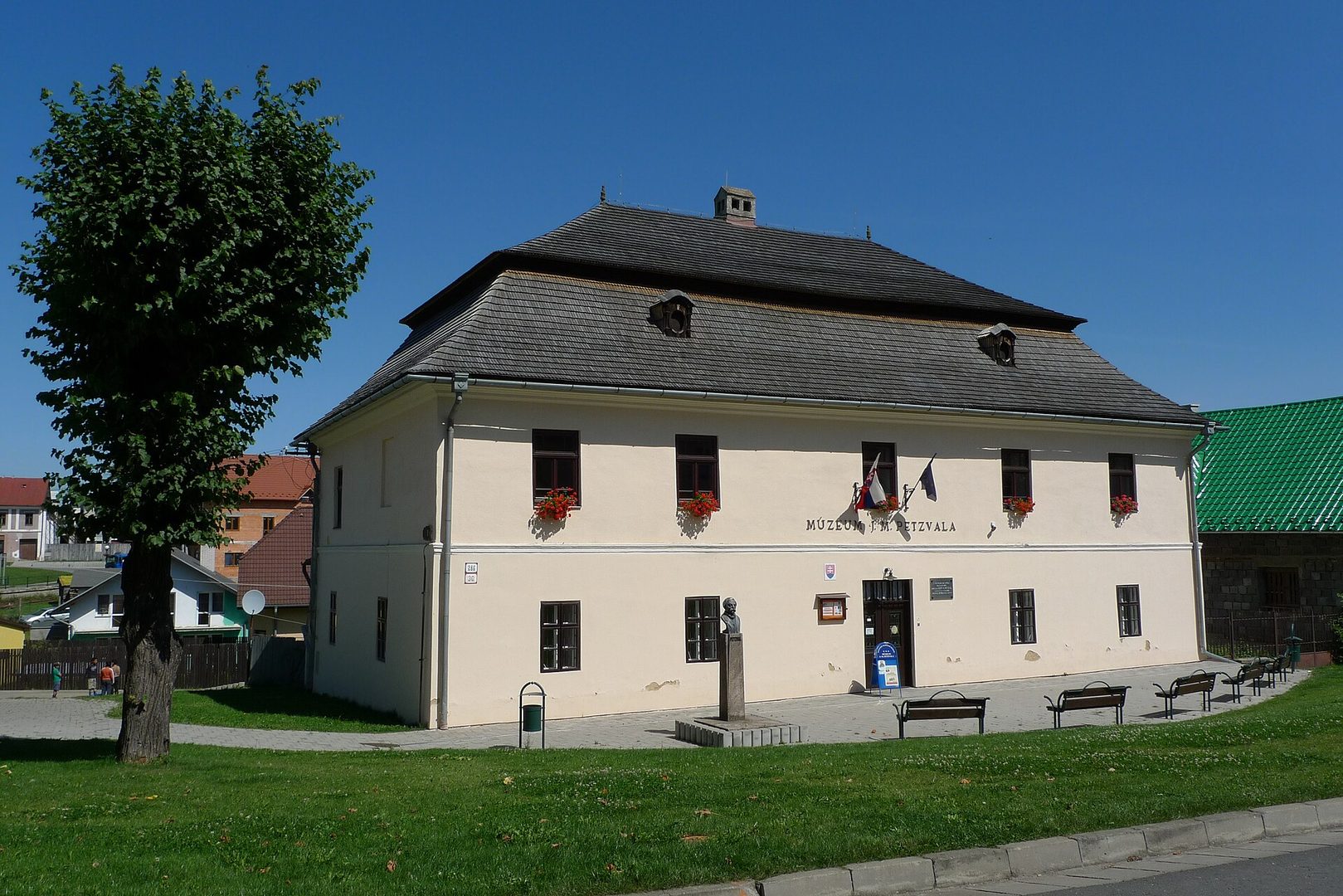
Josef Petzval’s childhood was spent in several towns of Upper Hungary. The family lived in Kežmarok, and in 1819 moved to Levoča, where Josef continued his education. Curiously, at first he had serious difficulties with mathematics, although he did well in other subjects. According to a widely repeated biographical account, one of his teachers even advised his parents to apprentice the boy to a craftsman. During the summer holidays, however, Petzval studied Matthias Hauser’s mathematics textbook on his own and became so absorbed in the subject that he soon ranked among the best pupils. It is hard to establish how reliable every detail of this story is, but mathematics gradually did become the young man’s main passion.
In 1823 Petzval went to Košice, where he studied at the lyceum for 2 years. His parents had limited means, so the young man had to earn money by giving private lessons, and for a time he worked as a private tutor in the family of Count Almásy. The money he saved allowed him to continue his education, and in 1826 Josef enrolled at the Institutum Geometricum, an engineering school attached to the University of Pest, where he studied mathematics, mechanics and practical geometry.
From engineering to a university career
After receiving his engineering diploma in 1828, Petzval began working for the city administration of Pest. His duties included calculations for buildings and structures, sewerage projects and measures to protect the city from flooding by the Danube. The young engineer took part in designing flood defences and a project for a navigable canal. According to his biographers, his calculations helped reduce the consequences of one major flood. This kind of work especially appealed to Petzval because it let him apply complex mathematical methods to quite concrete engineering problems.
At the same time he continued his scientific studies and in 1832 received a doctorate. Soon Petzval began teaching mathematics, mechanics and geometry at the University of Pest, and in 1835 he became a professor of higher mathematics. By then his abilities were already known beyond Hungary, and in 1836 he received an invitation to the University of Vienna. The following year Petzval took over the chair of mathematics, to which almost all of the rest of his life would be tied.
In Vienna new opportunities opened up for him, both for research and for cooperation with manufacturers of scientific instruments. Petzval taught analytical mechanics, differential equations, optics, ballistics and acoustics, trying to explain mathematical laws through real physical phenomena. Students valued his lectures for their liveliness and unusual examples, although even then he had acquired a reputation as an extremely demanding man who was not inclined to spare the pride of his colleagues or of the university’s leadership.
The invention that changed photography
In 1839 the French inventor Louis Daguerre presented the daguerreotype to the public, a new way of producing photographic images on silver-plated metal plates. The invention aroused enormous interest, but it had a serious drawback: to get a portrait, a person had to remain completely motionless for several minutes, and sometimes considerably longer. The slightest movement could ruin the picture, so photographers even used special devices to hold the head still.
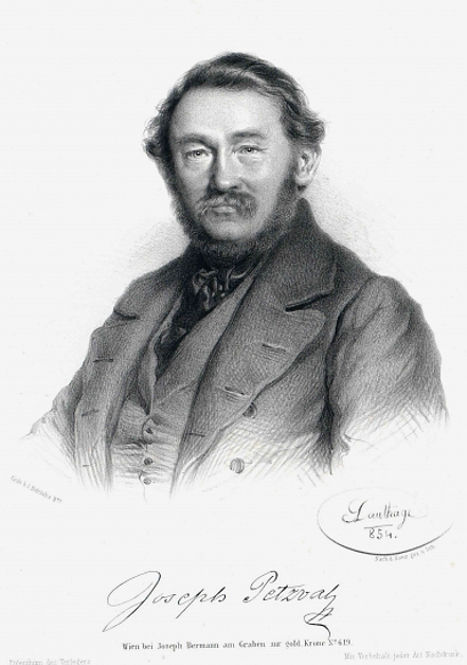
The Viennese physicist Andreas von Ettingshausen drew attention to the problem and suggested that Petzval try to calculate a faster lens. At that time the making of optics rested largely on practical experiment: craftsmen chose combinations of lenses, checked the resulting image and gradually improved the design. Petzval decided to take a mathematical approach that made it possible to calculate in advance the shape, position and characteristics of the optical elements. The volume of calculation turned out to be enormous. Thanks to the support of Archduke Ludwig, Petzval received help from soldiers of the artillery corps who had mathematical training. Eight artillerymen and three non-commissioned officers carried out separate parts of the calculations under his direction. In roughly half a year the research group managed to determine the design of a lens that was considerably superior to the photographic systems then in common use.
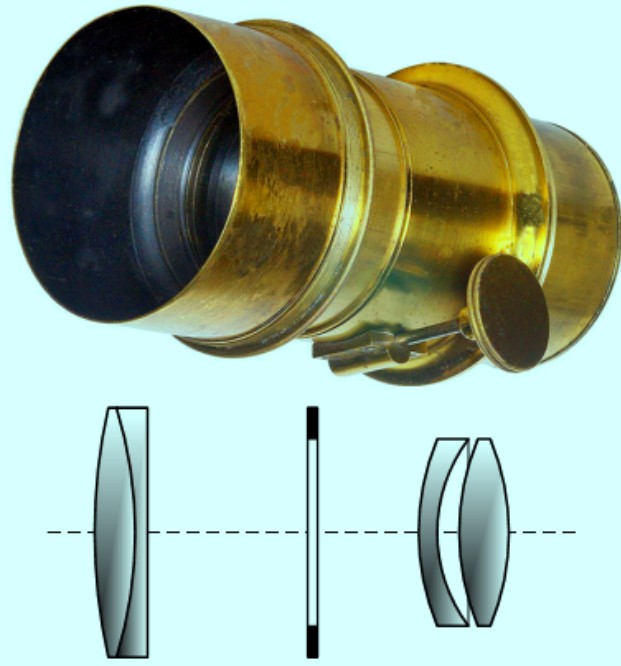
In 1840 Petzval developed a portrait lens made of 4 elements, which let in substantially more light and kept the image sharp in the central part of the frame. By various estimates, its light-gathering power was roughly 16 to 20 times greater than that of earlier lenses. As a result, exposure time fell to a few dozen seconds, which made the photographic portrait far more convenient and opened the way to its wide spread.
The new design also had a characteristic feature: the image was especially sharp in the centre, while towards the edges the sharpness gradually fell off. For portrait photography this was not a serious problem, since the face was usually in the central part of the frame. In time, this softening of the background came to be valued as an artistic effect too, and lenses built on Petzval’s design still interest photographers today.
Cooperation with Voigtländer
To turn his calculations into a camera that could be produced in series, Petzval needed an experienced optics manufacturer. That partner was the Viennese businessman Peter Wilhelm Friedrich Voigtländer, who headed a well-known family firm. In 1840 Petzval handed over the results of his research to him and, according to commonly cited accounts, received a one-off payment of about 2,000 gulden. The agreement did not give the scholar any share in the income from future sales.
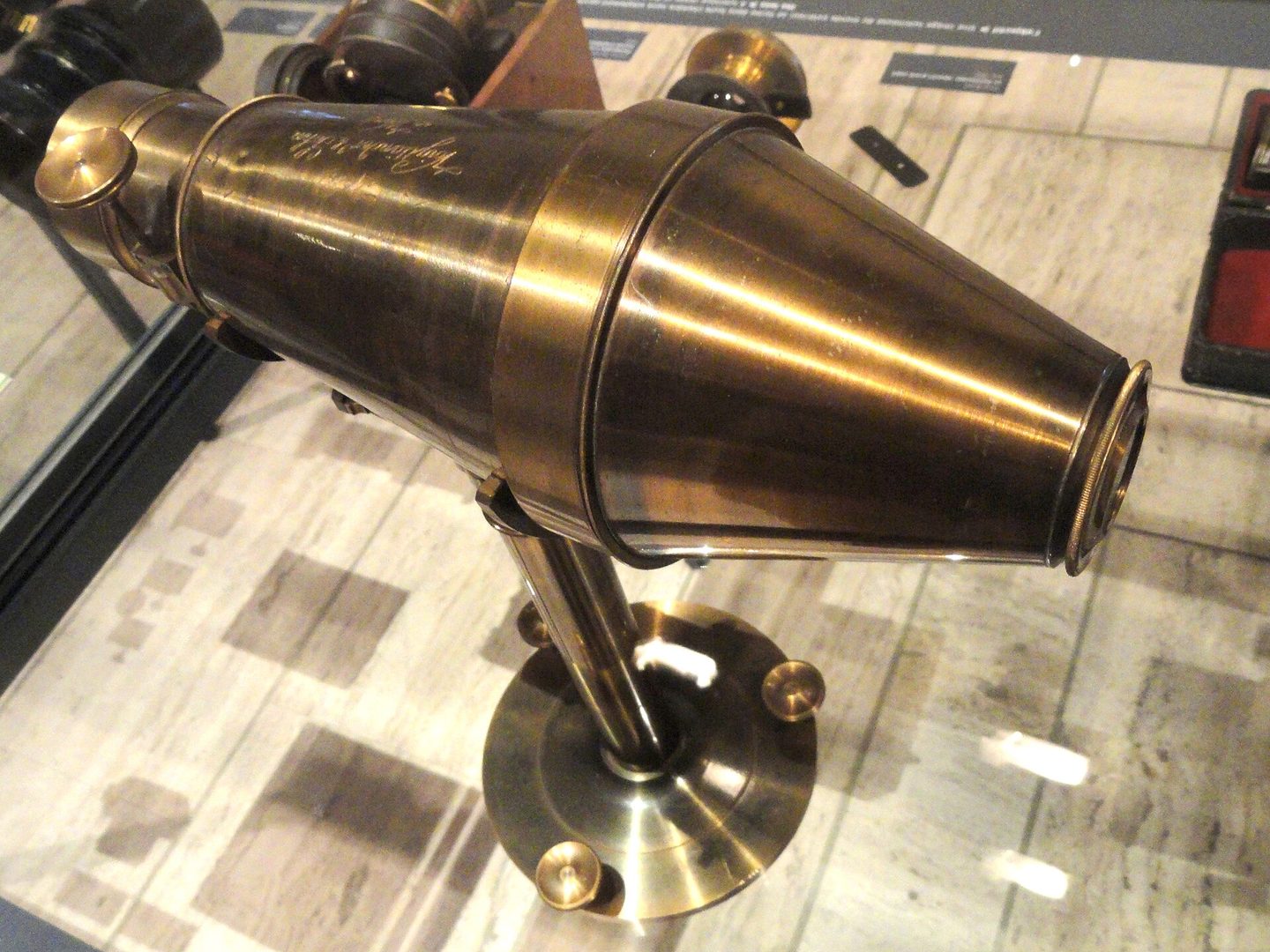
Voigtländer quickly appreciated the commercial prospects of the invention. As early as 1841 his company began producing cameras with Petzval’s lens, including an unusual camera with a cylindrical metal body. The new optics made it possible to take good portraits much faster, so the firm’s products were in great demand. In the following decades tens of thousands of lenses based on Petzval’s calculations were made, and Voigtländer himself gained international recognition and considerable income.
The success, however, gradually destroyed the relationship between the inventor and the businessman. Petzval believed that his scientific merits were being unfairly assessed, while the main commercial benefit went to the manufacturer. Further discontent was caused by the expansion of production outside Austria, where copyright protection remained limited. By 1845 the disagreements had grown into an open conflict, after which the cooperation effectively ended. Voigtländer went on producing and improving lenses, while Petzval tried to develop new optical systems on his own.
Scientific research and conflicts
For his further work Petzval equipped his own workshop in the premises of a former monastery on the Kahlenberg, a hill in Vienna. Here he made and processed lenses and calculated designs for telescopes, binoculars and other optical instruments. He paid particular attention to the causes of the image distortion that occurs when light passes through a system of lenses. Some of the regularities he discovered later came to bear his name, including Petzval field curvature, a phenomenon in which a flat object corresponds to a curved surface of sharpest image.
Petzval’s scientific interests were not limited to optics. He continued to work in mathematics and physics, and he often entered into sharp disputes with other researchers. Particularly well known was his confrontation with Christian Doppler, who had proposed an explanation for the change in the frequency of waves when a source moves relative to an observer. Today this principle is known as the Doppler effect: for example, the sound of an approaching train seems higher in pitch, and that of a receding one lower. Petzval considered the mathematical basis of the theory insufficient and in 1852 sharply criticised Doppler in public at meetings of the Austrian Academy of Sciences. He doubted that the proposed explanation was correct and demanded a more rigorous mathematical proof. The dispute became personal, and part of the scientific community initially supported Petzval’s objections. At the time Doppler was already seriously ill, and he died soon afterwards.
Later developments in physics confirmed the existence of the Doppler effect. Petzval’s student Ernst Mach later showed that some of the propositions his teacher had considered incompatible could in fact be reconciled. This episode noticeably affected Petzval’s reputation, since his uncompromising nature often turned scientific discussions into protracted conflicts.
Despite his disagreements with colleagues, he continued to work productively. In 1853 and 1859 two volumes of his study on the integration of linear differential equations were published and were highly rated by mathematicians. At the same time Petzval looked for ways to resume production of his own optical designs, and in the mid-1850s he began working with the Viennese craftsman Carl Dietzler. One result of this work was the “Orthoskop” lens, intended for landscape photography and giving a more even sharpness across the image. The improved design was presented in 1857, but it failed to repeat the commercial success of the earlier portrait lens. Dietzler’s business ran into financial difficulties and went bankrupt in 1862.
The loss of his scientific papers and his later years
A particularly heavy blow for Petzval was an incident in 1859. In his absence, unknown people broke into the workshop on the Kahlenberg, where his drawings, calculations and unpublished research were kept. A significant part of the materials was destroyed or disappeared, including the manuscript of a large work on optics on which the scholar had worked for many years. The circumstances of the incident remain unclear: it is not known whether the documents were destroyed deliberately or as a result of an ordinary burglary.
The loss of the manuscripts, the failures with producing new lenses and the long-running conflict with Voigtländer gradually weakened Petzval’s interest in photography. Afterwards he devoted more and more time to acoustics, studying the vibration of strings, the propagation of sound and the mathematical theory of musical instruments. Among his later developments was a musical tuning system that divides the octave into thirty-one intervals.
His contemporaries described Petzval as an energetic, independent but extremely difficult man to deal with. He loved horse riding and fencing, and was so good at the latter that he was considered one of the strongest fencers in Vienna. At the university he was respected for his deep knowledge and his ability to explain complex questions in a fascinating way.
The scholar’s personal life remained private and closed for a long time. Only in 1869, at the age of 62, did he marry Katharina Schlegl, who had previously kept house for him. A few years later, however, his wife died, and Petzval was left alone again. In 1877 he ended his teaching career at the University of Vienna, to which he had devoted 40 years, and settled permanently on the Kahlenberg.
After retiring, Petzval appeared less and less often in scientific society, preferring to spend his time on his own research. His home in the former monastery was sometimes called a kind of castle by his contemporaries. He continued to work on mathematics and acoustics, but almost stopped speaking in public and gradually narrowed his circle of acquaintances. According to the recollections of people who knew him, one of the few constant companions of the elderly scholar was his beloved horse.
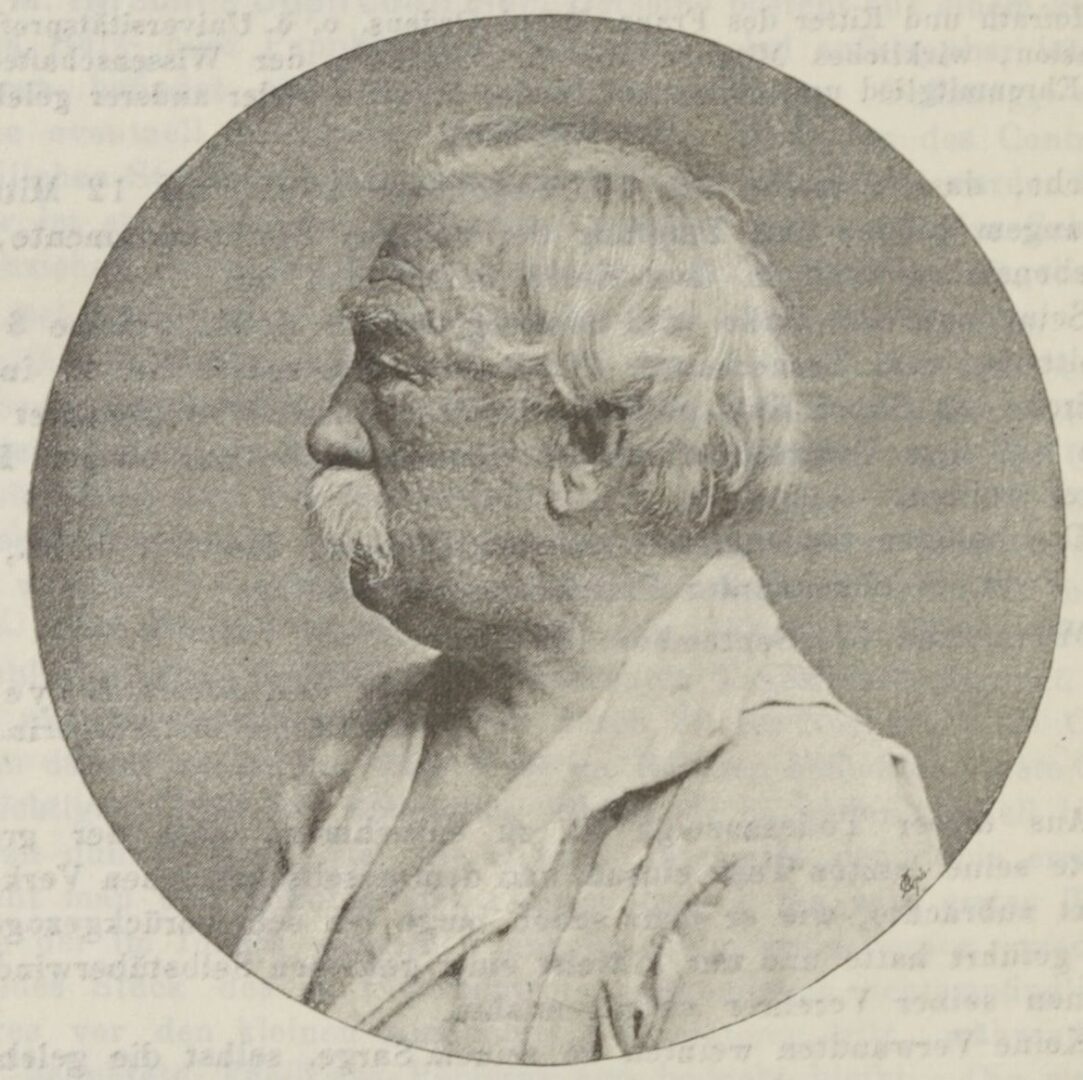
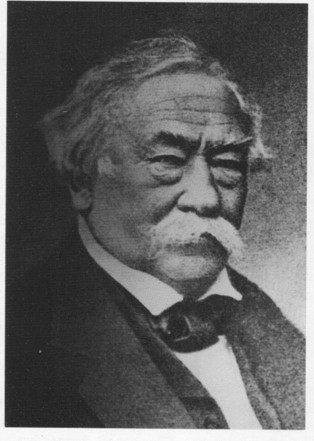
Josef Petzval died on 17 September 1891 in Vienna at the age of 84. Only a few friends, former students and representatives of the university attended his funeral. By then his name was still known to specialists in mathematics and optics, but the wider public hardly remembered the man whose calculations had once brought about a real revolution in photography.
Remembrance
After Petzval’s death, his achievements gradually gained wider recognition. In 1901 a monument to the scholar, made by the sculptor Anton Brenek with funds from the Austrian Photographic Society, was erected in the inner arcaded courtyard of the University of Vienna. Streets, scientific institutions and geographical features were later named after him, including a crater on the far side of the Moon and a glacier in Antarctica. In his native town of Spišská Belá there is today a Petzval museum of the history of photography and cinematography, housed in the house where he was born.
Petzval’s main scientific legacy was his methods of mathematical calculation for optical systems, which made it possible to move from numerous practical experiments to more precise lens design. His portrait lens, created in 1840, helped turn photography from a laborious technical procedure into an accessible way of preserving a person’s image.
You may also like these articles:
- Sziget 2026 — Part 2. Day 0
- The History of the Austrian Town of Straßburg
- An Emigrant’s Observations: How to Improve Your Chances of Getting Lucky as an Emigrant
- Lise Meitner: An Outstanding Researcher of the 20th Century from Austria
- Sziget 2026 — Part 1. The Beginning
- The History of the Austrian Town of Peuerbach
- An Emigrant’s Observations: My Strongest Motivation in My New Country Is the Fear of Returning to My Homeland
- New Restaurants in Vienna Opening in November 2026
- Josef Petzval: The Austro-Hungarian Mathematician Who Was Ahead of His Time
- Photo Report from Almost-Summer Malaga 2026
- The History of the Austrian Town of Bad Aussee
- Anti-Jewish Pogroms in Vienna, 9–10 November 1938
- The Most Beautiful Christmas Markets in Vienna
- Andrea Bocelli Live in Vienna: A Look Back at the Concert
- An Emigrant’s Observations: What “Home” Means After Nine Years Abroad
- An Emigrant’s Observations: My Nine Years in Austria
- An Emigrant’s Observations: Reverse Culture Shock
- My Beloved Vienna: By the Numbers, Not Just from the Heart
- An Emigrant’s Observations: A Fresh Look at the Exhausting Process of Adapting to Another Country
- Photo Report from Donauinselfest 2026. Part Two: Giant Rooks and Another Evening on the Island
- Photo Report from Donauinselfest 2026. Part One: My Ugly Clementine
- An Emigrant’s Observations: The Russian Language Without the “Russian World”
- Marilyn Manson Live in Vienna: A Look Back at the Concert
- An Emigrant’s Observations: Feeling Guilty About My Good Life
- An Emigrant’s Observations: What Surprises Me About the Austrian Attitude to Beer
- LP Live in Vienna: A Look Back at the Concert
- An Emigrant’s Observations: Anti-Putinism and the Imperial Lens
- An Emigrant’s Observation: How Big Is Our Small World?
- An Emigrant’s Observation: How Difficult Is It to Make New Friends?
- It’s My Birthday Today!
- My Life in Austria: July 2026
- An Emigrant’s Observations: My Toxic Homeland —Yesterday, Today and Tomorrow
- Ricchi e Poveri Live in Vienna: A Night of Music and Memories
- An Emigrant’s Observations: Simple Ways to Support Your Emotional Well-Being
- Eisenstadt in Pictures: A Day in a Small Austrian City
- Exploring Vienna’s Neubaugasse Flea Market
- Sofia Isella Live in Vienna: A Concert Review
- An Emigrant’s Observations: When Mistakes Become Toxic While Adapting
- An Emigrant’s Observation: Extreme Heat in Europe and Austria in 2026
- My Emigration to Austria: June 2026 Recap
About the project:
My name is Anatoly, and I am the author of Emigrants.life. In 2017, my family and I emigrated from Krasnodar to Austria. My wife and I work in marketing, and we created Emigrants.life to help people who are thinking about moving abroad.
Emigrants.life publishes daily news about life and everyday matters in Austria and Europe. Follow us on Facebook, Instagram and Twitter, or join our Russian-language Telegram channel.