
Julia and I have had quite a lot of difficulties during our 9 years in Austria. There were periods when we didn’t have enough money, problems with work, and no clear idea what to do about visas and documents. Sometimes it’s annoying to have to keep learning German all the time, and sometimes I miss my former status or the comforts I used to have. There are moments when something doesn’t work out and you can’t help wondering why, even after so many years, you still have to overcome yet another difficulty. But as soon as I imagine that we might move back to Russia, all these problems become completely incomparable to the horror that the very thought of returning provokes. I started to wonder: why is that?
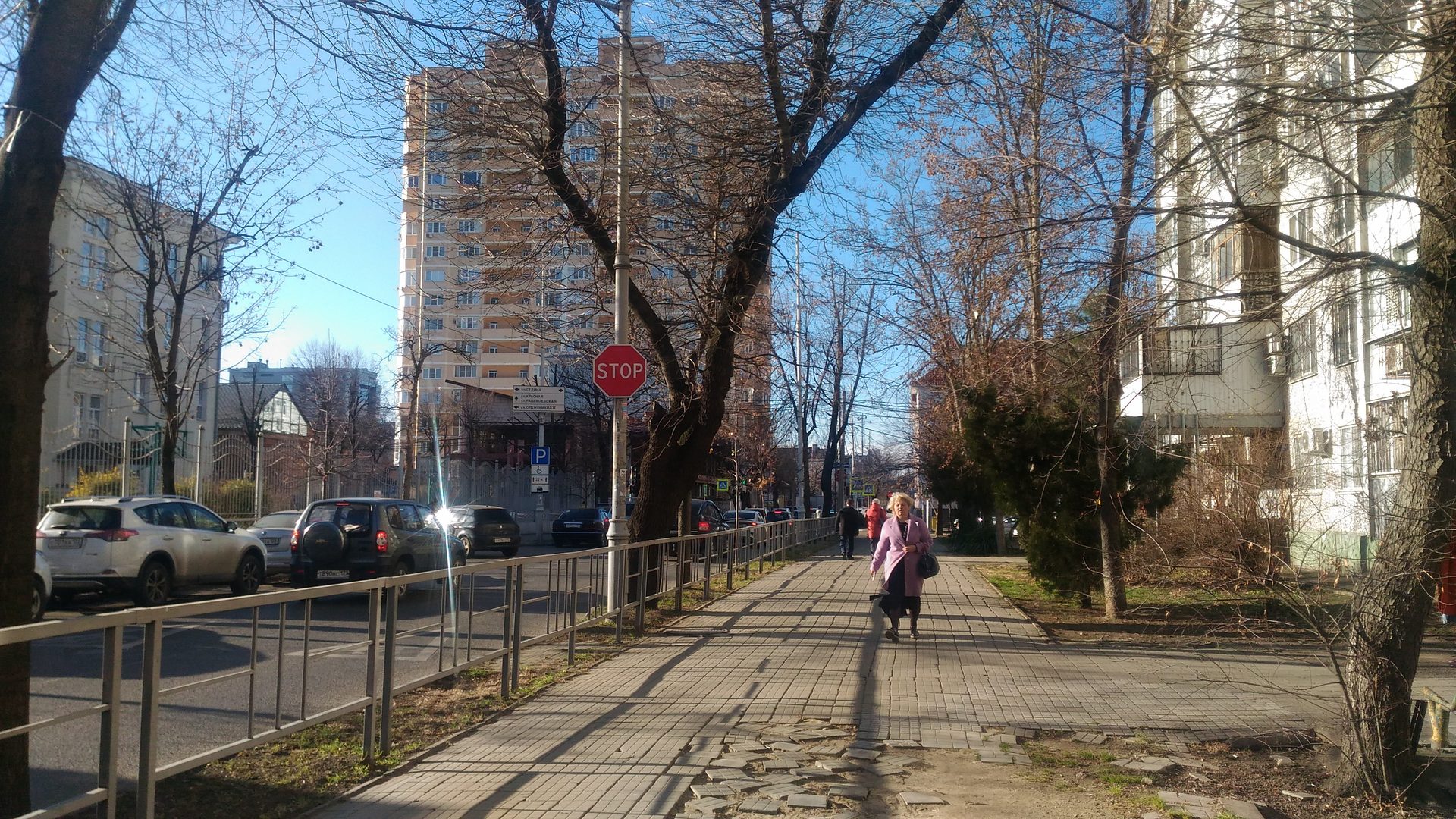
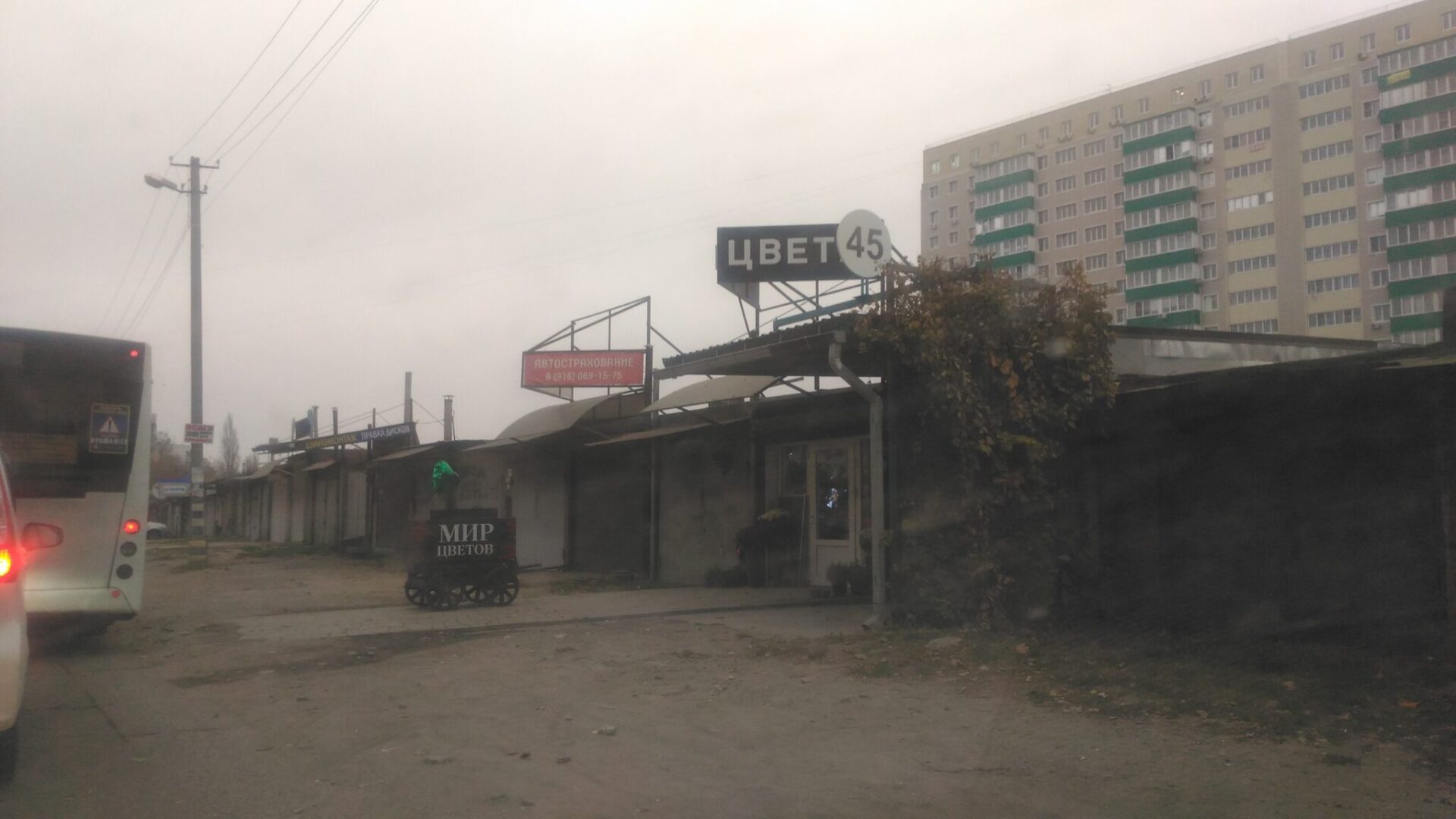
When I analyse my existence in Russia and my life today, I associate returning to my homeland with plunging into a world of constant rudeness, aggression, dirt and having no rights, and I mean dirt in the most literal sense of the word. I still shudder when I remember how in Russia you constantly had to wash everything. You drive a car, but you still bring dirt home. You have to wash your shoes, clothes, the car, the windows, the balcony, various things, all the time scrubbing something, cleaning, putting things in order. And however much you clean, the dirt appears again, and you’re literally drowning in it.
But what always frightened me far more were the people I had to deal with in everyday life: aggression in shops, on public transport, on the roads, in the most ordinary day-to-day situations. You’re constantly looking over your shoulder, trying to work out in advance where the next unpleasantness might come from, where you’ll have to defend yourself, and where it might, perhaps, be better to be the first to reply as rudely as possible so that they leave you alone. And that’s where your energy and your life go!
I had a constant, endless inner tension, and sometimes it made you simply want to die right here and now, just so that nothing else would happen. Gradually the desire to talk to the people around you disappears. You want to reduce any contact to a minimum, shut yourself in your own flat or car, turn the music up loud and be alone, so that nobody touches you.
And the homeland provides such moments in abundance! I still shudder when I remember crossing the Russian border. You’d think you’re returning to your own country, but they talk to you like cattle. You can meet the same humiliating treatment from the police, from officials and from generally anyone who has any power at all. Sometimes it seems that a person only needs to get minimal authority to be ready to trample over your bones. This applies not only to dealing with the state. I remember the feeling of having no rights at all at work, in my own flat, at my dacha, in my car. You’re in your native country, but you’re constantly forced to prove that you have any rights at all.
Here in Austria, when I run into yet another restriction and realise that there’s something I can’t achieve yet, I sometimes remind myself that I’m not even living in my homeland. And yet it is here that I feel much more protected and calm.
In Russia, as I remember it, I constantly had to think about which piece of paper I needed to get, which phone number to keep at hand, whom to call if a problem arose, and who could protect me at all. Because it’s impossible to resist everyone around you endlessly. They can answer one piece of paper with another, there will be a next decision for any decision, and even when you’re sure you’re right, that doesn’t mean at all that you won’t end up losing money, time or property.
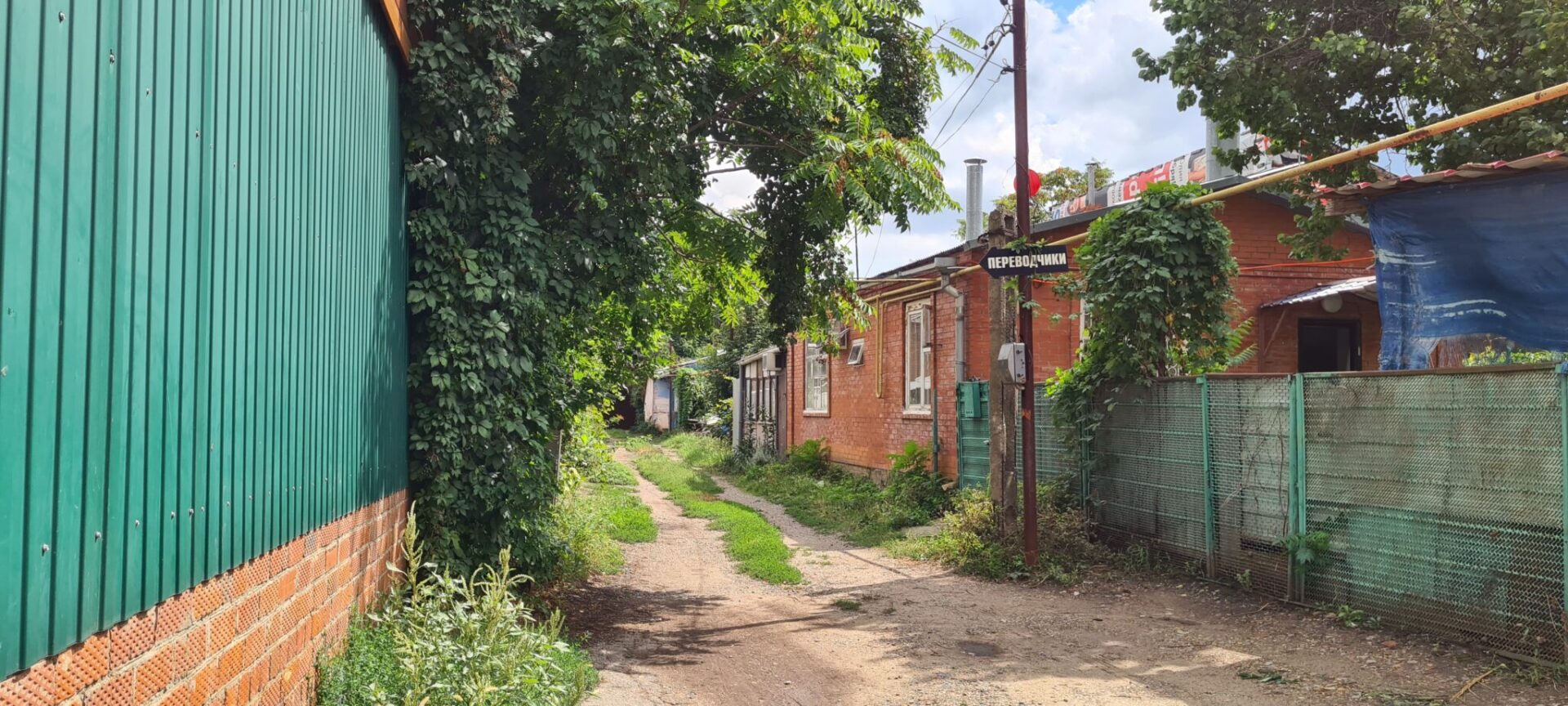
You may suddenly find out that you’ve accumulated huge tax debts, or discover that a court hearing has already taken place somewhere, one you knew practically nothing about, and you’ve been deprived of something, or come to work and hear that the company has no money for salaries. Pension contributions are dutifully collected from your income, but that doesn’t yet mean you’ll ever receive the pension you’re counting on. Even your own home doesn’t give you a sense of peace. In the entrance hall of your building, the lighting, doors, lift or sewage system can go unrepaired for years. You try to get the electricity, water or internet to work properly, and again you have to argue with someone, write formal complaints, look for ways to make people do their duties.
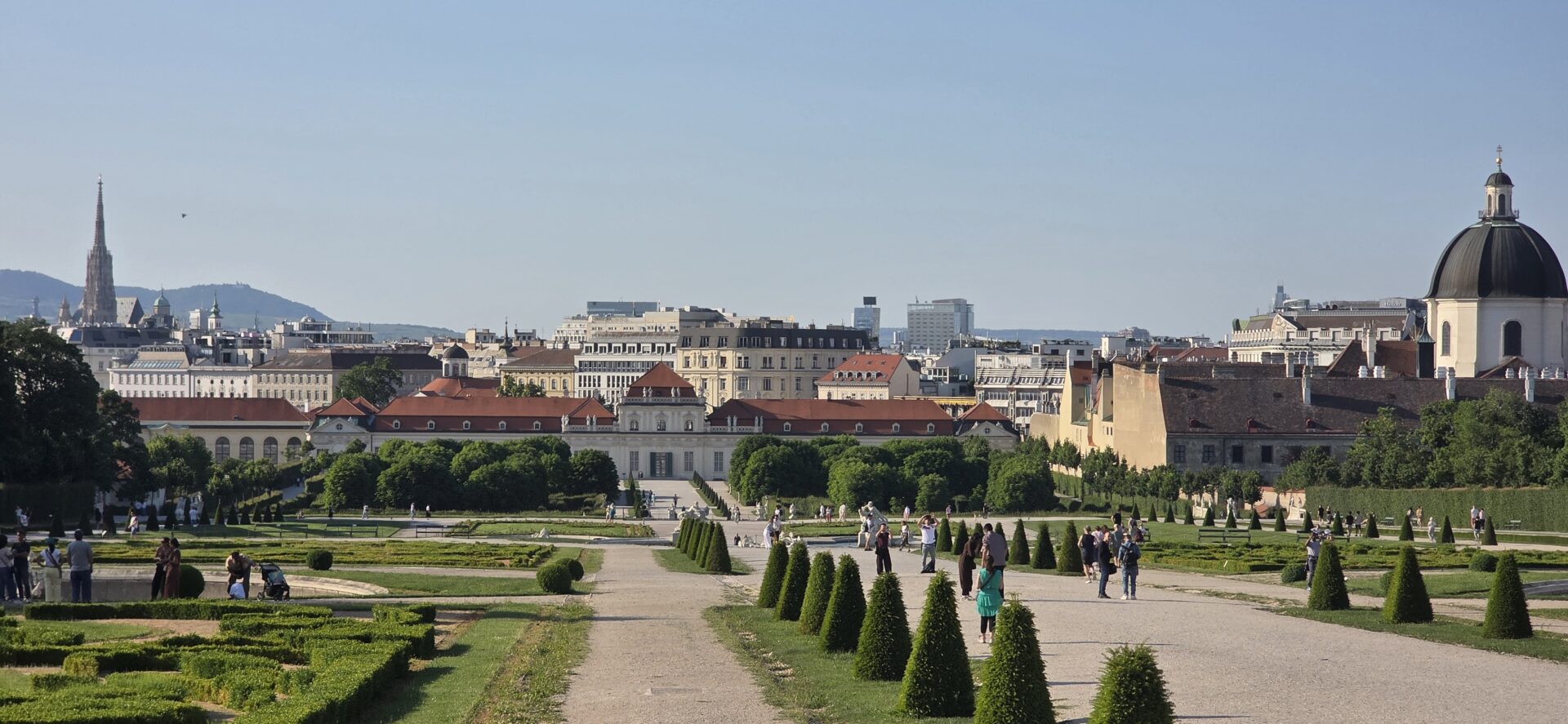
In 9 years of living in Austria, our electricity has never once been cut off. Not once! The internet has never stopped working either because of some breakdown or maintenance problem. The water has never been cut off. I can hardly imagine now a situation where you turn on the tap and there’s no water, or the electricity suddenly goes out in the flat. And yet over these years we even lived through a small flood in Vienna and the coronavirus in Linz. But still we felt much calmer here than in our homeland.
But for me, safety is a much broader concept than working utilities or the ability to protect your rights. In Austria I feel calm even among strangers, whether in a shop, a restaurant, a bar, a club or on the street. I’m not afraid of a policeman, a passer-by, a random customer in an establishment or someone who has had too much to drink. It seems to me that the overwhelming majority of drunk people I meet here are considerably less aggressive than some completely sober people I came across in Russia. And I’m not talking only about men. In Russia you could meet aggression from women, from elderly people, from practically anyone. Here, though, I often see elderly people who look content with life, cheerful, sociable, interested in what’s going on around them. Perhaps some of them are lonely, perhaps they have plenty of problems too. I don’t know and I don’t intend to check. What matters far more to me is that in front of me is a person who isn’t bristling with hatred and malice, and from whom I don’t expect that they’ll suddenly start insulting me or try to hit me with a stick or a bag. Even dogs and children here mostly behave quite calmly, and I feel comfortable around them too. Although, however terrible it may sound, when I do have to deal with a child’s inappropriate behaviour, it often turns out to be a child from an immigrant family from Slavic countries, the Balkans, Turkey or Syria. Sometimes their behaviour really does make me feel uncomfortable and unsafe. But there are still not many such cases, and they don’t change my overall sense of calm.
There is another reason why I’m so afraid to return to Russia. It’s the people I meet here, in Austria, and would never meet there, in Russia. Over these years I’ve met an incredible number of interesting people. Some are engaged in science, some in music or art, some are passionate about medicine or biology. They travel, take part in international conferences, and are interested in research, new technologies and what’s happening in other countries. And to make such acquaintances you don’t have to live in Vienna, the capital of Austria. Even relatively small Linz is full of such interesting and talented people, whom you can meet in any bar in the evening. Many of them know several languages and keep up with the latest news and scientific breakthroughs. They are open to the world, or, in a word, open-minded. It’s interesting to talk with them, to learn their views, to listen to stories from their lives, to discuss all kinds of questions. I like this flexibility of perception, this readiness to get excited about something new and go beyond the usual picture of the world. And I imagine with fear finding myself again in an environment where you listen to a person and think: God, what nonsense he’s talking! It’s utterly incredible rubbish, drivel that’s hard even to imagine. And the person sitting across from you may be the CEO of a large company, a successful entrepreneur or a university professor. In the first 35 years of my life I listened to so much of this kind of nonsense that I sometimes still can’t get over it. And it’s especially frightening to remember the confidence with which people could say completely absurd things, take pride in their own ignorance and feel no desire to understand anything at all.
This pride in ignorance, which for some reason is customarily presented as a special path, one’s own opinion or an original view of the world, has always irritated me enormously. The very prospect of finding myself again in an environment where ignorance can be considered a virtue, and an unwillingness to understand what is going on is seen as a sign of independence, frightens me.
However hard things get for me in Austria, here I feel part of a big world, a truly big, international world that includes the USA, China, Argentina, South Africa, Israel and a huge number of other countries. Of course, they are all different, with different interests, cultures, histories and political systems, but for me they still exist in some shared global space.
Here you talk to people from different countries, find out what they live for, how they work, what they think about, what they research, what they want to achieve. I like feeling this connection with a huge world that doesn’t end at the borders of a single country and isn’t obliged to look at everything happening through one political or national idea.
That is exactly why the concept of the invented “Putin’s Russian World” feels so alien to me. Today’s Russia increasingly seems to me like a separate space fenced off with barbed wire, from which aggression and threat constantly emanate. In my mind, returning there is like going back to prison, to a world I once managed to leave.
But perhaps the most important change I notice in myself over these 9 years is not even connected with safety, acquaintances or the opportunity to travel. I feel that I’m developing here. And for me this is fundamentally different from how I lived in Russia, where I had to spend a significant part of my time conforming.

In Austria I learn languages, gain new knowledge, and get to know advanced technologies and solutions. I’m interested in finding out what’s happening in sales, marketing, public relations, psychology and other professional fields. I talk to people from all over the world, learn about their experience, and hear about new research and approaches to work.
And for me this isn’t a status game at all. I don’t need to brag about how many books I’ve read in a week or try to impress people with the amount of information I’ve taken in. I remember how popular such conversations can be in Russia, when people take pride in their reading speed but don’t even ask themselves how deeply you can understand a book if you read it at such a pace.
I’m much more interested in discussing what exactly a person has read, what thoughts it gave them, what they agree with, what surprised them, what new things can be learned from a book, a study or a conversation, and which ideas are worth trying to apply in one’s own life or work. For me this is a completely different level of communication, one that lets me keep learning and developing.
And in Russia a significant part of my energy went into conforming. I don’t mean a person’s ordinary ability to adapt to new conditions, but the need to constantly adjust to a toxic environment in order to avoid trouble. If you work in a company where the CEO is convinced that artificial intelligence is complete nonsense, the internet is complete nonsense, and computers are complete nonsense too, you have to spend time and energy on arguments, explanations or attempts to prove the obvious. And sometimes it’s much safer to simply agree with the boss, even if you perfectly well understand how absurd his convictions are. And it’s far from being only about technology. In such an environment you’re often expected to demonstrate complete loyalty to management, to the authorities, to the views accepted in the team. If the company believes that Navalny is a traitor, then you must think so too. Tomorrow you move to another company where the attitude to him is quite different, and you can suddenly start loving Navalny. Then Putin again. Then Navalny again. It doesn’t matter what your convictions really are. The main thing is that you know how to adjust in time to those on whom your position depends. And, unfortunately, I too often met people for whom such behaviour was completely normal. Who you really are, what you believe, what you think, what you consider right: what difference does it make? The main thing is that you can adjust to circumstances and earn something for yourself.
But I do care.
What matters to me is what kind of person I’m becoming, what I find out, what I learn, how I treat those around me and how far I can remain myself. I don’t want to spend my life constantly looking for ways to protect myself from arbitrary treatment, avoid another conflict or guess which opinion should be considered right today. For me, development means being able to direct my energy to what is truly interesting: new knowledge, people, ideas and my own life. And conforming, in the sense in which I remember it from Russia, was connected above all with the need to constantly defend what you already have. Sometimes you make incredible efforts to achieve just one thing: that nothing bad happens to you today.
That is why Russia, and not only Putin’s Russia today but in many respects the country I remember from the first 35 years of my life, evokes such heavy feelings in me. It seems to me that it was there that the most unpleasant traits of my character showed themselves: aggressiveness, irritability, the urge to defend myself in advance, to answer rudeness with rudeness, to distrust those around me. And these are exactly the traits I’m trying to fight here in Austria. I feel that in this country I’m becoming better.
That’s why I’m so afraid of returning to Russia, and why having to learn German, worrying about documents or running into yet another of the difficulties of life abroad seem to me so trivial compared with all the negatives connected with my homeland. After all, compared with all of that, German is just total rubbish!

You may also like these articles:
- Sziget 2026 — Part 2. Day 0
- The History of the Austrian Town of Straßburg
- An Emigrant’s Observations: How to Improve Your Chances of Getting Lucky as an Emigrant
- Lise Meitner: An Outstanding Researcher of the 20th Century from Austria
- Sziget 2026 — Part 1. The Beginning
- The History of the Austrian Town of Peuerbach
- An Emigrant’s Observations: My Strongest Motivation in My New Country Is the Fear of Returning to My Homeland
- New Restaurants in Vienna Opening in November 2026
- Andrea Bocelli Live in Vienna: A Look Back at the Concert
- An Emigrant’s Observations: What “Home” Means After Nine Years Abroad
- An Emigrant’s Observations: My Nine Years in Austria
- An Emigrant’s Observations: Reverse Culture Shock
- My Beloved Vienna: By the Numbers, Not Just from the Heart
- An Emigrant’s Observations: A Fresh Look at the Exhausting Process of Adapting to Another Country
- Photo Report from Donauinselfest 2026. Part Two: Giant Rooks and Another Evening on the Island
- Photo Report from Donauinselfest 2026. Part One: My Ugly Clementine
- An Emigrant’s Observations: The Russian Language Without the “Russian World”
- Marilyn Manson Live in Vienna: A Look Back at the Concert
- An Emigrant’s Observations: Feeling Guilty About My Good Life
- An Emigrant’s Observations: What Surprises Me About the Austrian Attitude to Beer
- LP Live in Vienna: A Look Back at the Concert
- An Emigrant’s Observations: Anti-Putinism and the Imperial Lens
- An Emigrant’s Observation: How Big Is Our Small World?
- An Emigrant’s Observation: How Difficult Is It to Make New Friends?
- It’s My Birthday Today!
- My Life in Austria: July 2026
- An Emigrant’s Observations: My Toxic Homeland —Yesterday, Today and Tomorrow
- Ricchi e Poveri Live in Vienna: A Night of Music and Memories
- An Emigrant’s Observations: Simple Ways to Support Your Emotional Well-Being
- Eisenstadt in Pictures: A Day in a Small Austrian City
- Exploring Vienna’s Neubaugasse Flea Market
- Sofia Isella Live in Vienna: A Concert Review
- An Emigrant’s Observations: When Mistakes Become Toxic While Adapting
- An Emigrant’s Observation: Extreme Heat in Europe and Austria in 2026
- My Emigration to Austria: June 2026 Recap
About the project:
My name is Anatoly, and I am the author of Emigrants.life. In 2017, my family and I emigrated from Krasnodar to Austria. My wife and I work in marketing, and we created Emigrants.life to help people who are thinking about moving abroad.
Emigrants.life publishes daily news about life and everyday matters in Austria and Europe. Follow us on Facebook, Instagram and Twitter, or join our Russian-language Telegram channel.