
In the 9 years I’ve lived in Austria, I’ve collected quite a few occasions to remember my own former certainty. Julia and I moved here as adults, with settled habits and fixed ideas about how one should live, work and deal with other people. Some of these principles seemed so natural to me that I could hardly have explained where they came from in the first place. But then something fairly trivial would happen, and my habitual reaction would suddenly turn out to be surprisingly out of place. At first I was baffled by other people’s behaviour, but over time questions began to arise about my own as well.
Today I understand that it’s perfectly normal to change your mind when you get new facts and data. But there is a certain context to this in our post-Soviet past. Saying that someone has “flip-flopped” is usually done with such relish, as if the person had finally been caught doing something indecent. How come? Not long ago you confidently said one thing, and now you hold a completely different opinion? They’ll be sure to remind you of your earlier words, especially if you once defended them with feeling. Still, I fully understand this surprise. Sometimes I listen to someone, get ready to object, and suddenly remember that a few years ago I would have gladly agreed with them and perhaps even found additional arguments in their favour. In this article I’ve tried to gather my own observations that could be described precisely as that same phenomenon of “flip-flopping”.
One of these changes concerned meeting up with friends. In Russia I liked making arrangements spontaneously: calling someone during the day and seeing them that same evening. There was a special pleasure in being able to get together quickly, while everyone felt like chatting. After moving to Austria I carried on inviting people in exactly the same way, for that day or for the next. Only here it hardly worked. My acquaintances already had plans they had agreed on in advance. I gradually discovered that in Austria it’s customary to choose a day well ahead that suits everyone taking part. An invitation to go somewhere this evening may even seem like bad manners: the person has already decided how to spend their time. While I was counting on spontaneity, other people’s calendars had time to fill up. Then I, too, started making arrangements in advance and putting meetings in the calendar. Now Julia and I have concerts, trips and evenings with friends all there. True, sometimes a date that suits everyone can only be found a month or even two months ahead. You live nearby, you’re glad to see each other, but you still have to wait before you meet. I still find that hard to get used to at times. On the other hand, the planning itself turned out to be surprisingly convenient. When there’s so much of interest around, you want to make it to this and that, and also to see the people you love. You open the calendar and already know what lies ahead in the coming weeks, what you’re looking forward to and which evening is still free. I like this way of living much more. I used to love spontaneity, and now I happily make plans a month ahead. This is one area where I really did “flip-flop”.
In Russia I was used to the idea that a man should be ready to help a woman simply on the basis of her sex. Offering a hand as she gets off public transport, carrying her bags, standing up for her if necessary: all of this seemed quite natural. It was assumed that you would notice for yourself when to step in. If she has to ask, it means you’re already not attentive enough.
Here I’ve come across a rather sharp reaction to help that nobody had asked me for. The woman is managing perfectly well on her own, and for some reason you’ve already decided that she needs help. In what you did she may see doubt about her independence, though you were guided purely by habitual ideas of politeness. Gradually I came to understand such a reaction better.
Now the expectation that I’m obliged to look after someone all the time on the basis of sex puzzles me. Need help? Ask for it, out loud, in actual words. It’s curious to find myself in a Russian-speaking company again and discover that to some of the women you already look inattentive or even rude. They still expect initiative from you, which here has more than once turned out to be completely ill-timed.
There are a few more important examples where I “flip-flopped”. I used to feel that responsibility for my health always lay with someone else. The doctor was supposed to notice a problem and explain what to do, and my wife or, maybe, even my mum was supposed to worry about me in good time, remind me, insist, and scold me if necessary. Yet it was I who had to live with the consequences of everyday decisions that the people around me might not even know about.
In dealing with Austrian doctors I got used to the idea that you need to come to an appointment prepared: to be able to say what’s bothering you and to have thought through your questions. I have the impression that here people are much less ready to talk you into looking after yourself. How much to move, what to eat, how closely to watch your condition: much is left to your own discretion. I like this independence. Now I’m interested myself in reading about nutrition and physical exercise, and in working out what suits me in particular. I pay attention to how I feel, try changing habits, and see what comes of it. Sport has gradually become an ordinary part of my life. The wish to feel better is quite enough for me to find time for it. Some things we can do together with Julia, supporting each other.
All this takes resources, and before, almost my whole life revolved around work. If I needed to stay late, I was always ready to stay. There seemed to be nothing special about it: there’s work, it has to be finished, so I’ll have to spend a bit more time. Everything else adjusted to the work schedule. I got used to this routine and rarely thought about how much energy it takes to keep living up to it all the time.
Proper sleep and rest have now acquired enormous importance for me. I want to start work well rested, keep my attention sharp and cope properly with my tasks during working hours. For that, too, I have to stop in time and recover my strength. Tiredness gradually stopped seeming like something one can put up with indefinitely, and the heroic feat I was so proud of in Russia became an unacceptable sacrifice that nobody needed.
Work is still important to me. I’m interested in doing my job and seeing the results. At the same time, I value the time that belongs to Julia and me or to me alone. Even the most ordinary quiet evening at home has its value. And now, when planning my day, I take into account that after work my life goes on.
I used to feel a considerable sense of guilt about alcohol. There seemed to be something shameful in drinking itself, even if no trouble followed. Of course, it’s hard to take it lightly when so many conversations about alcohol are linked to broken families and people gradually losing everything. The idea that alcohol is evil was quite understandable to me, and close to my own view.
Here in Austria, as in the neighbouring countries, I found a much more neutral attitude to drinking. It may well accompany a pleasant get-together and remain an ordinary part of the evening. Gradually I, too, began to treat it somewhat more indifferently. At the same time, I myself need to understand when it’s time to stop, and be able to do it.
Now I’m especially surprised by attempts to excuse rudeness or some antic by saying the person was drunk. I made the decision to drink, and it’s up to me to answer for my behaviour as well. The people around me came to spend time together, and they had their own expectations of the evening. It’s unlikely that anyone planned to keep an eye on my condition and take away my next beer. Alcohol gives no leniency here. If what people remember after a get-together is, above all, how unpleasantly I behaved, there may well be no next invitation.
That said, I was able to excuse my own sharpness without any alcohol. Living in Russia, I got used to regarding a readiness to hit back sharply as a useful quality. It’s best to make it clear at once that it’s better not to mess with you: that way there’s less chance of anyone starting to test your patience. Gradually you yourself get used to being on guard in advance, sizing up the person, and thinking about how gently you can talk to them. Aggression becomes a familiar way of heading off possible trouble, although it often creates that very trouble itself. Sometimes this manner reminds me of the behaviour of a small dog that first rushes in barking and only then works out whom it was threatening and why. What if they get scared? Then you can consider that you’ve managed to defend your place. I was always worn out by these constant attacks. Now I have much less desire to keep up communication in which you have to show all the time that you’re ready to quarrel, and I’m determined to change my own behaviour completely. In a word, I’ve “flip-flopped”!
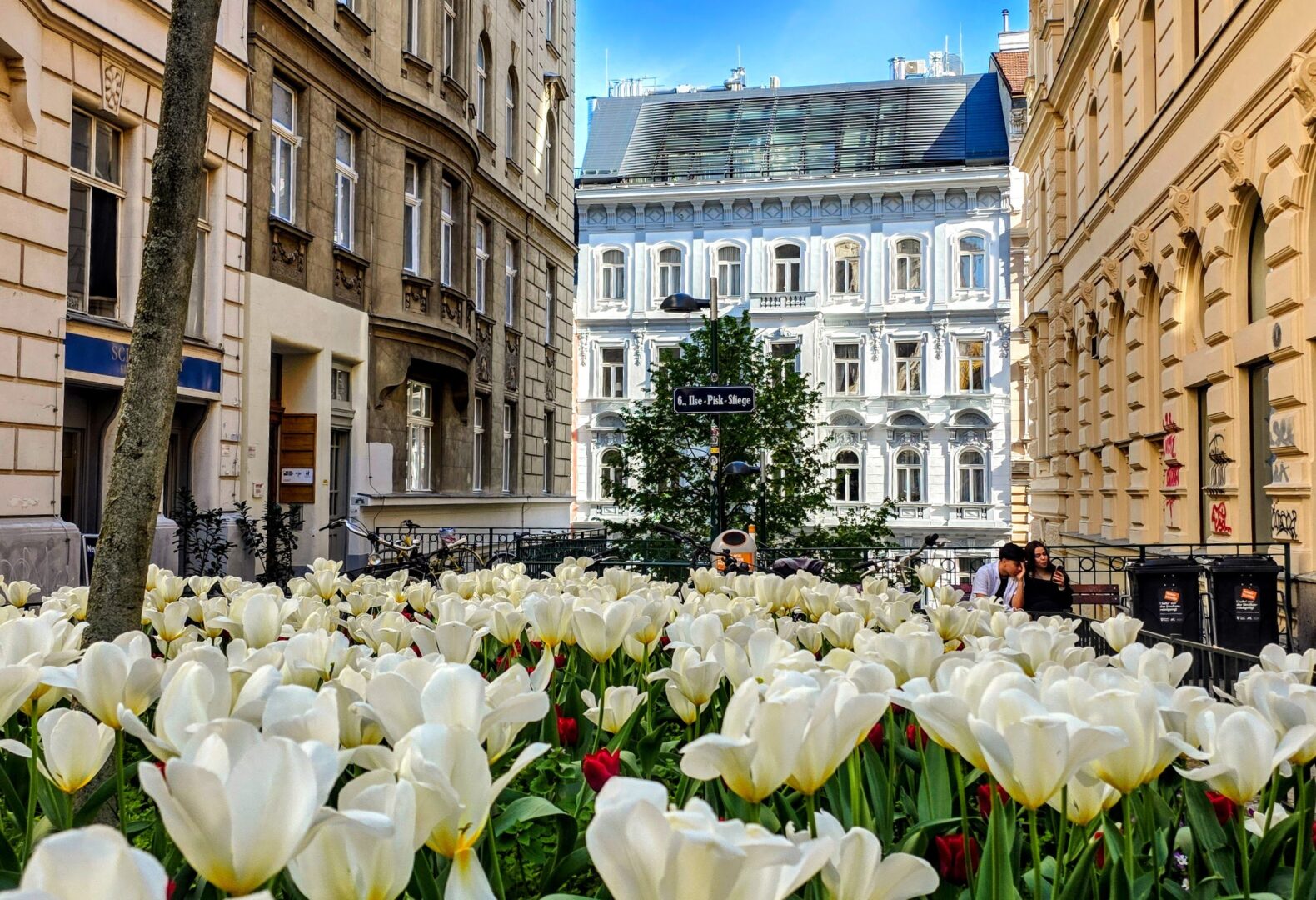
But generally, this wariness used to affect even my attitude to my neighbours. In Russia I often expected them to try to impose someone else’s rules on me, and for some reason precisely at my expense. In Austria my experience has been completely different. People try to support each other and respect the interests of those who live nearby. Behind all this I sense a simple understanding that people can cause each other inconvenience endlessly. In all these years I haven’t once had to face the neighbourly brazenness that I used to prepare for in advance.
I’ve met similar goodwill in people of very different backgrounds. In my life I’ve come across outright boors and, on the other hand, very well-mannered people, regardless of nationality. Among Austrians there were both kinds, just as among Russians, Germans or Italians. Nationality did very little to help me understand whom I was dealing with. Much more became clear in the very first conversation, from how a person listens, how they react to disagreement, and how they treat those around them. Gradually it became harder and harder for me to talk about the merits and shortcomings of a whole people when every time what stood before me was an individual with their own character and upbringing.
Along with this, questions arose about national pride as well. When I’m invited to take pride in someone on the basis of shared origin, I increasingly wonder what their merits have to do with me. I understand how one can love Pushkin, admire Gaito Gazdanov or find something important for oneself in Solzhenitsyn. Their books can mean a lot in my life. It’s just that I find it harder and harder to understand how the talent of these people becomes a basis for pride in one’s own nationality.
Of course, I notice cultural differences. In some places people express emotions more readily, in others they behave more reservedly, and they understand politeness differently. I find it especially unpleasant when national pride starts to sound like a demand. You’re already being told whom you’re supposed to love, whom to hate and for which latest war to feel enthusiasm. In the words “we are Russians, God is with us” I find nothing that would help me understand myself better. What I do hear clearly is a wish to dispose of my feelings. And I increasingly don’t want to agree that the place of birth gives anyone such a right. Or, for example, a person has managed to get himself set up at the expense of others, and he’s already called a go-getter, someone who knows how to get what he wants. Whereas the person who obeys the laws gets a completely different label: “terpila”, a pushover. It turns out you also have to justify yourself for sticking to norms that someone else has disregarded for his own convenience. I had to adapt to this somehow and break rules here and there in order to have a place in the hierarchy and not lose my status.
In Austria, the very attitude to these things is much closer to me. From what I have observed, it’s usually assumed here that an existing rule has to be followed. You may not like it, you may explain your position, but your dissatisfaction alone is not enough for an exception to be made for you. At the same time, Austrians aren’t saints and are quite capable of crossing the street on a red light. It happens at night too, when it’s empty all around and there isn’t a car in sight. So it would seem strange to me to present life here as a model of impeccable obedience. What matters to me is that a violation in itself far less often looks like a reason for pride, and brazenness like evidence of outstanding abilities. On this point, if anything, I have become more firmly set in my earlier convictions.

Now I like how Julia’s and my life is turning out and how I myself am changing in it. I’ve become calmer, and I value this state very much. I want to cherish it and stay attentive to what’s happening around me. I’m curious myself what in my present-day reasoning will seem questionable to me in a few years, and where else I’ll have time to “flip-flop”.
You may also be interested in the following articles from the “An Emigrant’s Observations” series:
- An Emigrant’s Observations: How to Improve Your Chances of Getting Lucky as an Emigrant
- An Emigrant’s Observations: My Strongest Motivation in My New Country Is the Fear of Returning to My Homeland
- An Emigrant’s Observations: How Hard It Is to Argue with Europeans About Russia
- An Emigrant’s Observation: Where I “Flip-Flopped” in Austria
- An Emigrant’s Observations: What “Home” Means After Nine Years Abroad
- An Emigrant’s Observations: My Nine Years in Austria
- An Emigrant’s Observations: Reverse Culture Shock
- My Beloved Vienna: By the Numbers, Not Just from the Heart
- An Emigrant’s Observations: A Fresh Look at the Exhausting Process of Adapting to Another Country
- An Emigrant’s Observations: The Russian Language Without the “Russian World”
- An Emigrant’s Observations: Feeling Guilty About My Good Life
- An Emigrant’s Observations: What Surprises Me About the Austrian Attitude to Beer
- An Emigrant’s Observations: Anti-Putinism and the Imperial Lens
- An Emigrant’s Observation: How Big Is Our Small World?
- An Emigrant’s Observation: How Difficult Is It to Make New Friends?
- An Emigrant’s Observations: My Toxic Homeland —Yesterday, Today and Tomorrow
- An Emigrant’s Observations: Simple Ways to Support Your Emotional Well-Being
- An Emigrant’s Observations: When Mistakes Become Toxic While Adapting
- An Emigrant’s Observation: Extreme Heat in Europe and Austria in 2026
About the project:
My name is Anatoly, and I am the author of Emigrants.life. In 2017, my family and I emigrated from Krasnodar to Austria. My wife and I work in marketing, and we created Emigrants.life to help people who are thinking about moving abroad.
Emigrants.life publishes daily news about life and everyday matters in Austria and Europe. Follow us on Facebook, Instagram and Twitter, or join our Russian-language Telegram channel.