
Julia and I have been living in Vienna for many years, and summer music events have long since become part of our everyday life. This year, we once again went to Donauinselfest, the free city festival that took place from 3 to 5 July. In the first part, I wrote about walking around the island and the performance by My Ugly Clementine. Today, I will continue with Giant Rooks, another band I wanted to see from close to the stage, and then move on to the following evening, when we returned for electronic music and ended up staying on the island much longer than the music itself lasted.
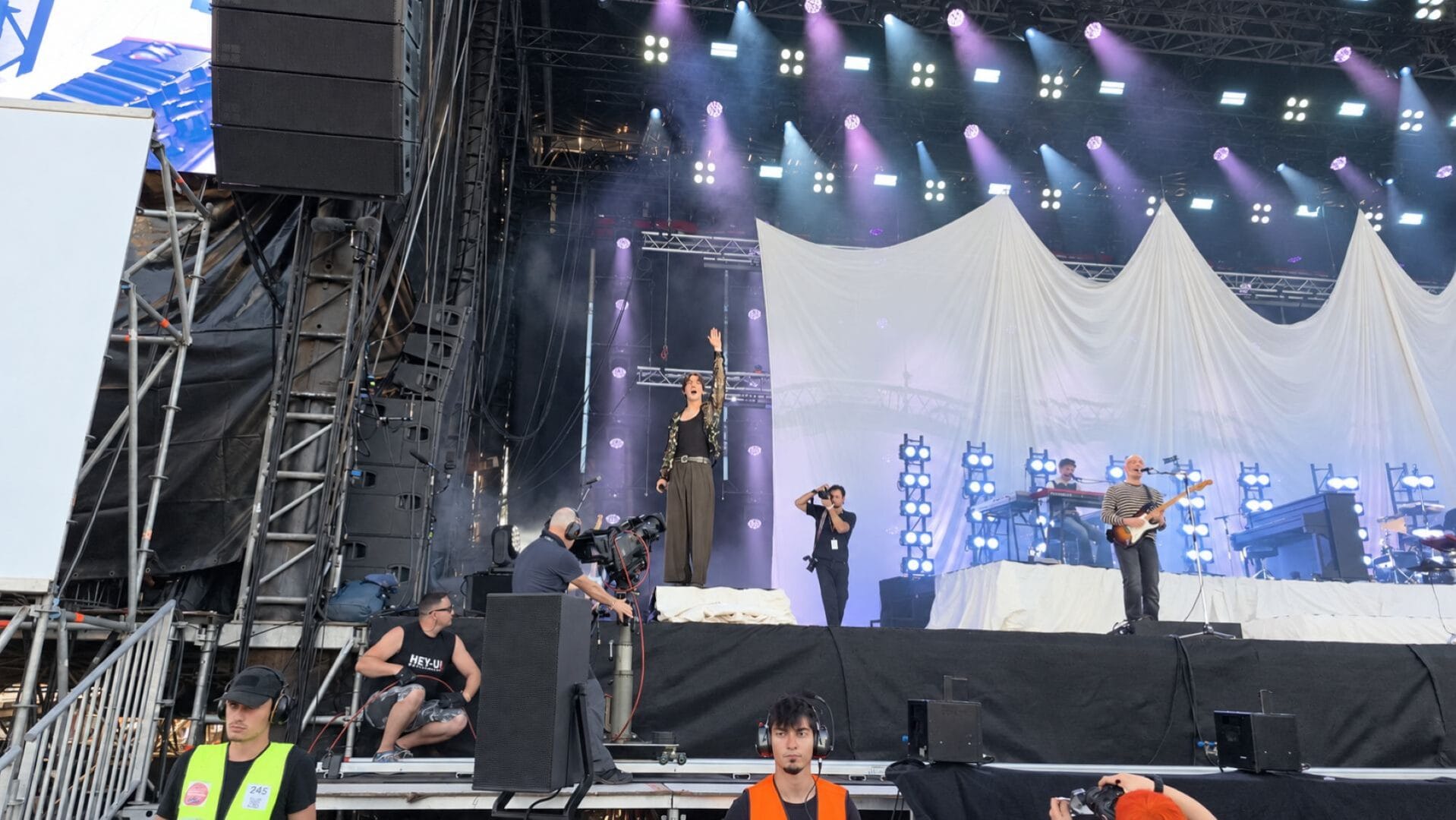
Interestingly, I first discovered Giant Rooks a little earlier, when the first names for Sziget 2026 were announced. I liked their music immediately. In some ways, they reminded me of Shawn Mendes, whom we also saw at Sziget, but in 2025. So when I looked through the Donauinselfest line-up and saw a name I already recognised, I was pleasantly surprised. It is also always interesting to see a band at a free concert. If we do end up going to Sziget, we will now have the chance to choose some other music instead of Giant Rooks. So the decision was made: we definitely had to go and see them.
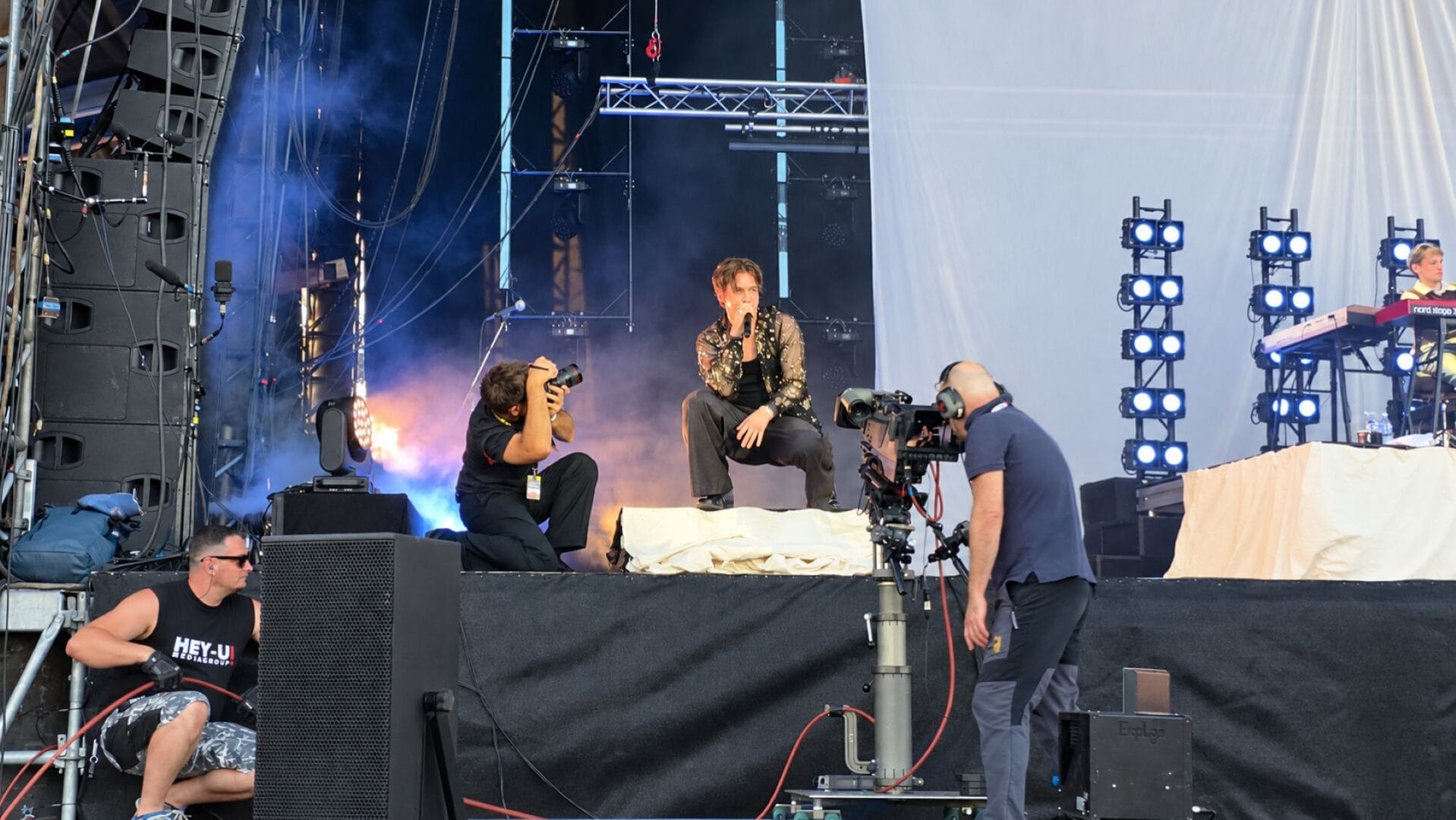
Giant Rooks were formed in 2014 in Hamm, Germany. Vocalist Frederik Rabe and guitarist Finn Schwieters are cousins who started making music together as children. The other members joined through school and mutual friends, eventually forming a five-piece band that still had its first recordings and the challenge of discovering how they wanted to sound ahead of them. In 2016, when the music press was already writing about them, two of the members were still at school.
There is a charming detail from those early years. When the disc manufacturer failed to finish the packaging for their first EP, The Times Are Bursting the Lines, in time, the musicians picked up stamps and handmade a small batch of covers themselves.
They and the buyers liked the result so much that they used the same method again. Today, the band tours internationally, but its beginnings can be captured perfectly in this little scene: several young people decorating their own records by hand before giving them to listeners.
The EP New Estate followed in 2017, and Wild Stare in 2019. These titles are worth remembering even if you are hearing about Giant Rooks for the first time: the songs with the same names remained part of their live repertoire years later.
By the time the band released its first full-length album, it already had its own audience and plenty of experience playing live. Their story developed quite steadily, through modest releases and concerts.
New Estate was also played at the Vienna show. In her report for FM4, Katharina Seidler singled it out among the other songs and complained that a track like this had already been played halfway through the set, even though it could easily have deserved a grand finale with confetti. It is an interesting fate for an early song: the band records new albums and changes over time, yet a track from 2017 continues to hold an important place in its live performances.
Their debut album, Rookery, was released in August 2020 and reached number three on the German album chart. Its tracks include Heat Up, Watershed, and What I Know Is All Quicksand, which offer a good introduction to different sides of the band. In interviews at the time, the musicians explained that it had taken them several years of working together before they felt ready to make a full-length record. Writing and producing it took around two years.
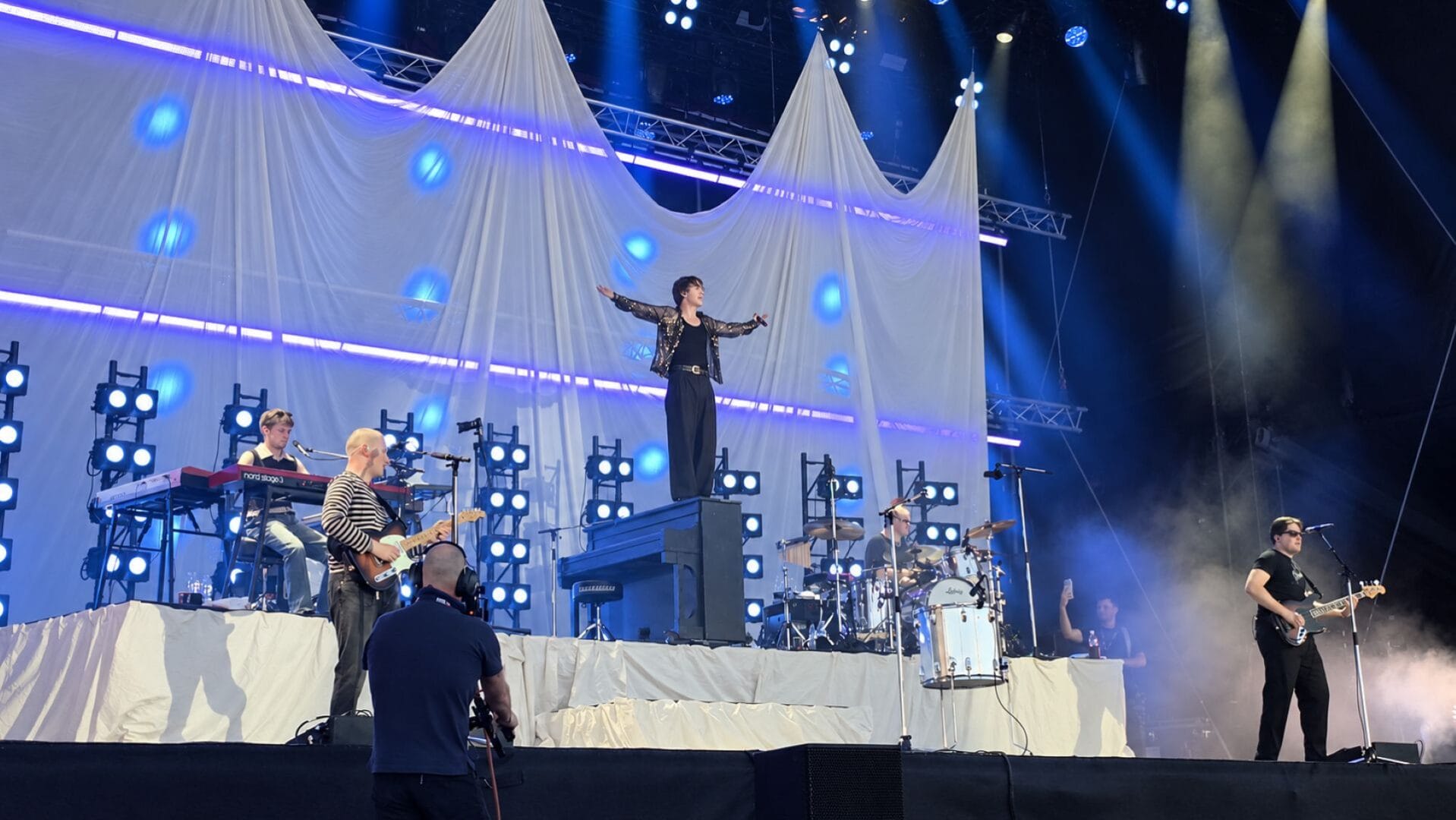
They were relaxed about songs having different lengths and allowed each musical idea to develop for as long as it needed. That is why the energetic Heat Up can sit alongside the much longer What I Know Is All Quicksand. There is a particular pleasure for the listener in this approach: you can stay inside a song for a while, wait for it to change, and gradually settle into its movement.
Their lyrics can also be quite interesting. All We Are, for example, grew out of their impression of Lars von Trier’s Melancholia: the musicians said they wrote a love story set on the eve of the end of the world. More generally, the album was created alongside questions about their own place in the world and how to deal with their privileges. These details add depth to a band that, at a festival, can easily be experienced first of all through melody, vocals, and stage energy.
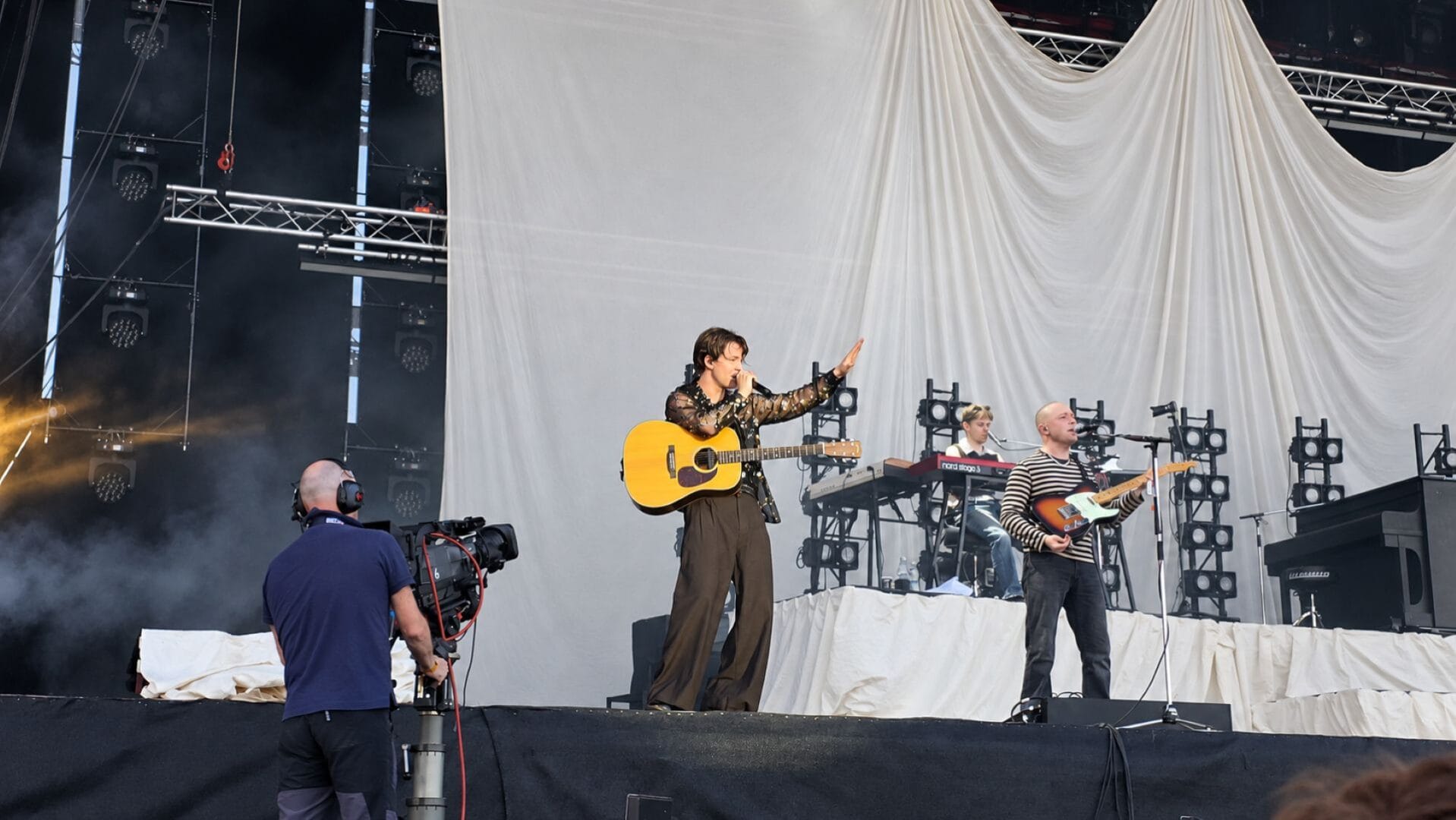
It is quite possible that some readers have already heard Giant Rooks without recognising the band’s name. In 2019, they recorded Suzanne Vega’s Tom’s Diner together with AnnenMayKantereit, and in 2022 that version found a huge new audience through social media. An older recording gained another life several years after its original release.
There is an obvious reason for the success of that recording. It brings together Frederik Rabe and Henning May, two singers with instantly recognisable voices. For many listeners, the collaboration became their first introduction to both German bands at once. By then, however, Giant Rooks already had several releases and extensive live experience behind them. Behind one video that spread across the internet were years of work.
The second studio album was called How Have You Been? — “How are you?” or, perhaps more accurately in tone, “How have you been all this time?” It was released on 2 February 2024. Across its 14 songs, the band returned to what they had experienced in the years since their debut, ending the record with a calm title-track ballad. By then, they had accumulated plenty of material behind that ordinary question. Discussing the album, Rabe spoke about how long they had spent saying yes to almost every opportunity and overloading their touring schedule. Eventually, they had to learn to say no and leave gaps between trips. The successful debut also brought pressure from their own expectations: they wanted to understand where to go next and how much they should change their music.
A good example of that search is Morning Blue, released back in 2022 and later included on the album. According to Rabe, after Rookery they wrote hundreds of songs and became confused by the sheer number of possible directions. With Morning Blue, they finally felt that they had found the right next step. When the musicians were asked to explain its meaning, Finn spoke about being able to move at your own pace and give yourself time. Behind an energetic festival song lies the very recognisable experience of people who had been rushing themselves.
Somebody Like You has a different story. They wrote it within a few hours during a rehearsal, working together as a full band, and tried to preserve the pleasure of that shared creative process in the recording. For the first time, they also tried structuring each verse as a separate little story with its own character. The result is a song that works on two levels at once: you can follow its easily memorable chorus while also listening closely to the people who appear in the verses.
By the time of the Vienna festival, Giant Rooks already had new material as well. In March 2026, they released Want It Back, a song about the end of a relationship and that strange moment when you discover that you are already capable of moving on. It contains a memory of a summer that once seemed endless and of a connection that was eventually going to end. The band themselves have mentioned how much they enjoy playing the song live.
Then, in May, came The Waves, recorded with singer Solann. Here, a relationship is experienced through loss of control and emotions that are difficult to manage, while closeness survives among the accumulated contradictions. In July, they released Slow Dance (For a Minute), a song about wanting to hold on to a brief moment beside another person while fully understanding that it cannot be stopped forever.
Their third studio album, If Heaven Exists, This Might Be It, is scheduled for release on 16 October 2026. So these summer performances came at a moment when listeners were already getting to know the next songs while the album itself was still ahead.
For Giant Rooks, I stood right against the barrier in front of the stage. I like either being very close to the performers, where I can record a few videos as memories, or standing as far back as possible, where I can move freely, dance, and not depend on the crowd around me.
According to a setlist published by listeners, the concert opened with Want It Back and ended with Watershed. In between, there was room for early songs and material from both albums. The list even includes Slow Dance (For a Minute), whose official release came three weeks after Donauinselfest. So the Vienna audience also had the chance to hear one of the new songs in advance.
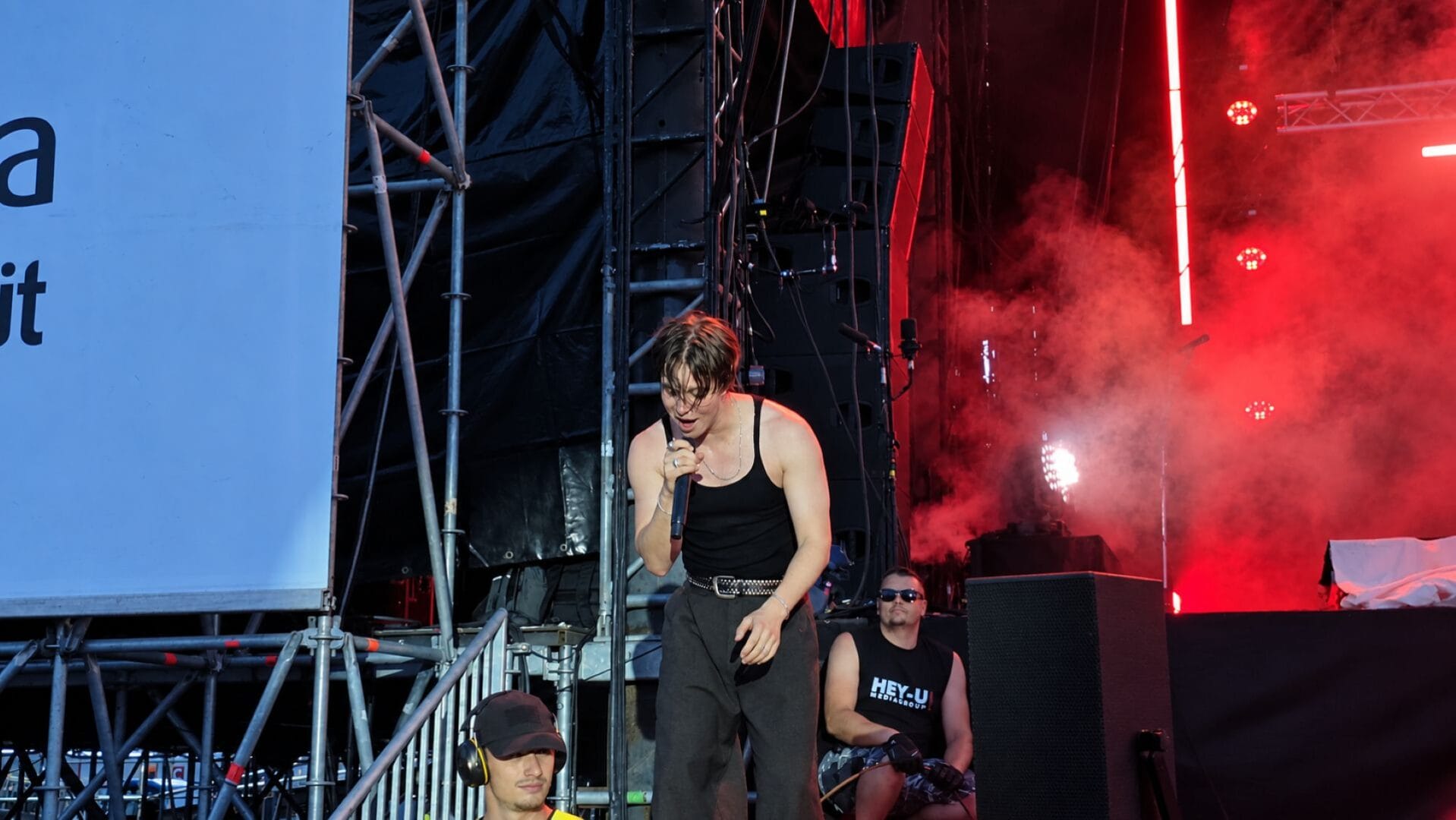
After the festival was over, I was looking for information about the event and came across a rather accurate description of the concert. In an FM4 report, the band received a funny compliment. Katharina Seidler wrote that Giant Rooks do almost everything right to the point of being irritating, specifically noting how tightly they play together and how polished their stage presence is. It is interesting to compare that impression of a major performance with their beginnings in Hamm: behind the freedom the audience sees are years of working together. But what pleased me most at their concert was the warmth, lightness, and effortless vibe. You could feel that these guys wanted to conquer the stage, perform, and reach the height of fame.
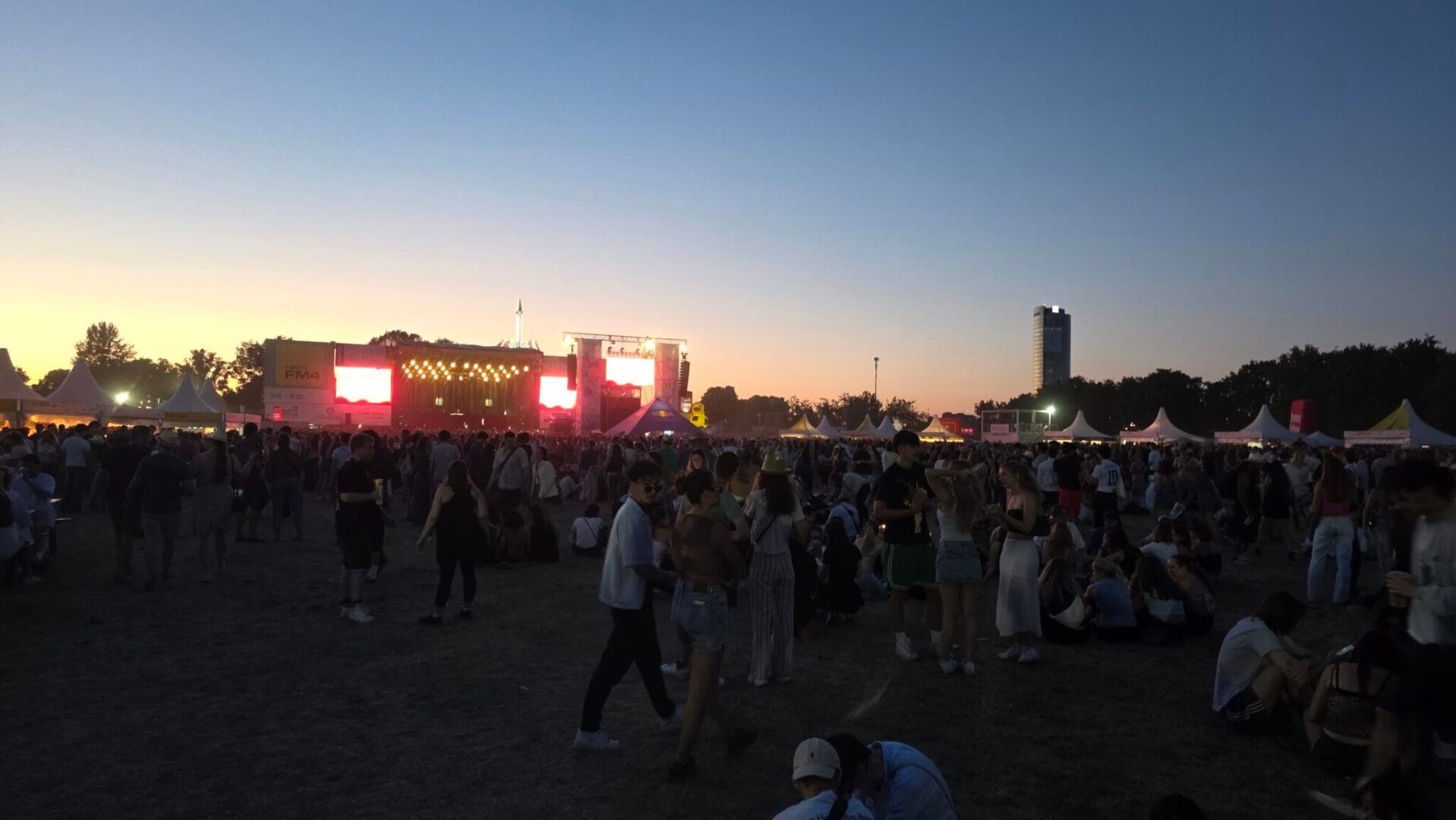
After Giant Rooks, we met up with our friends, got some beer, and stayed on the island a little longer. The evening’s headliner, Zartmann, performed next. We listened from farther away while talking to each other at the same time. Incidentally, even though I am not a big fan of fairly heavy rock, I liked this music too. One of his best-known songs is Tau mich auf, which Vienna media also singled out in their coverage.
Another feature of the festival surprised me a little. The programme on the main stage continued until around 11:00 p.m., while at the electronic stage, where we planned to go later, the music stopped at around 10:00 p.m. For an evening that had only just got going, that felt very early and extremely strange, especially considering how far the festival is from where most Vienna residents live. On the other hand, we could hear the music coming from the electronic stage, and I can say that we liked it. So we decided to return the following day and simply spend the evening there until those same 10:00 p.m. As a reminder, at Sziget the electronic stages usually open at 10:00 p.m. and often continue until 6:00 a.m. But Donauinselfest is, after all, a city festival.
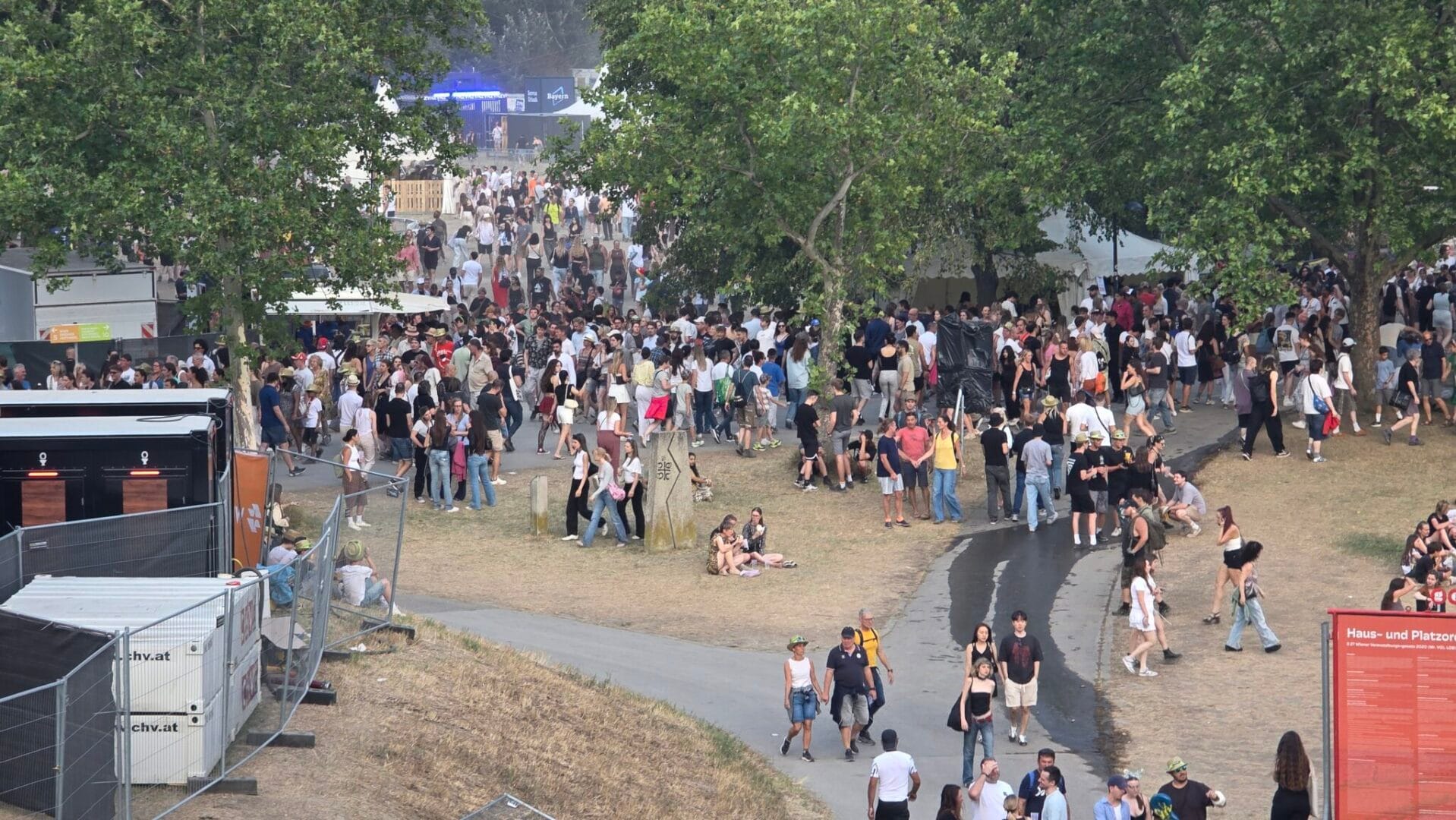
The following day, we arrived closer to the evening and never made it as far as the main stage. We were perfectly happy with the electronic music. I did not recognise the names of the performers, but the music had a great energy, and we had no desire to go looking for anything else.
At first, the atmosphere around us was a little harder to get used to. There were a lot of drunk people, including some who were already struggling to stay on their feet. People were laughing loudly all around us, someone was trying to get into the toilet without waiting in line, and everything was happening at once and felt slightly excessive. After an ordinary calm day in Vienna, it took some time to settle into this environment. Julia and I initially felt quite tense.
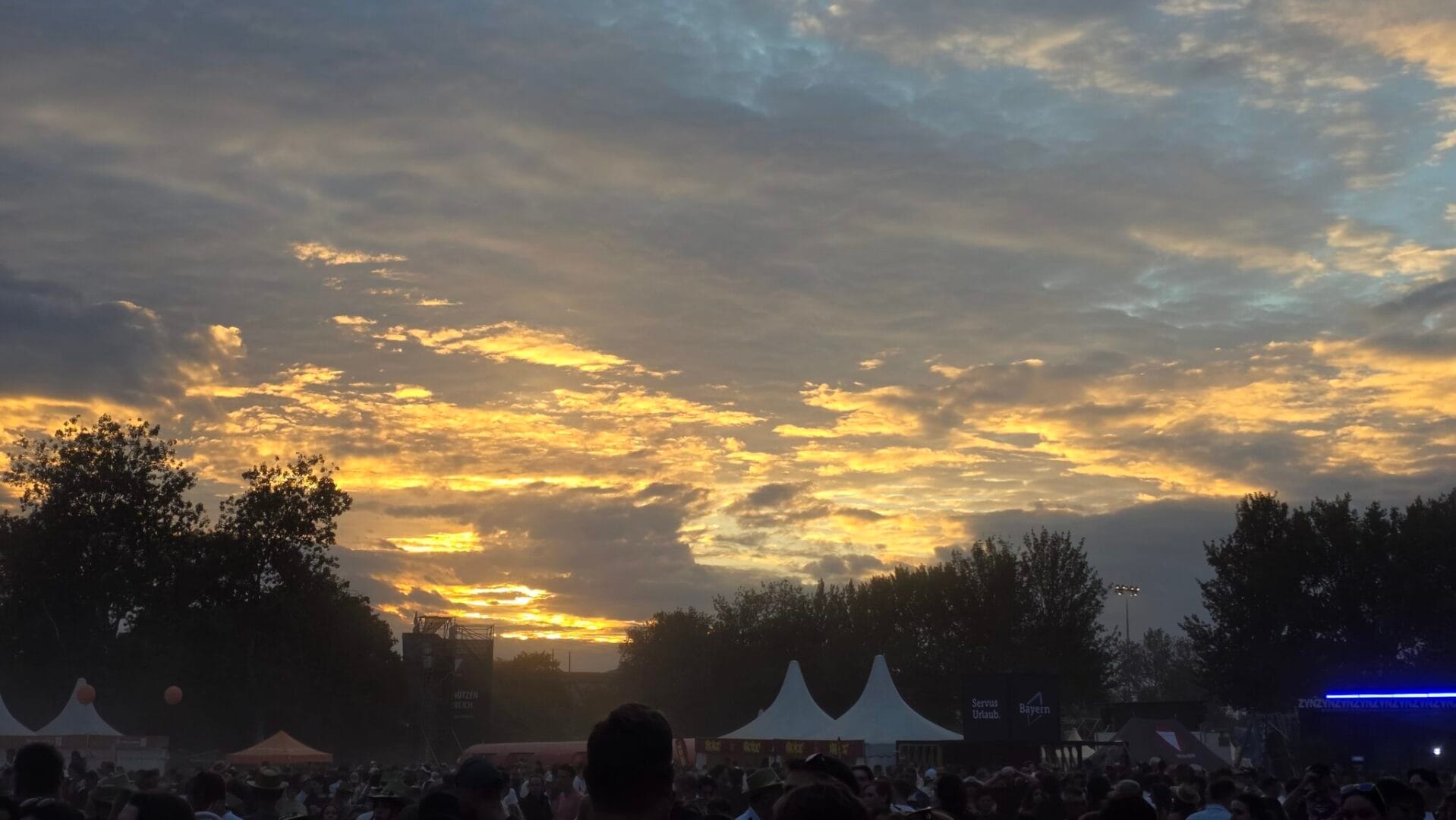
But Sziget had toughened us up and taught us well. So we each had a glass of beer, added a couple of shots, and soon fitted the atmosphere much better ourselves. The crowd remained exactly the same, but our willingness to coexist with it increased considerably. We did not manage to be one hundred percent sporty and healthy at a festival like this that evening, but we understood very well that this was not our goal anyway.
The evening was a good illustration of something I have written about before. Discussions about Europe sometimes create a remarkable image of people who are supposedly capable of having fun only in a respectable and well-behaved way. This image becomes especially vivid next to comments about how people from our countries, and Slavs in general, get drunk. At Donauinselfest at night, that neat picture quickly lost its credibility. Austrians also drank far too much and looked exactly as ridiculous as any very drunk person can look.
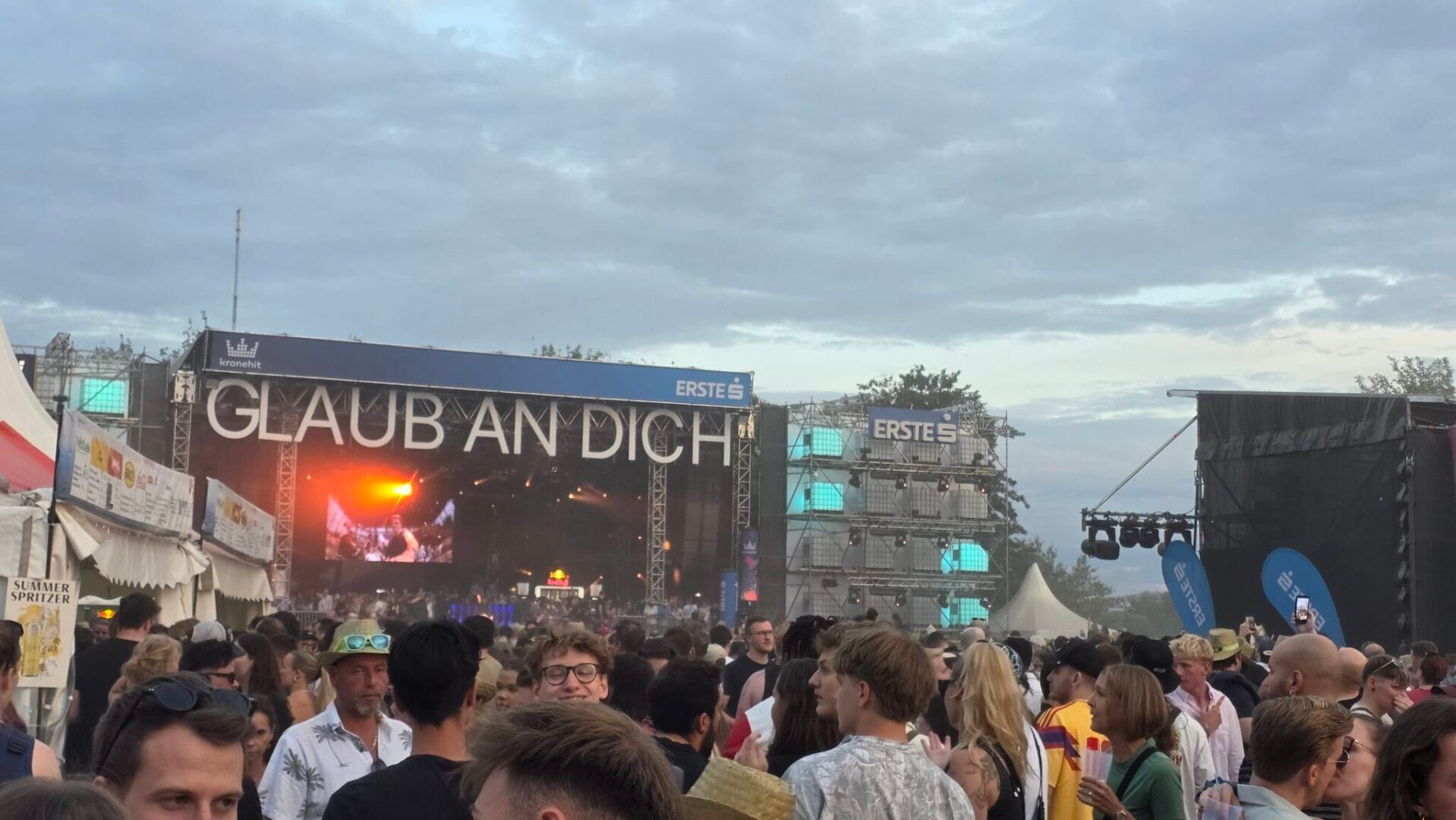
At the same time, I felt almost no aggression around us. People could be loud and barely able to think clearly, but they did not bother us or try to start arguments. By late evening, the families had gone home, we no longer saw children nearby, and the island had taken on a completely different mood. What was happening had its own time and place; walking around there, you had to understand where you had come.
What interests me in situations like this is how a person behaves toward other people. Getting drunk and admitting the next day that you had too much is a perfectly human story. Starting to torment everyone around you and then somehow making them responsible for it is a separate choice. And since we ourselves had joined the general fun fairly quickly, we did not have much reason left to pretend we were strict outside observers.
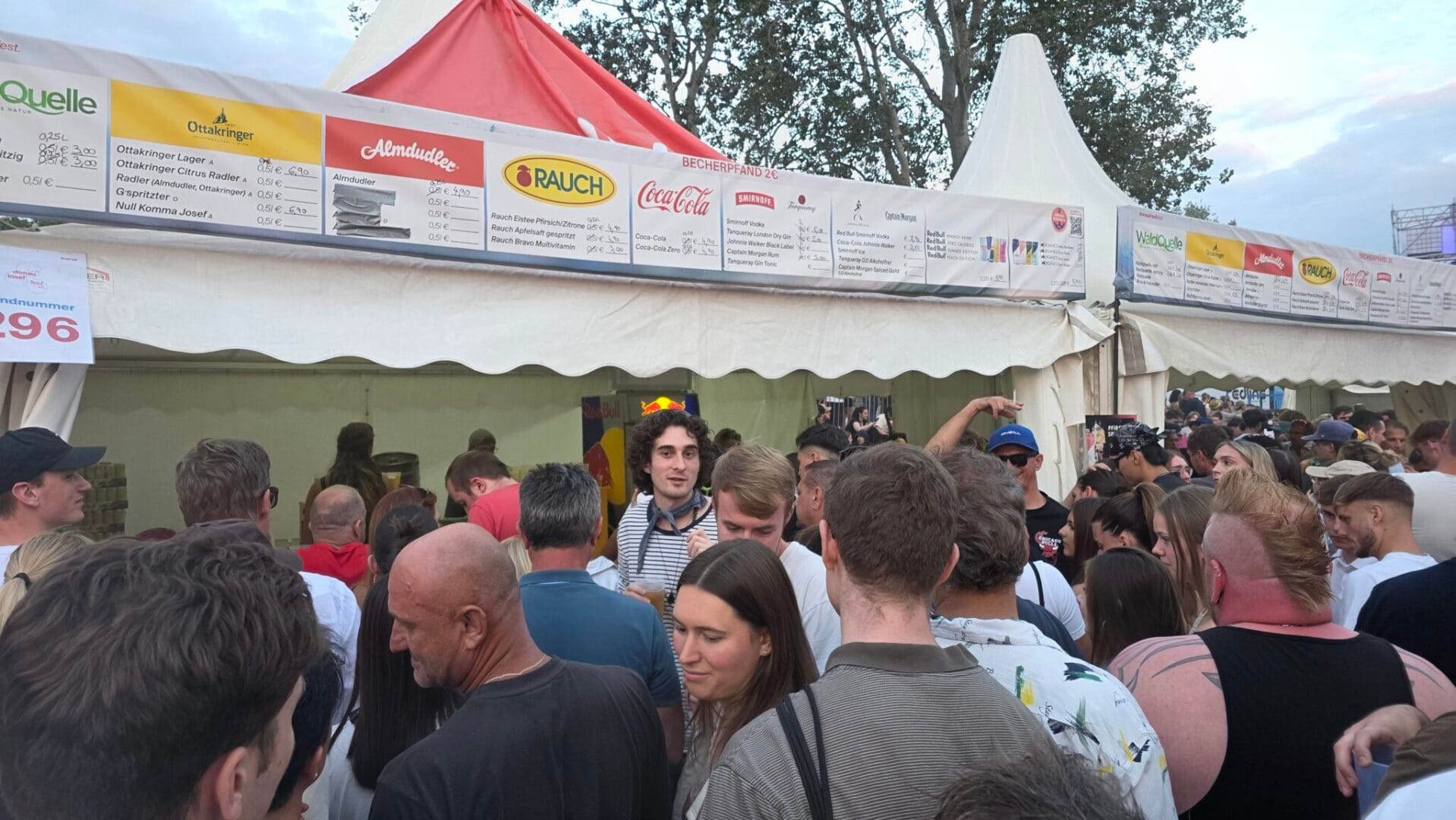
As the evening went on, the queues for drinks became so long that we started buying two or three cups at once. We did it from experience, simply so that we would not have to join another long and slightly chaotic stream of people wanting something to drink a few minutes later. Some stalls were already closing even though there were still huge numbers of people around. That was confusing: the visitors clearly intended to keep going, while buying anything was becoming increasingly difficult.
At around 10:00 p.m., the music on our stage ended. Judging by the crowd, nobody was particularly ready to leave yet. People continued wandering around the island, stayed together in groups, and looked for somewhere else to sit and extend the evening. We also went for a walk, and from that point on everything unfolded without any schedule at all.
There is one festival habit that I became especially attached to at Sziget. There, it is easy to walk up to a stranger, compliment their appearance or costume, or simply laugh together about something that has just happened. Being next to each other is enough to start a conversation. It makes socialising much easier, especially when in everyday life even a short conversation with a stranger can be more complicated than you would like.
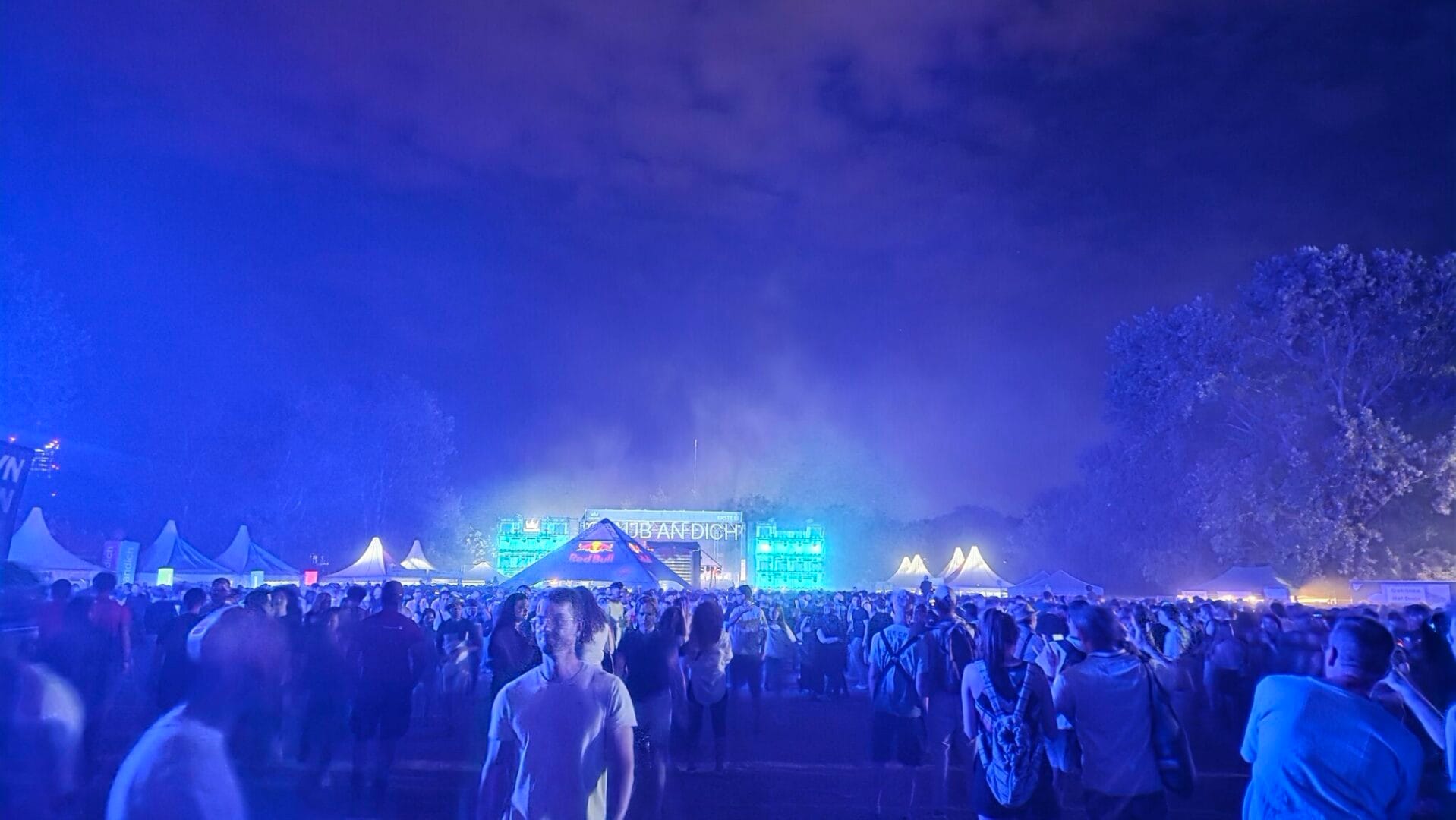
The same lightness and ease of communication appeared at Donauinselfest. We started talking to one person, then someone else joined us, and before long we were walking around together as a fairly international group. Among our new acquaintances were an Austrian and some guys from Odesa, and we also talked to a woman from Kazakhstan. Conversations appeared naturally as we walked, moved from one person to another, we exchanged contact details, and kept wandering around together.
I like this light, friendly madness of festival life. People dress up, happily attract attention, and enjoy noticing one another. Someone’s appearance becomes a reason to smile, a random comment becomes the start of a conversation. In an atmosphere like this, meeting someone rarely requires any serious explanation, and you can spend several hours with people whose existence you knew nothing about earlier that evening.
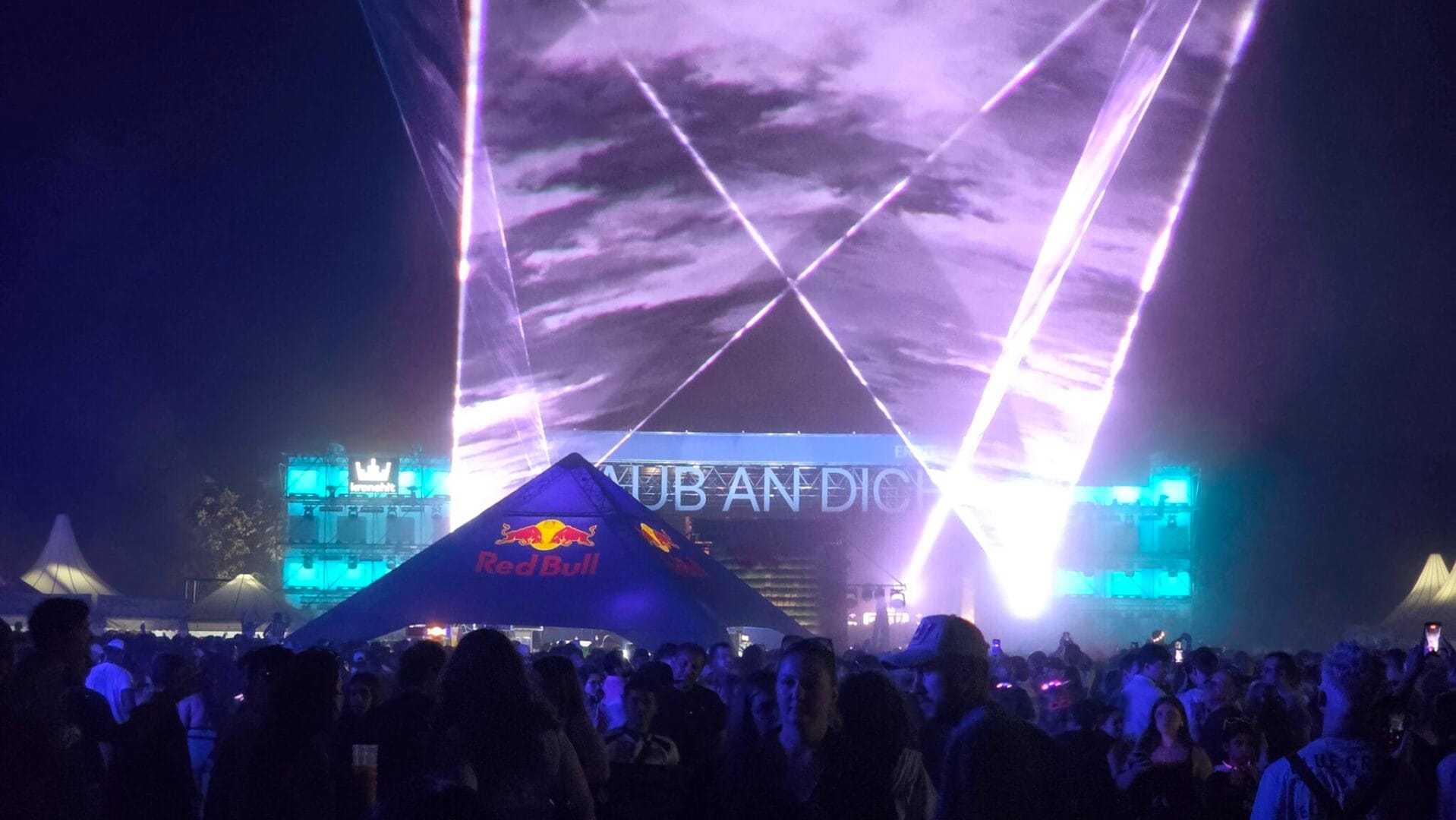
Some of those new connections continued afterwards. We met some of the people again several times and became friends. For life in emigration, that is a pleasant thing: your social circle expands through an evening from which you originally expected nothing more than good music and a chance to dance.
Donauinselfest left me with the feeling of a genuine city celebration in the large capital of a small European country. Despite all the queues, the early closing of some stages, and the people who probably should have stopped drinking a couple of glasses earlier, it still felt warm and alive. You can come to this free festival for one particular band, return the following evening, and meet people you later want to see again. That is exactly what happened to us, and it matters, especially when you are building your life again.
You may also like these articles:
- Photo Report from Donauinselfest 2026. Part Two: Giant Rooks and Another Evening on the Island
- Photo Report from Donauinselfest 2026. Part One: My Ugly Clementine
- Marilyn Manson Live in Vienna: A Look Back at the Concert
- LP Live in Vienna: A Look Back at the Concert
- An Emigrant’s Observations: Anti-Putinism and the Imperial Lens
- It’s My Birthday Today!
- My Life in Austria: July 2026
- An Emigrant’s Observations: My Toxic Homeland —Yesterday, Today and Tomorrow
- Ricchi e Poveri Live in Vienna: A Night of Music and Memories
- An Emigrant’s Observations: Simple Ways to Support Your Emotional Well-Being
- Eisenstadt in Pictures: A Day in a Small Austrian City
- Exploring Vienna’s Neubaugasse Flea Market
- Sofia Isella Live in Vienna: A Concert Review
- An Emigrant’s Observations: When Mistakes Become Toxic While Adapting
- An Emigrant’s Observation: Extreme Heat in Europe and Austria in 2026
- My Emigration to Austria: June 2026 Recap