
I have been living in Austria for almost nine years now, having spent most of my life before that in Russia. During my time in this Alpine country, some local habits have stopped surprising me, while certain differences between the two societies have become much more noticeable. And one of these differences may seem completely trivial at first glance: the attitude towards beer. Today, I would like to share some of my observations in Austria and look more closely at the differences between beer consumption in my homeland and in the society I now live in.
Beer is actually an interesting cultural marker. Technically, it is just one of many alcoholic drinks. But who drinks it, where, how much, and what significance other people attach to it can tell us quite a lot about a society. In Austria and Russia, attitudes towards beer are completely different, and I suspect these differences go far beyond culture and tradition alone.
The Beer Culture I Grew Up With
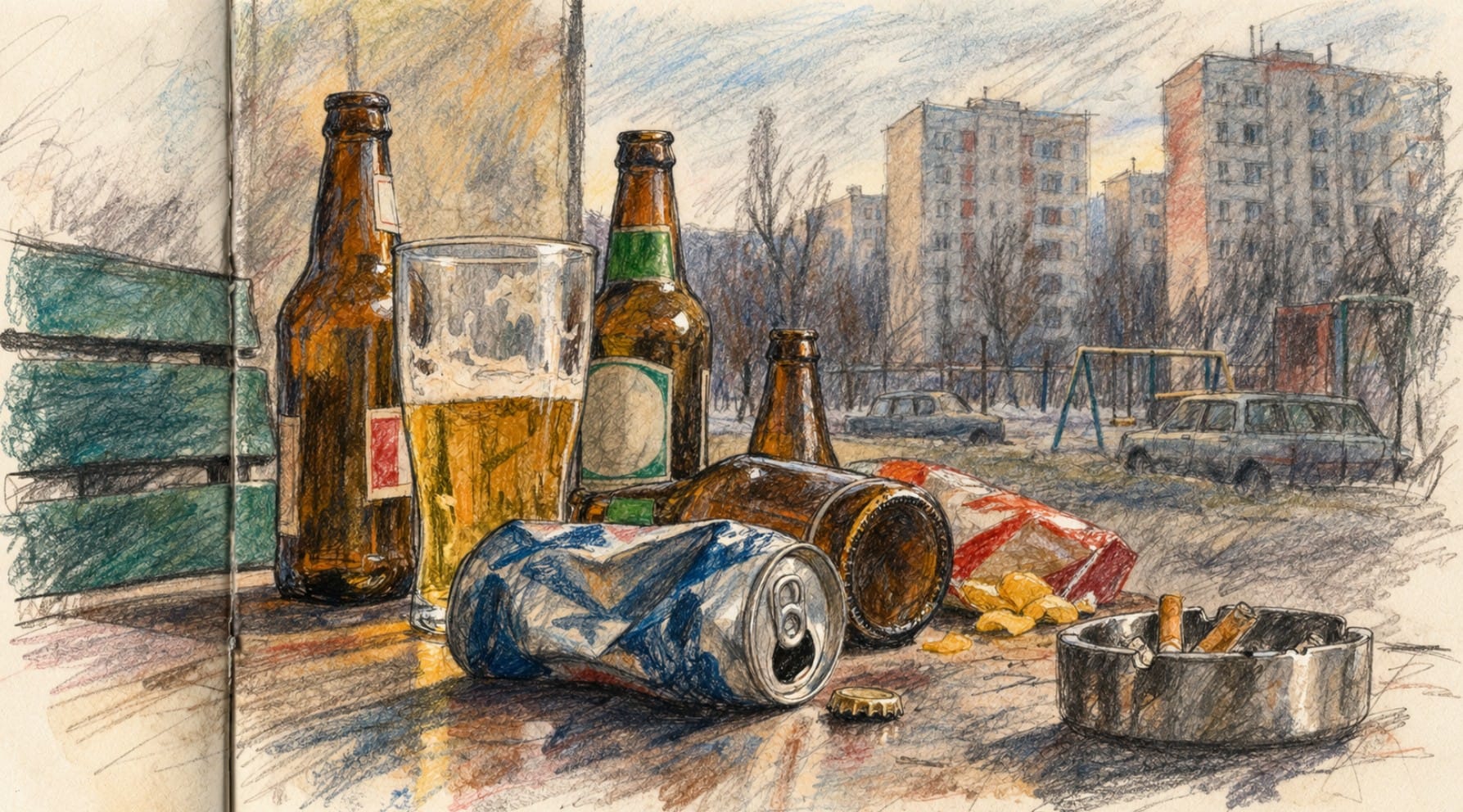
In Russia, I always felt that beer came with a rather strange collection of associations. On the one hand, people drank plenty of it. On the other, the drink itself often carried a slightly disreputable image: “beer alcoholism,” a man with a bottle, cheap draught beer, or some mysterious “live” beer of uncertain origin. For many women, beer also remained something of a man’s drink for a long time.
There is another thing I have noticed: for some reason, in Russia, responsibility for controlling a man’s alcohol consumption often falls to the woman closest to him. It might be his girlfriend or wife, but she is the one who acts as a kind of restriction on how much he drinks, rather than the man himself. And she starts doing this from the very first bottle.
At the same time, there was another strange habit. Regular alcohol consumption could cause concern and disapproval, but as soon as someone actually got drunk and started behaving appallingly, a surprisingly forgiving explanation would appear: “Well, what do you expect? He’s been drinking.”
The result was rather paradoxical. Alcohol was condemned in advance, but then sometimes used to excuse a person’s behaviour.
Here, Someone Is Simply Drinking Beer
One thing that surprised me quite quickly in Austria was the absence of so many meanings attached to a simple glass of beer. At lunchtime, you might see people from a nearby office sitting in a restaurant, having ordered a Mittagsmenü and a large glass of alcoholic beer before returning to work. An elderly married couple might be sitting over a beer. A group of older women might be doing exactly the same. In summer, young women might buy several packs of beer, perhaps a dozen bottles, head down to the Danube, sit right on the riverbank, and spend several hours talking, laughing, and enjoying their drinks. They do not need a restaurant, a special occasion, or a man who is supposed to “treat” them.
And the most interesting thing for me is not even how much they drink. The mere presence of beer changes practically nothing about the situation. Nobody around them feels the need to immediately decide whether it is good or bad, respectable or suspicious, or whether the person “might have a problem.” They are simply drinking beer.
Austrians Know How to Get Drunk Too
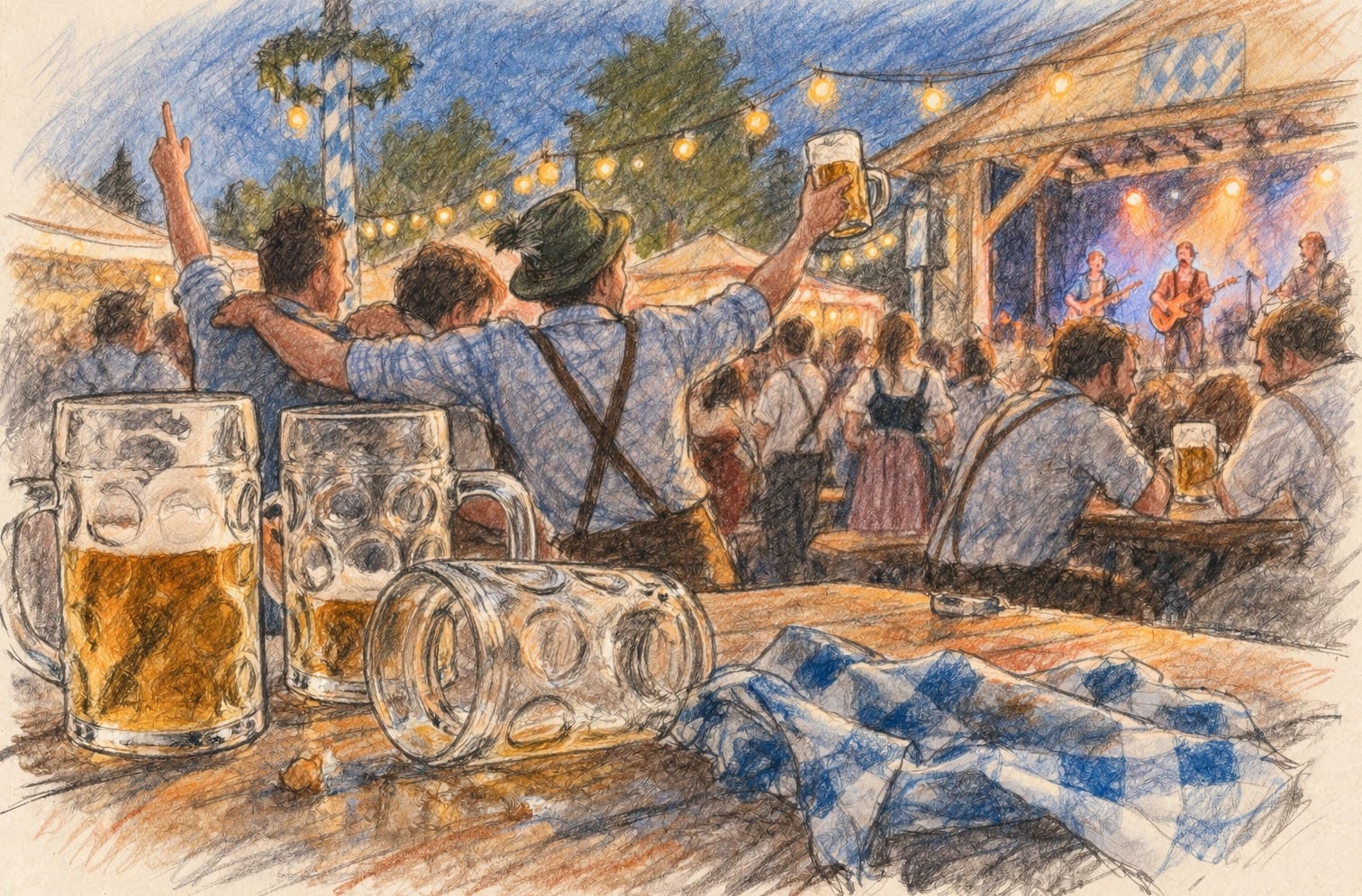
At the same time, I have absolutely no desire to create yet another beautiful myth about incredibly disciplined Austrians who drink exactly one glass, smile politely, and go to bed at 10 p.m. At festivals, I have seen a completely different side of Austria.
When the occasion calls for a big celebration, people here are perfectly capable of getting drunk, talking loudly, behaving crudely, staggering around, and generally displaying all the signs of ordinary human imperfection. The difference I notice has more to do with understanding the context.
A festival is one setting. A working lunch is another. A business meeting is a third. An ordinary evening with friends is a fourth. And people seem to understand the boundaries of acceptable behaviour in each of these situations quite well. You can have a fun evening and return to your normal life the next day. Yesterday’s enjoyment does not automatically become a reason to abandon all your other responsibilities.
Having a Drink Doesn’t Remove Responsibility
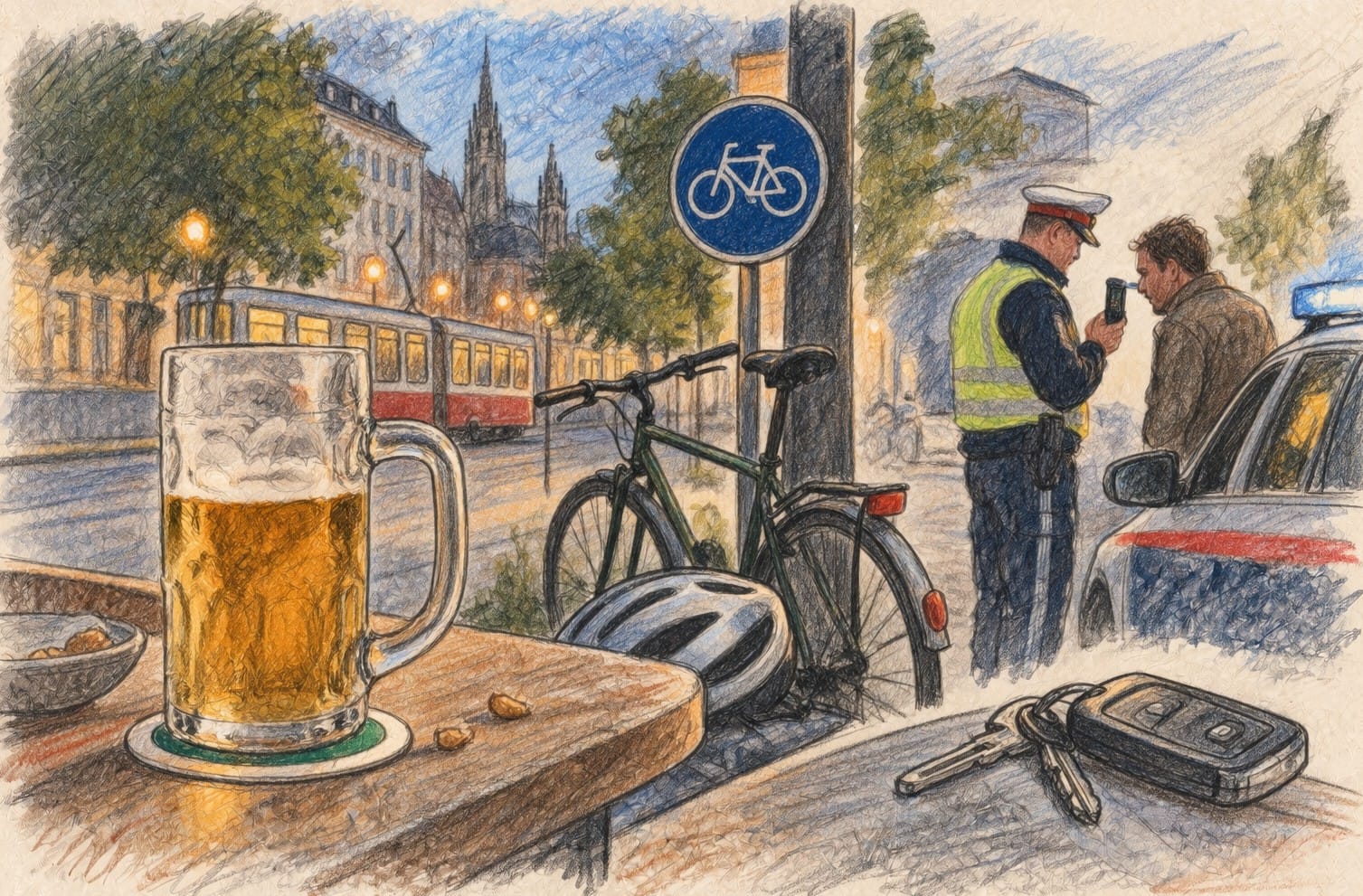
Perhaps this is the difference I appreciate most of all. Alcohol does not become a universal excuse here. If someone drinks and then behaves like a pig, their drunkenness remains, first and foremost, their own responsibility.
This approach is visible even in the regulations. Austrian legislation is relatively liberal when it comes to lower-strength alcoholic drinks. Youth protection rules are set by the individual federal states, but following their harmonisation, beer and wine are generally available from the age of 16, while restrictions on spirits remain in place until 18.
At the same time, that freedom quickly reaches its limits when other people are put at risk. For example, cyclists are subject to a blood alcohol limit of 0.8 per mille. Substantial fines apply, and serious violations can, under certain circumstances, even affect a person’s driving licence.
To me, these two principles fit together perfectly well. A society does not need to create a moral drama around every glass of beer. But individuals do need to understand that they remain responsible for what they do after drinking it.
Beer Stops Being a Special Event in Life
I suppose we have gradually started adopting this attitude ourselves. You can meet friends, have a glass of beer each, talk, and then go home. The next day, nobody cancels their workout, responsibilities, or plans because of it. There is no sense that something significant has happened that requires you to rearrange your life. And I have found that I unexpectedly like this simplicity.
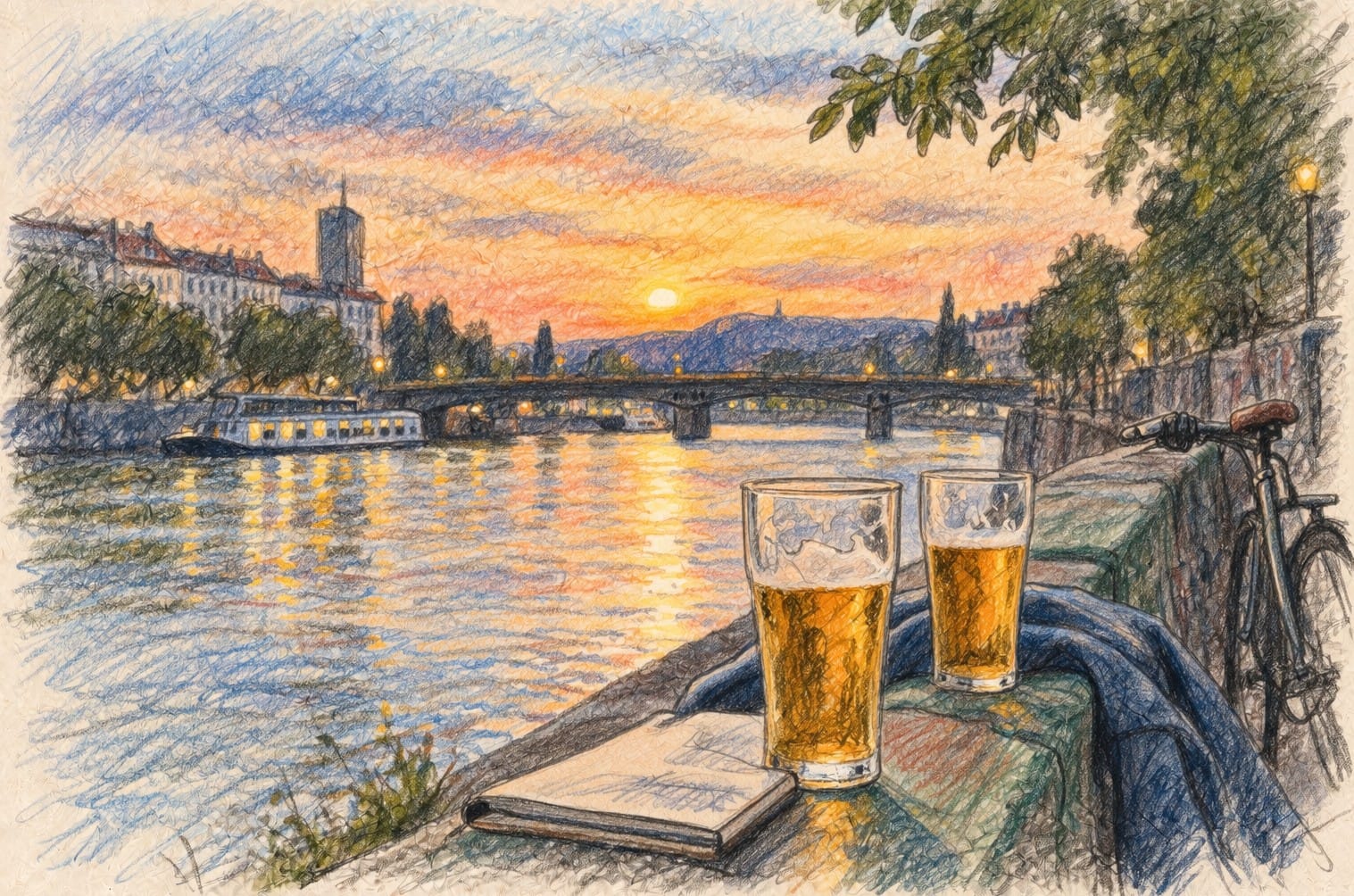
Beer occupies exactly as much space as it is given. It can accompany a conversation, lunch, a meeting, or an evening by the river, without necessarily becoming the centre of attention.
Perhaps It Isn’t Really About Beer at All
The longer I observe this, the more I feel that the subject of this article is gradually becoming broader than the drink itself. I like a cultural model in which people are given considerable freedom while remaining fully responsible for how they use it. Want a beer? Have one. Want to spend a very lively evening at a festival? Go ahead. But tomorrow is still tomorrow, the people around you still matter, and the consequences of your behaviour remain your own. Perhaps that is why my own attitude towards beer has changed over the years I have lived in Austria. It now carries far less anxiety, judgement, and symbolic meaning for me.
Sometimes a glass of beer really is just a glass of beer.
You may also like these articles:
- An Emigrant’s Observations: What “Home” Means After Nine Years Abroad
- An Emigrant’s Observations: My Nine Years in Austria
- An Emigrant’s Observations: Reverse Culture Shock
- My Beloved Vienna: By the Numbers, Not Just from the Heart
- An Emigrant’s Observations: A Fresh Look at the Exhausting Process of Adapting to Another Country
- Photo Report from Donauinselfest 2026. Part Two: Giant Rooks and Another Evening on the Island
- Photo Report from Donauinselfest 2026. Part One: My Ugly Clementine
- An Emigrant’s Observations: The Russian Language Without the “Russian World”
- Marilyn Manson Live in Vienna: A Look Back at the Concert
- An Emigrant’s Observations: Feeling Guilty About My Good Life
- An Emigrant’s Observations: What Surprises Me About the Austrian Attitude to Beer
- LP Live in Vienna: A Look Back at the Concert
- An Emigrant’s Observations: Anti-Putinism and the Imperial Lens
- It’s My Birthday Today!
- My Life in Austria: July 2026
- An Emigrant’s Observations: My Toxic Homeland —Yesterday, Today and Tomorrow
- Ricchi e Poveri Live in Vienna: A Night of Music and Memories
- An Emigrant’s Observations: Simple Ways to Support Your Emotional Well-Being
- Eisenstadt in Pictures: A Day in a Small Austrian City
- Exploring Vienna’s Neubaugasse Flea Market
- Sofia Isella Live in Vienna: A Concert Review
- An Emigrant’s Observations: When Mistakes Become Toxic While Adapting
- An Emigrant’s Observation: Extreme Heat in Europe and Austria in 2026
- My Emigration to Austria: June 2026 Recap