
Over the past few years, living in Vienna has given me the chance to attend a huge number of concerts that I could once only dream about: performances by Zemfira and Mashina Vremeni, Adele and Coldplay, as well as many other events I have written about in previous articles. In this sense, emigration changed much more than my daily life, documents, language, and habits. It also changed the cultural side of my life. At some point, you suddenly realise that you can go to a concert by artists you listened to as a child, knew from television, cassette tapes, family memories, or old songs that played somewhere in the background of your life.
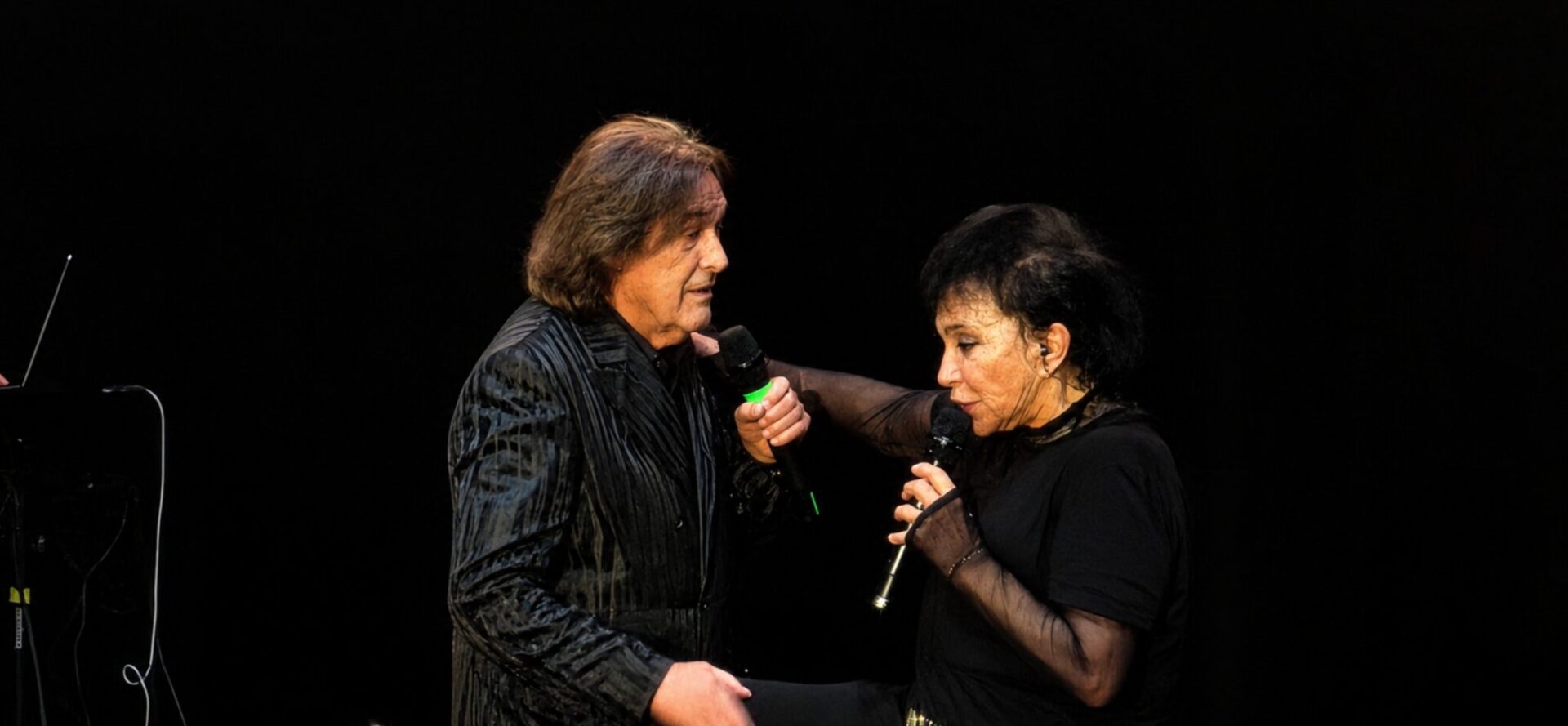
Ricchi e Poveri became one of those groups for me. When I saw that they were coming to Vienna, I decided to buy tickets almost immediately. They were more than simply an Italian band from the past. Their music had existed for many years alongside my family, my childhood, and the cultural background in which several generations had grown up. In this article, I want to tell you about the Ricchi e Poveri concert in Vienna, why this meeting was so important to me, and how another small childhood dream unexpectedly came true in Austria.
Ricchi e Poveri cannot be seen simply as an old Italian pop group. For many people from the Soviet and post-Soviet world, their songs were part of family memory. Our parents listened to them, our grandparents may also have known them, and their melodies could be heard everywhere. Most importantly, Ricchi e Poveri, like many other Italian musicians, were not banned by the Soviet authorities, so people could at least listen to their recordings on cassette tapes.
This music has a rare ability to move easily across generations. You can hear a song as a child, forget about it for years, and then, decades later, recognise the first familiar notes and suddenly realise that you still remember the melody and even some of the words. There is no artificial nostalgia in this. Some songs are simply stronger than time.
For me, Ricchi e Poveri are connected with exactly this feeling. Their music does not belong to one particular age. It belongs to home, family, old television broadcasts, summer evenings, and a time when Italian pop music seemed sunny, beautiful, and almost unreachable. Most importantly, it was a connection with the outside world, which seemed so happy and distant.
For Russian-speaking people, Italian music from the 1970s and 1980s forms a cultural world of its own. Ricchi e Poveri, Toto Cutugno, Al Bano & Romina Power, Adriano Celentano, and other performers were familiar even to people who had never visited Italy and did not speak Italian.
Before the concert, I decided to read a little about the history of the group and discovered many interesting facts. Ricchi e Poveri were formed in Genoa in the late 1960s. They originally performed as a quartet: Angela Brambati, Angelo Sotgiu, Franco Gatti, and Marina Occhiena. The name of the group means “the rich and the poor”, and it already contains a little Italian theatricality, lightness, and self-irony.
The group’s main strength was the combination of their voices. Male and female parts came together in distinctive harmonies that quickly made Ricchi e Poveri stand out on the Italian music scene. They took part in the Sanremo Music Festival many times. In Italian music, Sanremo is more than simply a competition. It is almost an institution of national culture.
Their best-known songs include La prima cosa bella, Che sarà, Sarà perché ti amo, Mamma Maria, Voulez-vous danser, and Se m’innamoro. For many listeners, these songs created the image of Ricchi e Poveri: bright, melodic, authentic, and understandable far beyond Italy.
The history of Ricchi e Poveri is also the story of a musical project that has survived for an exceptionally long time. They began as a quartet, later became a trio, and eventually a duo. The line-up changed, the times changed, and the music industry changed, but the songs continued to live.
Today, Ricchi e Poveri perform as the duo of Angela Brambati and Angelo Sotgiu. Both are now at an age when many artists prefer to live quietly with their memories, but they continue to go on stage, sing, move, joke, communicate with the audience, and remain standing throughout a long concert. There is something deeply admirable about that.
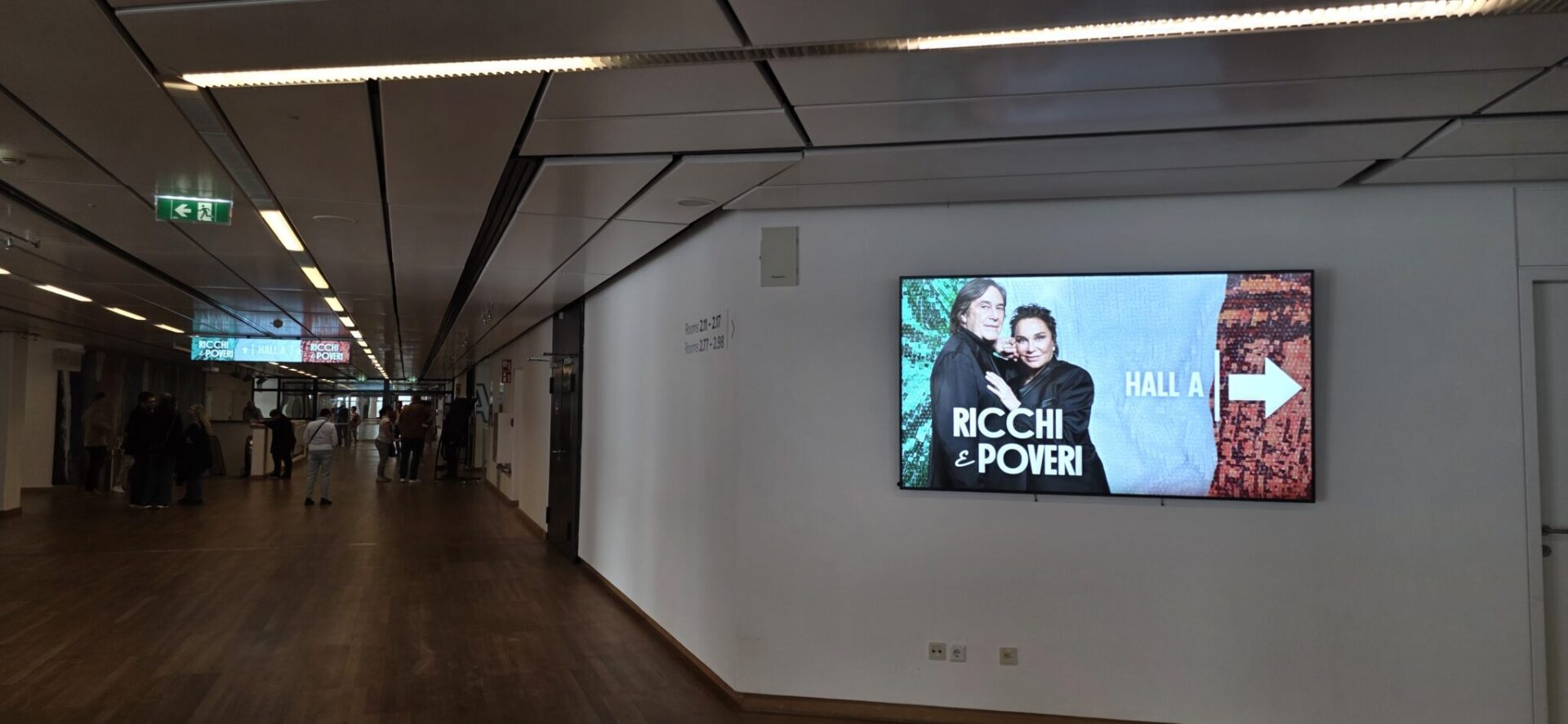
The Ricchi e Poveri concert in Vienna took place at the Austria Center Vienna. It was a new venue for me, and my impressions were mixed. The building is large, modern, and probably very convenient for conferences, forums, and major events. As a concert hall, however, it did not seem especially comfortable. The acoustics were not ideal either, but the producers chose the venue, and an extraordinary number of people still came.
The organisation also felt somewhat untidy. Music checks and soundchecks were carried out while the audience was already there. Something kept humming, squeaking, or making various strange noises. Perhaps this kind of concert is unusual for the Austria Center Vienna, or perhaps things simply did not go perfectly that evening. In any case, the atmosphere before the start felt strange. You had come to a large and long-awaited concert, but the venue itself did not immediately help you enter a festive mood.
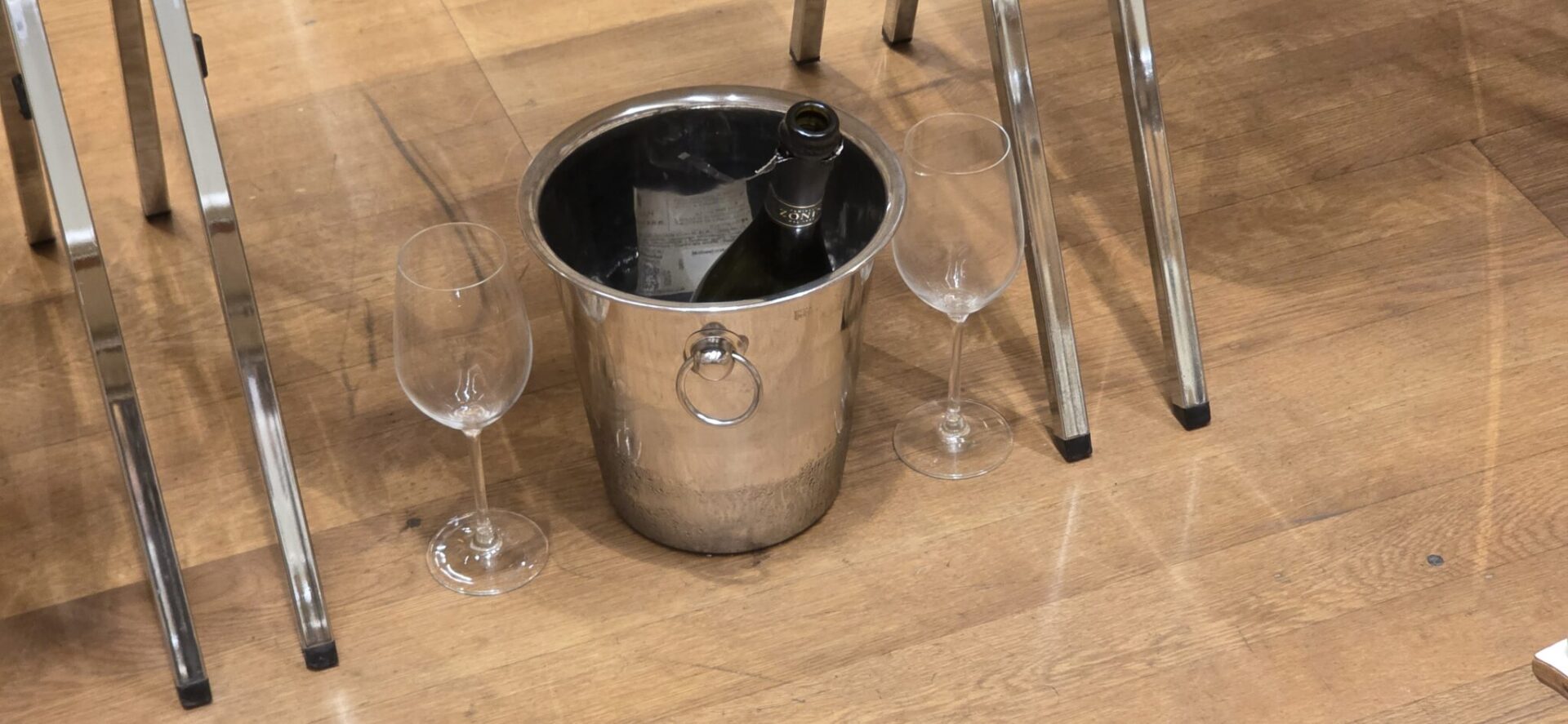
At the same time, Austria would not be Austria without drinks and snacks before an event. The Italian-Austrian touch of social etiquette was fully present. Aperol and sparkling wine were being served in impressive quantities, while the conversations outside the hall were warm, lively, and peaceful.
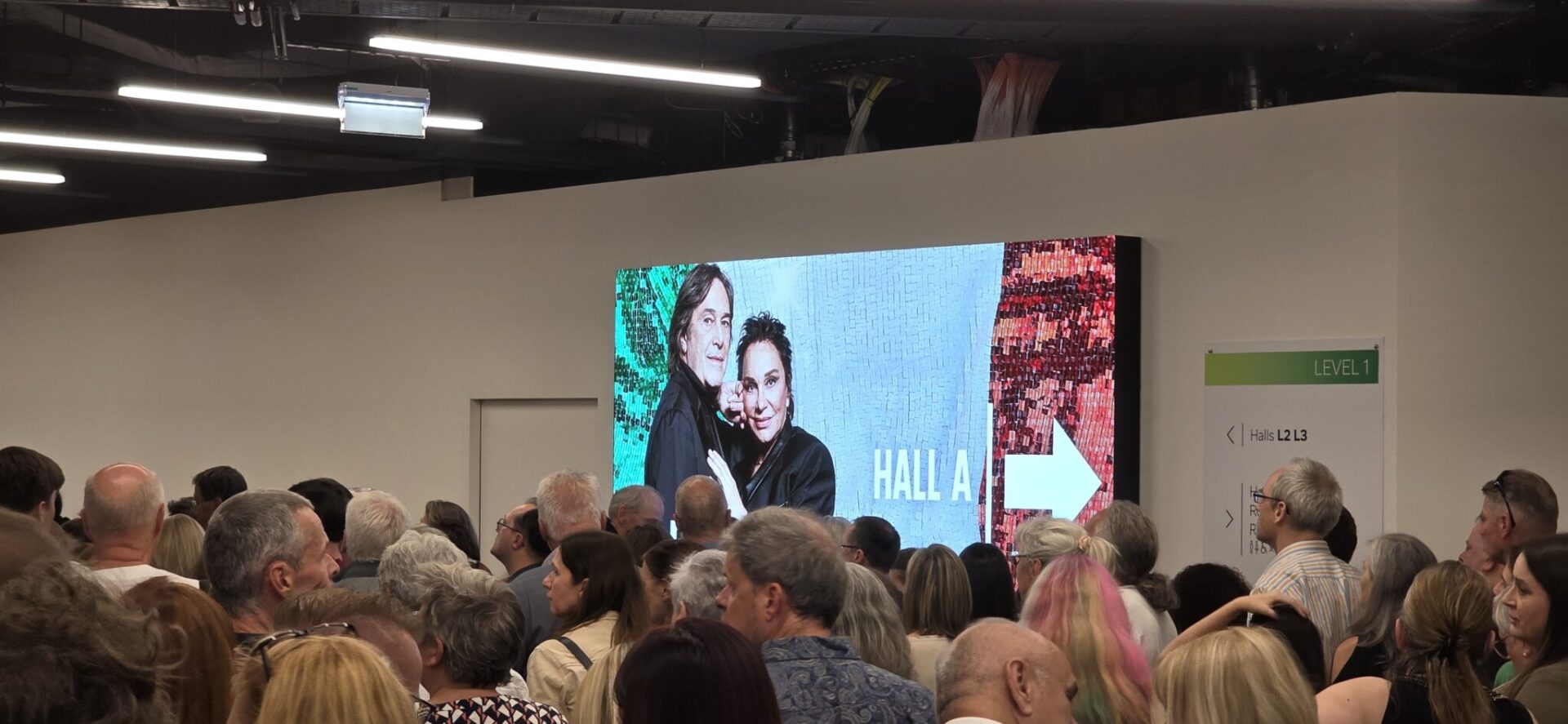
As an observer, I also found it interesting how quickly the crowd became noisy before the concert. That is not especially typical of local people, who are often very restrained in showing emotion. Here, surrounded by an Italian atmosphere, they allowed themselves to be much more expressive.
The concert began later than announced. This also affected the mood a little, because the wait became rather long. But when Ricchi e Poveri finally appeared on stage, these organisational details gradually faded into the background.
The performance itself was full and generous. From what I could tell, Ricchi e Poveri performed more than twenty songs. We heard their biggest hits, as well as other songs that the audience welcomed with obvious warmth. For many people, this was more than a concert. It was a chance to hear live the songs they had known for many years.
I was especially impressed by the energy of Angela Brambati and Angelo Sotgiu. They are both over seventy, but on stage they looked remarkably active. They sang, moved, spoke to the audience, smiled, maintained contact with the crowd, and created the feeling of a real Italian celebration.
Yes, their age was visible. That only made their energy more admirable. They did not try to pretend to be young performers. They came on stage as people with a long history, a huge collection of songs behind them, and a clear understanding that the audience had come for more than music. People had come to meet a part of their own memory.
Angela Brambati and Angelo Sotgiu spoke only a little English, and most of their jokes and stage banter were in Italian. The audience, however, seemed completely comfortable with this. Perhaps empathy on both sides translated their words better than any professional interpreter could have done.
Filming the concert was not especially easy. People often stood up, applauded, raised their phones, and tried to record the performance themselves. Because of this, it was sometimes difficult to keep the camera steady or get a clear view of the stage. I still tried to film as much as I could, because concerts like this are worth preserving, and I wanted to share the experience with you.
You could feel that people had come for a reason. They had not simply been brought along by someone else. They knew the songs, reacted to familiar melodies, applauded, smiled, and sang along. At certain moments, the concert felt almost like a large family evening, where every person had their own memories connected with these songs. Many people danced in the aisles. Some moved closer to the stage, even though the organisers asked them to return to their seats.An audience like this always creates a special feeling. Shared joy is highly contagious. It becomes a kind of catalyst for your own emotions.
At the very end of the concert, Angela Brambati and Angelo Sotgiu returned for three encores and spent a long time saying goodbye to the audience. It was clear that performing is difficult work for them, but also something they love deeply. It seemed almost like a form of dependence, something without which they could no longer imagine themselves.
For me, the concert became the fulfilment of a small childhood dream. When this music played in our home, on television, through speakers, and in family memories, I could never have imagined that one day I would live in Vienna and attend a Ricchi e Poveri concert almost as an ordinary event in the middle of the working week.
This is one of the surprising sides of emigration. You move to another country for certain reasons. You deal with everyday, legal, professional, and personal challenges. Then, suddenly, you notice that your new life is giving you encounters you could never have imagined before.
Ricchi e Poveri gave me exactly this kind of joy. The concert was not perfect in terms of organisation or venue, but emotionally it was incredibly powerful. I saw live the people whose songs were known not only by me and my parents, but also by my grandparents. That made the evening something much greater than simply another concert in Vienna.
You may also like these articles:
- An Emigrant’s Observations: What “Home” Means After Nine Years Abroad
- An Emigrant’s Observations: My Nine Years in Austria
- An Emigrant’s Observations: Reverse Culture Shock
- My Beloved Vienna: By the Numbers, Not Just from the Heart
- An Emigrant’s Observations: A Fresh Look at the Exhausting Process of Adapting to Another Country
- Photo Report from Donauinselfest 2026. Part Two: Giant Rooks and Another Evening on the Island
- Photo Report from Donauinselfest 2026. Part One: My Ugly Clementine
- An Emigrant’s Observations: The Russian Language Without the “Russian World”
- Marilyn Manson Live in Vienna: A Look Back at the Concert
- An Emigrant’s Observations: Feeling Guilty About My Good Life
- An Emigrant’s Observations: What Surprises Me About the Austrian Attitude to Beer
- LP Live in Vienna: A Look Back at the Concert
- An Emigrant’s Observations: Anti-Putinism and the Imperial Lens
- It’s My Birthday Today!
- My Life in Austria: July 2026
- An Emigrant’s Observations: My Toxic Homeland —Yesterday, Today and Tomorrow
- Ricchi e Poveri Live in Vienna: A Night of Music and Memories
- An Emigrant’s Observations: Simple Ways to Support Your Emotional Well-Being
- Eisenstadt in Pictures: A Day in a Small Austrian City
- Exploring Vienna’s Neubaugasse Flea Market
- Sofia Isella Live in Vienna: A Concert Review
- An Emigrant’s Observations: When Mistakes Become Toxic While Adapting
- An Emigrant’s Observation: Extreme Heat in Europe and Austria in 2026
- My Emigration to Austria: June 2026 Recap