
Is it possible to understand what is happening to people simply by watching how they walk down the street, read newspapers or talk to their neighbours? In the early 1930s, a young Viennese mathematician decided to look for answers to questions like these in places where other researchers could hardly have expected to find anything unusual. The results of his work made people look at human behaviour in a new way. Soon, circumstances took Lazarsfeld across the ocean, where he turned to even more unexpected questions: why people vote the way they do, whom they trust, and how far they are actually capable of making decisions for themselves.
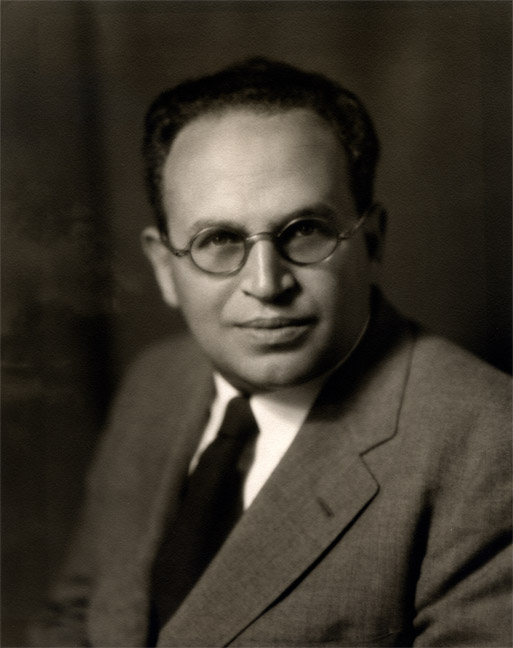
Paul Felix Lazarsfeld
Paul Felix Lazarsfeld was an Austrian-American sociologist, mathematician and one of the founders of modern empirical sociology. He became famous for his studies of unemployment, public opinion, voter behaviour and the influence of the mass media. The methods of surveys and statistical analysis that he developed had an enormous impact on sociology, political research and marketing.
Biography
Paul Felix Lazarsfeld was born on 13 February 1901 in Vienna, which was then part of Austria-Hungary. His father, Robert, was a lawyer, and his mother, Sophie, née Munk, worked in psychology and journalism. The family belonged to the educated Jewish milieu and maintained close ties with the Austrian Social Democratic movement. The Lazarsfelds’ home was visited by well-known political figures and intellectuals, such as Otto Bauer, Max Adler and Karl Renner.
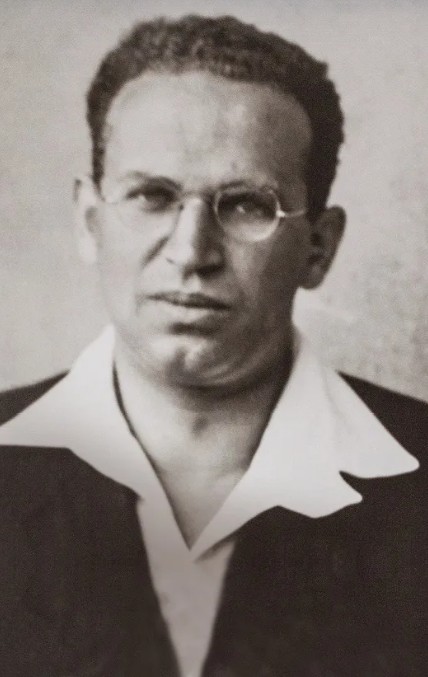
In this atmosphere, Paul was interested in social problems from his youth. While still a pupil at Vienna’s Akademisches Gymnasium, he joined the socialist youth movement, took part in organising political meetings and helped to set up associations of schoolchildren with socialist views. At first he was drawn to radical left-wing ideas, but later Lazarsfeld moved closer to the Social Democrats.
Political activity did not stop him from being passionate about mathematics, which gradually became the main focus of his education. After finishing school in 1919, Lazarsfeld entered the University of Vienna, where he studied mathematics and physics. He was particularly interested in the possibilities of applying precise calculation to complex scientific problems. In 1925 he received his doctorate, defending a dissertation on calculating the motion of the perihelion of Mercury on the basis of Albert Einstein’s general theory of relativity. Lazarsfeld spent part of his university years in France, where he continued his education and took part in the activities of socialist organisations. After returning to Vienna, he began teaching mathematics and physics at a secondary school. However, his interest in politics and human behaviour gradually led him to psychology, which in interwar Austria was going through a period of unusually intense development.
From mathematics to the study of society
In the 1920s, Vienna was one of the most important European centres of psychological research. Sigmund Freud, Alfred Adler, and Karl and Charlotte Bühler worked here, each developing different approaches to the study of human personality and behaviour. Lazarsfeld grew particularly close to Karl and Charlotte Bühler, who headed psychological research at the University of Vienna. He began working with their institute, helping to apply mathematical and statistical methods in psychology. Gradually he became interested in the possibility of studying people’s behaviour outside university laboratories: in everyday life, at work, in shops and in public organisations.
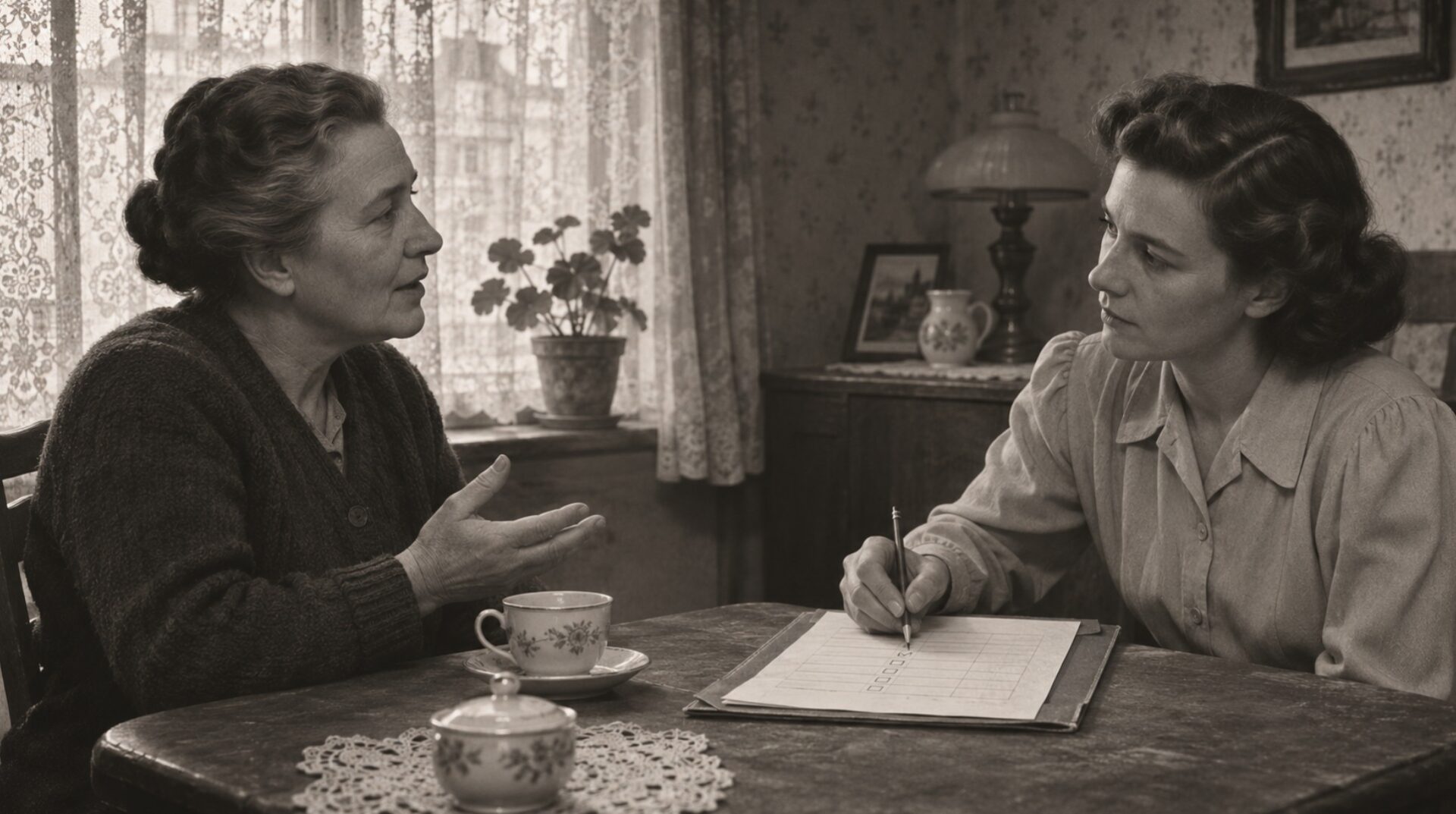
In the late 1920s, Lazarsfeld founded the Vienna Research Centre for Economic Psychology, which studied consumer behaviour, professional interests and social problems. Scientific research required money, so the centre also took on commercial commissions. Its staff looked into why people choose certain goods, how they make decisions about purchases and what circumstances influence their preferences.
This approach was rather unusual. Instead of reasoning about human nature mainly from a philosophical standpoint, the researchers collected concrete information: they conducted interviews, observed people’s behaviour, studied family budgets and compared the results. Lazarsfeld sought patterns that could be confirmed statistically, while paying attention to the personal circumstances of the people being studied.
Around the same time, a young researcher, Marie Jahoda, whom he had met in socialist circles, came to occupy an important place in his life. They married in 1926, and in 1930 their daughter, Lotte Franziska, was born; she later became a well-known social psychologist. The couple were united by an interest in science, shared political convictions and a desire to use research to solve social problems. Soon they had the chance to carry out a project that brought international fame to the Vienna research centre.
The unemployed of Marienthal
In the early 1930s, the global economic crisis hit Austria hard. Businesses were closing, thousands of people were left without work, and social organisations could not cope with the consequences of mass unemployment.
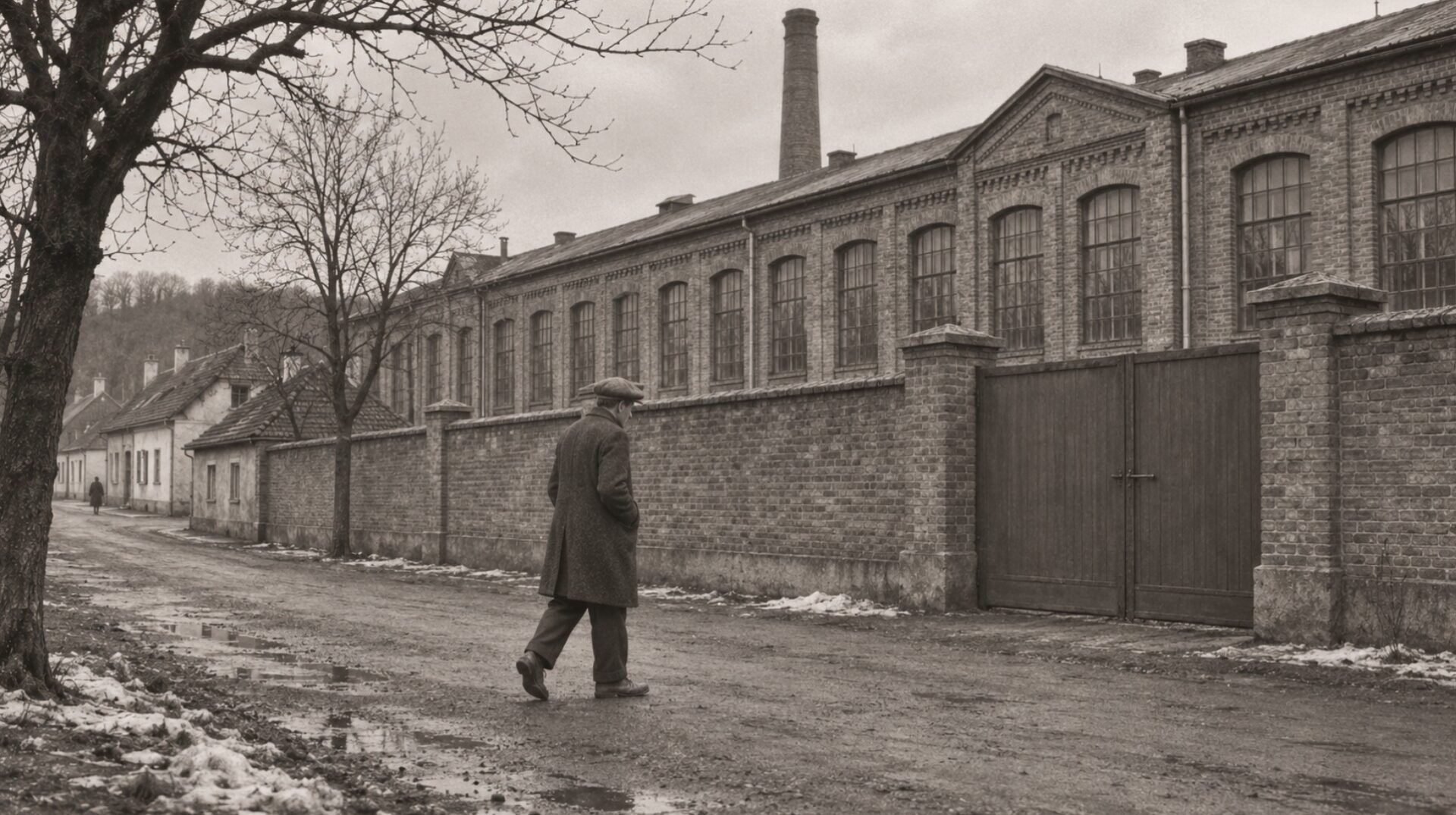
The situation was especially difficult in Marienthal, a small industrial village about 25 kilometres from Vienna. The local textile factory, which had for a long time provided work for most of the residents, closed in 1930. With it, the familiar way of life disappeared: families lost their income, workers lost their daily duties, and the population gradually became dependent on state aid.
In the socialist movement at the time, there was wide discussion of how long-term unemployment affects political attitudes. Many expected that people who had lost their jobs would protest more actively against the existing social order. Lazarsfeld proposed testing these assumptions by studying the life of one particular village. From November 1931 to May 1932, a research group under his leadership observed the everyday life of Marienthal’s residents. Marie Jahoda, Hans Zeisel and other young specialists took part in the work. They talked to people and studied family budgets, children’s school performance, attendance at public institutions and even the ways people spent their free time.
One of the most unusual observations was the measurement of the residents’ walking speed. The researchers noticed that many unemployed men moved along the streets much more slowly than before. They no longer had to hurry to the factory, keep to a work schedule or be home at a set time. Women, who continued to look after the household and the children, kept their usual daily routine to a greater extent.
Residents’ participation in public life also declined. People began to visit the library, use cultural institutions and take part in the activities of local organisations less often. Although they now had much more free time, their interest in activities that had previously given them pleasure gradually faded.
In 1933, the results of the study were published under the title The Unemployed of Marienthal. The main text was prepared by Marie Jahoda, Hans Zeisel wrote the historical and methodological appendix, and Lazarsfeld supervised the project, took part in the statistical analysis and wrote the introduction. The study showed that long-term unemployment affects a person far more deeply than one might suppose from the loss of income alone. Along with their jobs, people often lost their habitual organisation of time, their social ties and their confidence that they could change their own situation. Instead of the expected political activity, many gradually developed apathy and resignation.
The Marienthal study became one of the best-known works in the history of European sociology. It demonstrated that social problems can be studied by combining statistical data with observation of people’s everyday lives. This approach later became an important part of modern empirical sociology.
Emigrating to America
By the time the Marienthal study was being completed, Lazarsfeld was already well known among specialists in social psychology and statistics. In 1933 he received a fellowship from the American Rockefeller Foundation, which allowed him to continue his scientific work in the United States. At first the trip was seen as a temporary placement. Lazarsfeld wanted to become familiar with American universities, the methods of social research and the way projects were organised. He visited research centres, made professional contacts and studied the American experience of conducting mass surveys.

Meanwhile, the political situation in Austria was deteriorating rapidly. The government of Engelbert Dollfuss established an authoritarian regime, and after the armed clashes of February 1934 the activities of Social Democratic organisations were banned. For Lazarsfeld, who came from a Jewish family and had taken part in the socialist movement for many years, returning home would have meant serious uncertainty. In 1935 he decided to stay in the USA. To arrange the necessary documents, Lazarsfeld briefly returned to Vienna, after which he set off for America again, this time as an immigrant. In later years he kept up contacts with his European colleagues, but the main part of his life came to be connected with New York.
His emigration coincided with serious changes in his personal life. His marriage to Marie Jahoda broke up in 1934. Lazarsfeld later married Herta Herzog, who had also previously worked at the Vienna Centre for Economic Psychology and became a well-known researcher of mass communication.
His first years in America were devoted to finding a stable professional position. Lazarsfeld worked in organisations that studied youth employment, and then headed a research centre at the university in Newark, New Jersey. His experience of combining university science with practical research turned out to be in demand in a country where advertising, mass surveys and studies of consumer behaviour were developing quickly.
In 1943, Lazarsfeld became an American citizen. By then his scientific career had already reached a new level.
Radio and public opinion
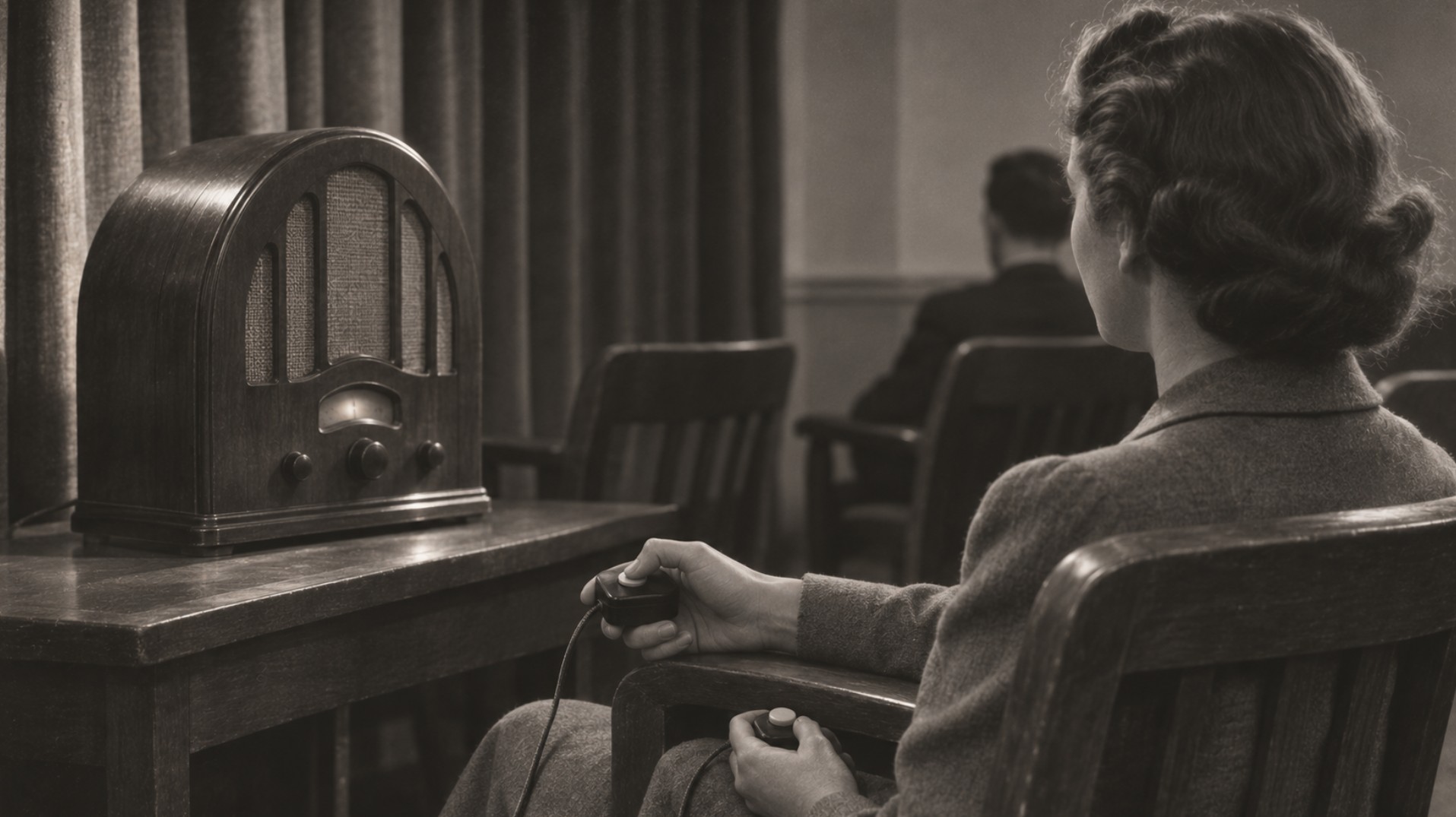
In the 1930s, radio became one of the most important mass media. Millions of Americans listened every day to the news, music programmes, advertisements and speeches by politicians. At the same time, researchers still had a poor understanding of how radio broadcasting influenced listeners’ behaviour and beliefs.
In 1937, the Office of Radio Research was established at Princeton University with the support of the Rockefeller Foundation. Lazarsfeld was entrusted with leading the project, which was to organise a systematic study of the audience and of the influence of this new means of communication. Together with colleagues, he began to investigate which programmes different groups of listeners preferred, why people trust certain sources of information and how far what they heard on the radio could change their views. For this purpose, surveys, interviews, experiments and new methods of statistical analysis were used.
Lazarsfeld sought to study the audience’s behaviour directly, as people were taking in information. Together with the American researcher Frank Stanton, he took part in developing a device that allowed listeners to mark the moments they liked and disliked during a radio broadcast. This made it possible to compare the audience’s reaction with individual parts of a programme.
In 1939, the project was transferred to Columbia University in New York, where it was later renamed the Bureau of Applied Social Research. Lazarsfeld became a professor of sociology and for many years took part in managing the research centre he had created.
Here he worked with well-known American sociologists, among whom Robert Merton held a particularly important place. Their work helped to form an influential school of thought that combined theoretical research with the study of concrete social processes. At the same time, Lazarsfeld’s interests gradually extended far beyond radio. He was increasingly occupied by a question that had taken on particular significance with the rise of mass politics: how do people make decisions, and who really influences their choices?
Why do people vote the way they do?

In 1940, Lazarsfeld, together with Bernard Berelson and Hazel Gaudet, organised a large-scale study of voter behaviour during the presidential campaign in the United States. The researchers chose Erie County in Ohio, where over several months they observed how local residents’ political views changed. The main group consisted of about 600 people, who were surveyed regularly throughout the election campaign. The researchers wanted to find out when people make their final decision, which events can change their preferences and how strong the effect of newspapers, radio and political advertising turns out to be.
The results were unexpected. It turned out that many voters had made up their minds long before the vote, and that new information more often strengthened existing convictions than made them change radically. Personal relationships played a significant role here: conversations with relatives, friends, colleagues and acquaintances.
The researchers paid particular attention to people whose opinions those around them listened to more often than to others. These so-called opinion leaders followed the news closely and then discussed what they had learned with the people around them, often influencing how others understood it.
These observations became the basis of the concept of the two-step flow of information. According to it, messages from the mass media often reach society through intermediaries: people who get their information from newspapers or radio and then pass it on to others, accompanying it with their own explanations and judgements.
In 1944, the results of the study were published in the book The People’s Choice. The work became one of the best known in the history of research on political behaviour and had a great influence on the further development of sociology, political science and research on mass communication.
Later, Lazarsfeld continued to study interpersonal influence together with the young sociologist Elihu Katz. In 1955 they published the book Personal Influence, in which they examined in more detail the role of communication between people in spreading information and shaping consumer preferences.
These studies changed ideas about the effects of mass communication. Radio, newspapers and advertising turned out to be part of a far more complex system, in which messages are constantly discussed, reinterpreted and passed from person to person.
Scholar and organiser of science
In the American scientific community, Lazarsfeld became famous not only for his own research but also for his ability to build teams, bring together specialists from different fields and attract funding for large projects. He developed and refined a number of methods of empirical research, including panel surveys, in which the same people are questioned several times in order to trace changes in their views and behaviour.
Lazarsfeld also worked on methods of statistical analysis of hidden patterns, which make it possible to study complex characteristics of people on the basis of their answers to questions and their observable actions. He was interested in many different areas of social life: labour relations, consumer habits, radio and television, education, political behaviour and the influence of social groups. At the same time, the results of his research were used not only by universities but also by government agencies, commercial organisations and the mass media.
This approach provoked debate. Some researchers believed that cooperation with the advertising industry and government clients limited the freedom of sociology and forced scholars to concentrate on narrow practical tasks. Lazarsfeld’s disagreements with the German philosopher Theodor Adorno, who for some time took part in the American radio research project, were especially prominent. Adorno sought to analyse mass culture in a broad social and philosophical context, whereas Lazarsfeld preferred research whose results could be tested by means of surveys, observation and statistics. Despite such criticism, his influence on the organisation of sociological research turned out to be enormous. The model he created, of a research centre able to carry out large collective projects while also supporting the university training of researchers, spread far beyond the USA.
In 1949, Lazarsfeld became head of the sociology department at Columbia University, and he continued to teach and direct research. He also worked as a visiting professor in Europe, in particular in Oslo and Paris.
By this time his second marriage had already ended. In 1949, Lazarsfeld married the American researcher Patricia Louise Kendall. In 1953 their son Robert was born, who later became a professor of mathematics.
Returning to Austrian scientific traditions
Despite his successful career in the United States, Lazarsfeld continued to follow the development of the social sciences in Europe, and especially in his homeland. After the Second World War, European universities gradually restored the scientific ties that had been broken by Nazism, emigration and the events of the war. Many scholars who had left Austria in the 1930s had built careers overseas, and the methods and schools they created had won international recognition.
Lazarsfeld wanted to use this experience to help develop new scientific institutions in Austria. Together with the well-known economist Oskar Morgenstern, who had also emigrated to the USA, he initiated the founding in Vienna of the Institute for Advanced Studies (Institut für Höhere Studien). The institution opened in 1963 with the support of American and Austrian organisations. Its task was to develop modern sociology, economics and political science, to train young researchers and to spread the methods of empirical analysis that by then were already widely used in American universities.
For Lazarsfeld, this project had particular significance. The sociologist was helping to bring back into the Austrian scientific community research approaches whose foundations he had himself begun to work out in interwar Vienna, but which he had been able to develop fully only after emigrating. In the following years, Lazarsfeld visited Austria many times, took part in scientific events and kept in touch with Viennese researchers. Even so, his permanent home remained in the United States.
Final years and legacy
Lazarsfeld’s scientific career continued into old age. In 1971, after many years at Columbia University, he officially retired, but soon went on teaching at the University of Pittsburgh. He also gave lectures at European universities, including the Sorbonne in Paris, where he taught in French.
Lazarsfeld’s achievements won wide recognition. As early as 1951 he was elected a member of the American Academy of Arts and Sciences, and in 1974 of the US National Academy of Sciences. He also served as president of the American Sociological Association and received honorary degrees from several universities.
Paul Felix Lazarsfeld died on 30 August 1976 in New York at the age of 75. After his death, the research carried out in Vienna and the United States continued to influence the development of the social sciences. In 1983, the Lazarsfeld Archive was opened at the University of Vienna, devoted to preserving his scientific materials and legacy. In 1994, a street in the Viennese district of Floridsdorf was named after him.
His main achievement was the development of methods that make it possible to study society through concrete observations and verifiable data. Thanks to this, sociology gained new possibilities to investigate not only what people say about their own beliefs and actions, but also how those beliefs arise, change and affect everyday life.
About the project:
My name is Anatoly, and I am the author of Emigrants.life. In 2017, my family and I emigrated from Krasnodar to Austria. My wife and I work in marketing, and we created Emigrants.life to help people who are thinking about moving abroad.
Emigrants.life publishes daily news about life and everyday matters in Austria and Europe. Follow us on Facebook, Instagram and Twitter, or join our Russian-language Telegram channel.