
Vienna is full of interesting events. Festivals, concerts, cultural events, district celebrations, and city fairs are constantly taking place here. Sometimes it feels impossible to keep up with everything, even if you really try. But after many years of living in Vienna, Julia and I had still never really gone to a flea market properly: with a clear plan, a chosen place, and an understanding of where exactly we were going. There are quite a lot of such markets in the capital, and I even wrote a separate article about them. In May 2026, we decided to correct this mistake and go to the area around Mariahilfer Straße, where a small but interesting flea market was supposed to take place on Neubaugasse. That is what today’s article is about.
We chose Neubaugasse for a reason. The street is almost in the very center of Vienna, it is easy to reach, and the market itself looked like a convenient way to get properly acquainted with this city tradition for the first time. It seemed more cozy, organized, and focused on small things that are pleasant to look at without rushing. There was another important advantage: the time. Many flea markets in Vienna start early in the morning and end quite quickly. The market on Neubaugasse stayed open longer, so there was no need to heroically get up at sunrise for it. We could arrive calmly, walk along the street, look at the people, the objects, and the atmosphere of this Viennese weekend.
After living in Austria for many years, I am still surprised by the popularity of flea markets. In essence, these markets sell used things. As I learned only after moving here, many of these items come to sellers after old apartments are cleared out. Sometimes charity organizations do this: they empty the apartments of people who are no longer alive, and some of the things later end up at flea markets or are resold through other channels.
Some items are simply given away for almost nothing or for free, and then sellers find new buyers for them. And I am still surprised by how calmly and willingly people in Europe buy such goods. For me, there is still something unfamiliar about this. Maybe I am just a more squeamish person. It seems to me that objects have their own energy and history. After all, I do not know who used this cup, fork, or old bag before me.
In Austria, I often see a completely different attitude. In many cases, a thing here is simply seen as a thing. If it looks fine, serves its purpose, and someone likes it, that is already enough. A fork remains a fork. A plate remains a plate. An old object can get a new life in another home. For me, this has still not become completely natural, but as a cultural feature, it is interesting to observe.
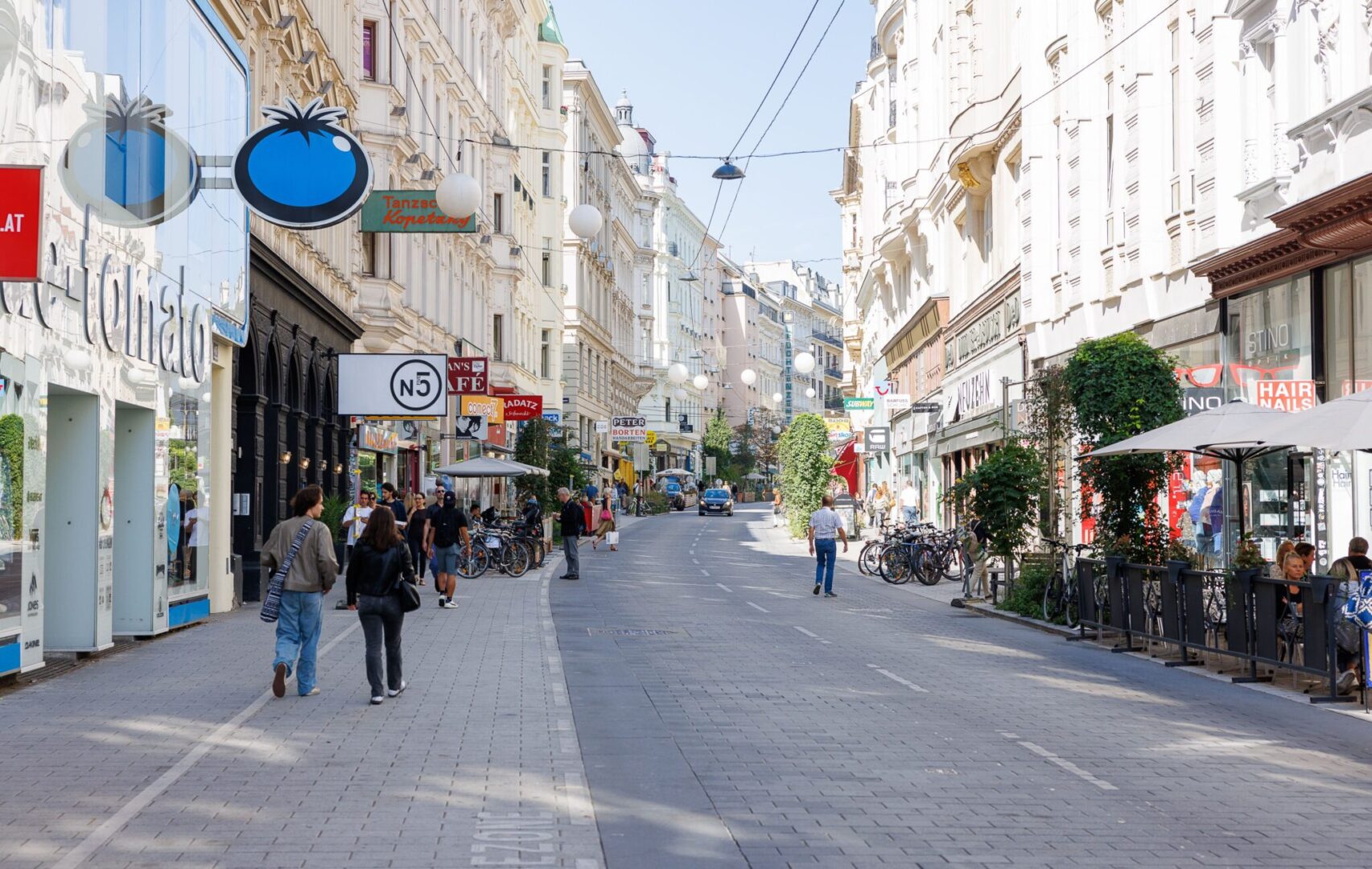
The atmosphere on Neubaugasse was exactly the way we had seen it several times from the outside, when we had accidentally walked past during a flea market. It is a very lively city bazaar. On normal days, traffic runs along the street, and in general it is a proper street in the center of Vienna, although quite narrow. But on market days, it is fully closed to traffic and turns into a noisy, crowded, lively space.
For Vienna, this kind of atmosphere is still unusual. Here, you rarely hear music on the street just like that, in the middle of ordinary city life. But on Neubaugasse, it sounded natural: live musicians were playing somewhere, the murmur of the crowd was around them, people were talking, laughing, stopping at tables, looking at things, and moving on. At the same time, the music was placed well. Different spots did not compete with one another and did not turn the street into a mess of sounds.
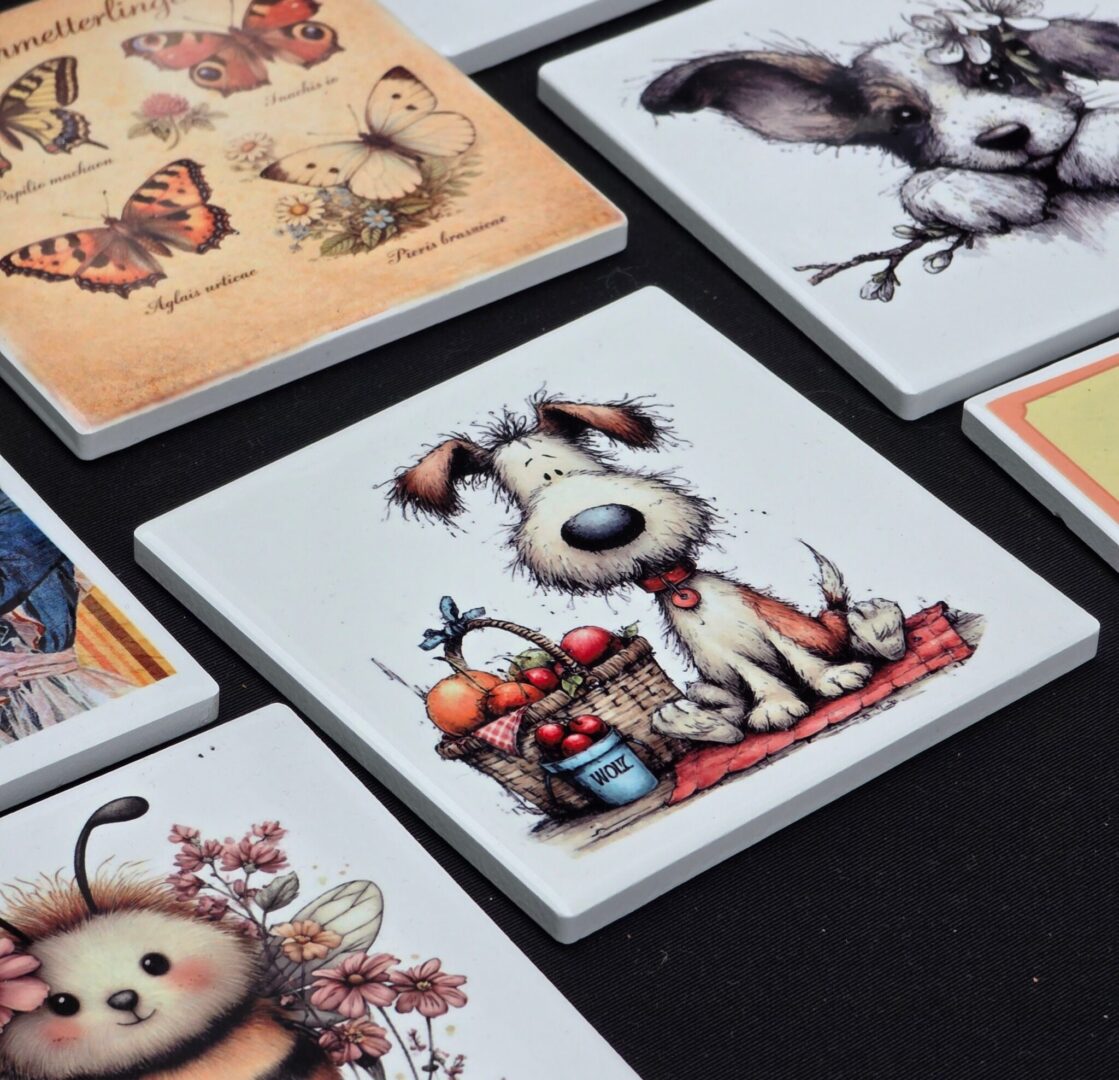
There were many goods. People were selling clothes, CDs, old things for the home, handmade items, crafts, and many small objects that you want not so much to buy as simply to look at. There was also quite a lot of food on the street. In some places there were cheese producers, in others ordinary festival fast food: kebabs, sausages, and everything that fits exactly this kind of day, when you are walking around, looking in all directions, and do not want to turn food into a whole separate event.
A separate Austrian detail is the drinks. At the market, you could buy coffee, beer, Aperol, gin and tonic, and calmly continue walking with it. In Austria, I am still surprised by how normal alcohol looks at city events. Sometimes it seems that many Austrians really need a glass of beer or Aperol to start having fun a little more freely. People drink, relax, talk to each other, but at the same time there is no feeling of drunken disorder in the street. Everything stays within the limits of a calm day off.
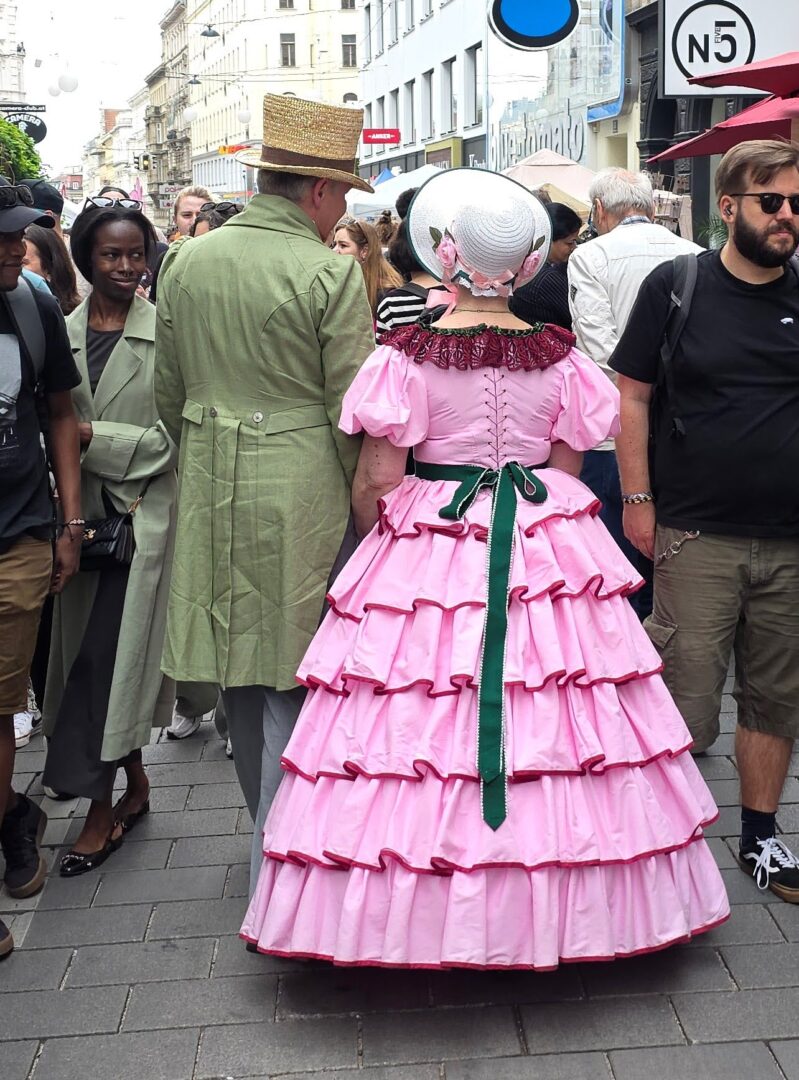
I really liked this atmosphere. It was especially nice to see so many different people walking peacefully in the crowd: young groups, elderly couples, tourists, and local residents. And sometimes among them there were people dressed almost like characters from the 19th or early 20th century. For a flea market, this creates a whole separate setting, and in such moments Neubaugasse looked especially alive.
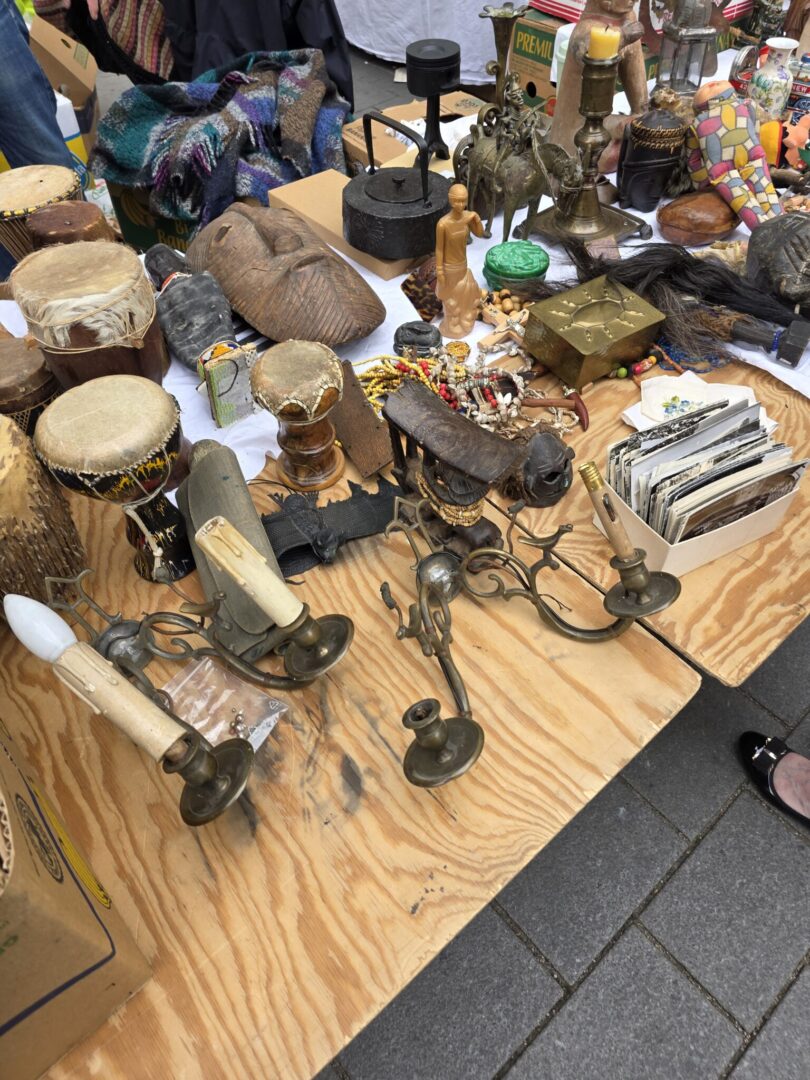
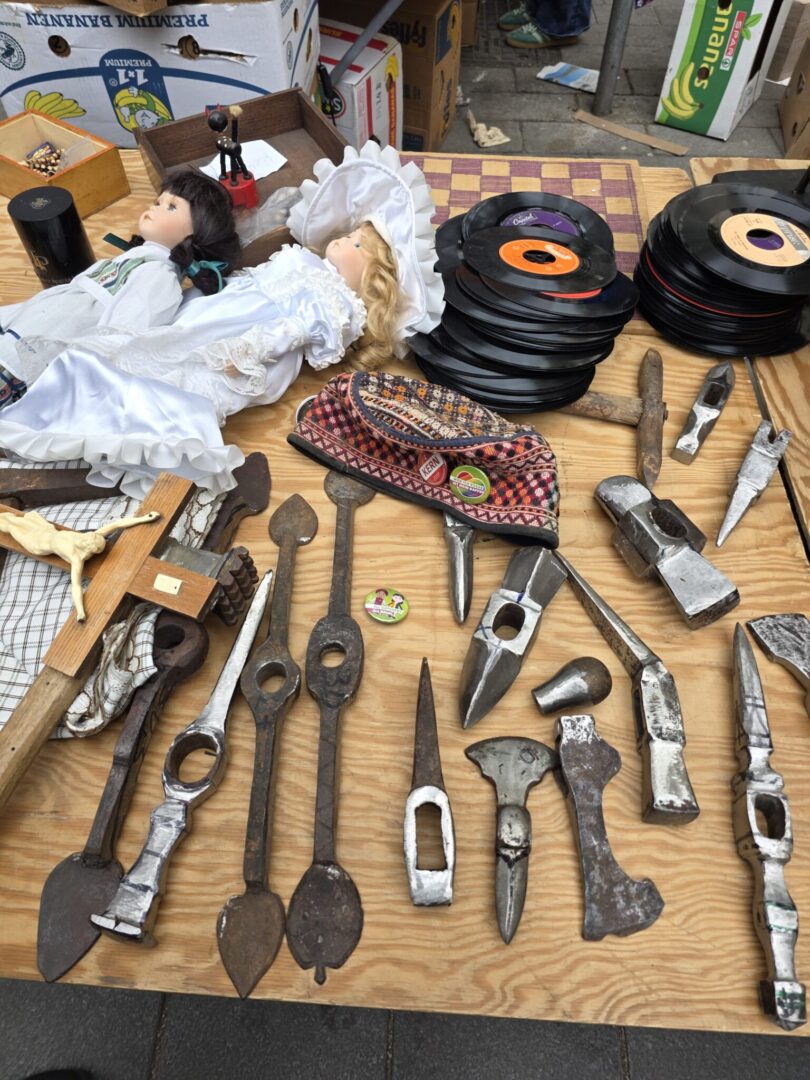
The selection at the flea market turned out to be very diverse. It is probably impossible to list everything, but the number of things you can find there is really impressive. There are large stands with more understandable and organized goods: CDs, vinyl records, clothes, books, jewelry, handmade items. Such places look almost like ordinary shops on the street.
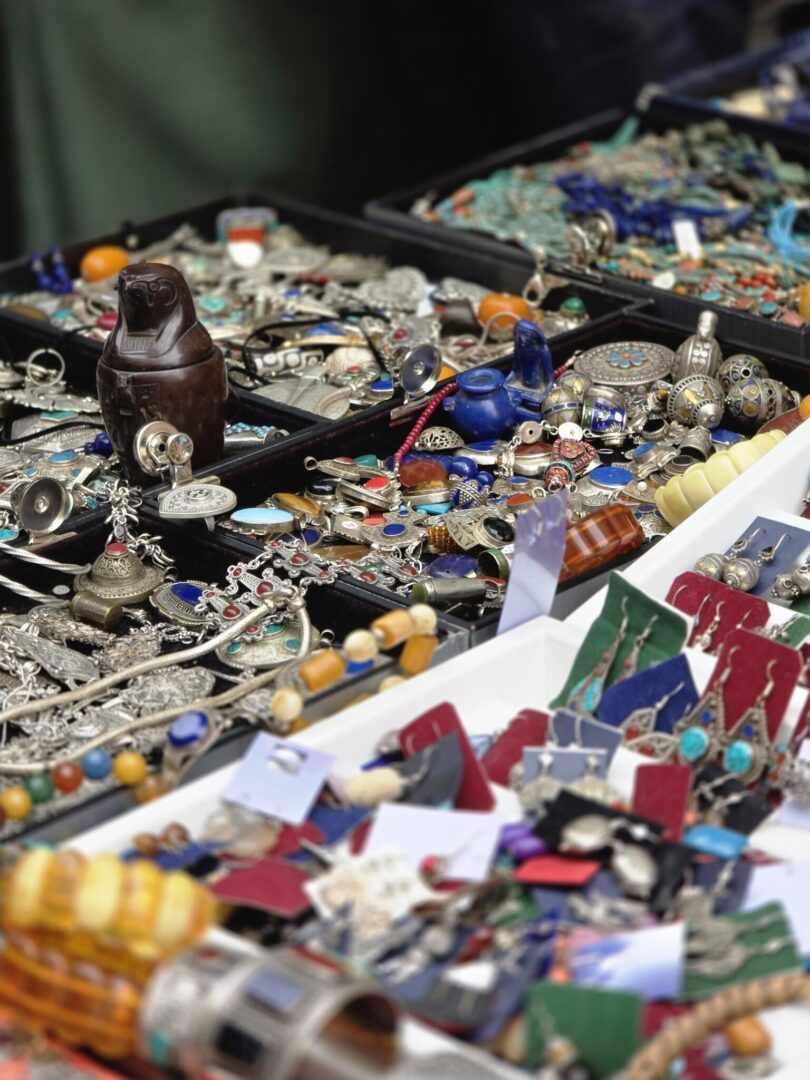
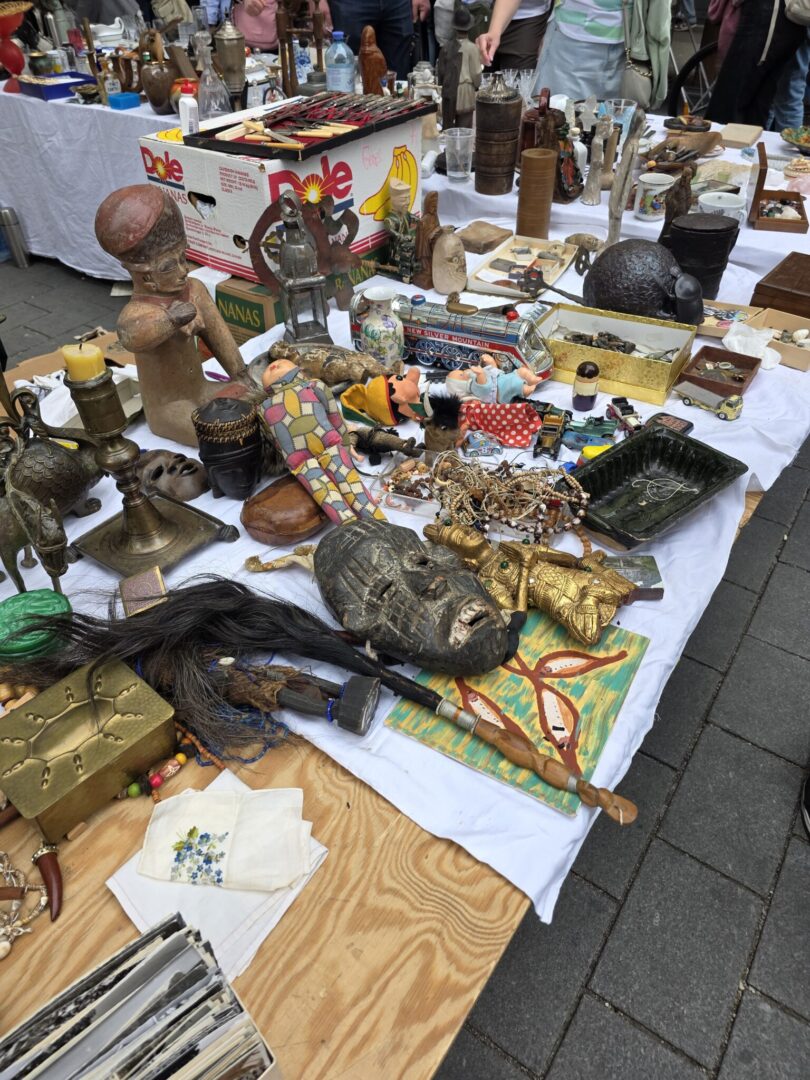
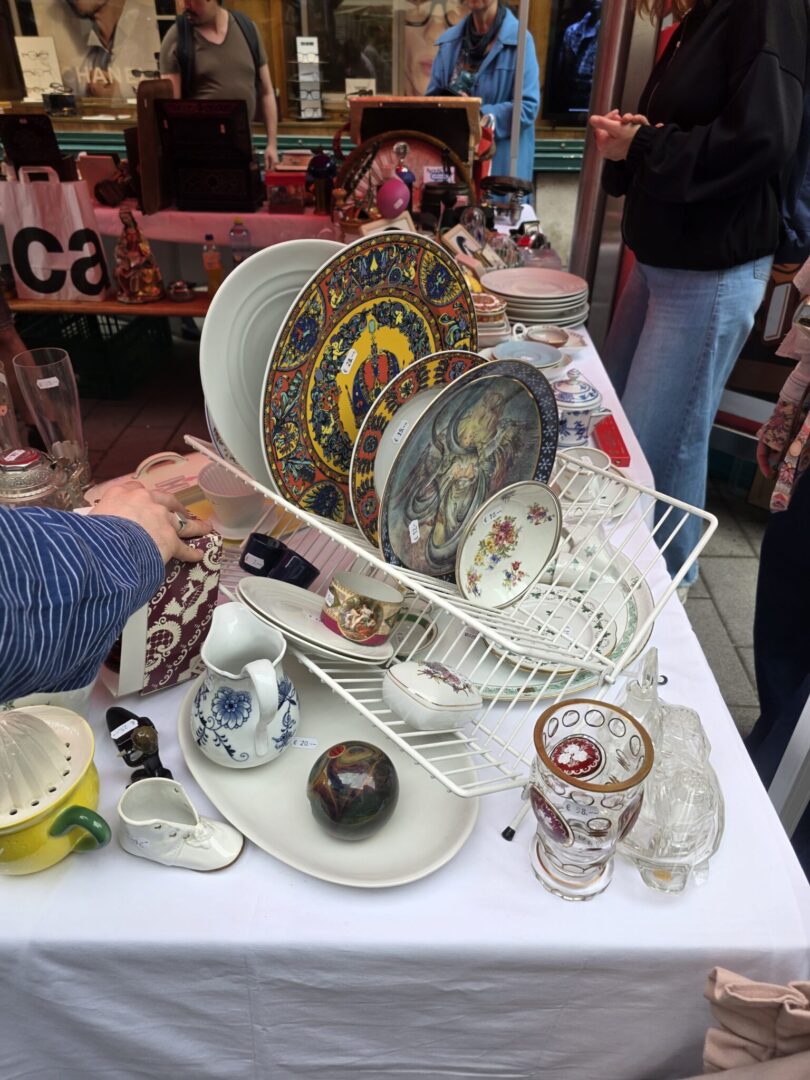
But the most interesting part begins where real piles of all kinds of things appear. On one table, you may find old jewelry, plates, vases, books, flashlights, projectors, binoculars, chess sets, and dozens of other items that usually spend years in basements, boxes, or country houses. Once they were part of someone’s life, then for a long time nobody needed them, and now they have appeared in front of people again and have a chance to find a new owner.
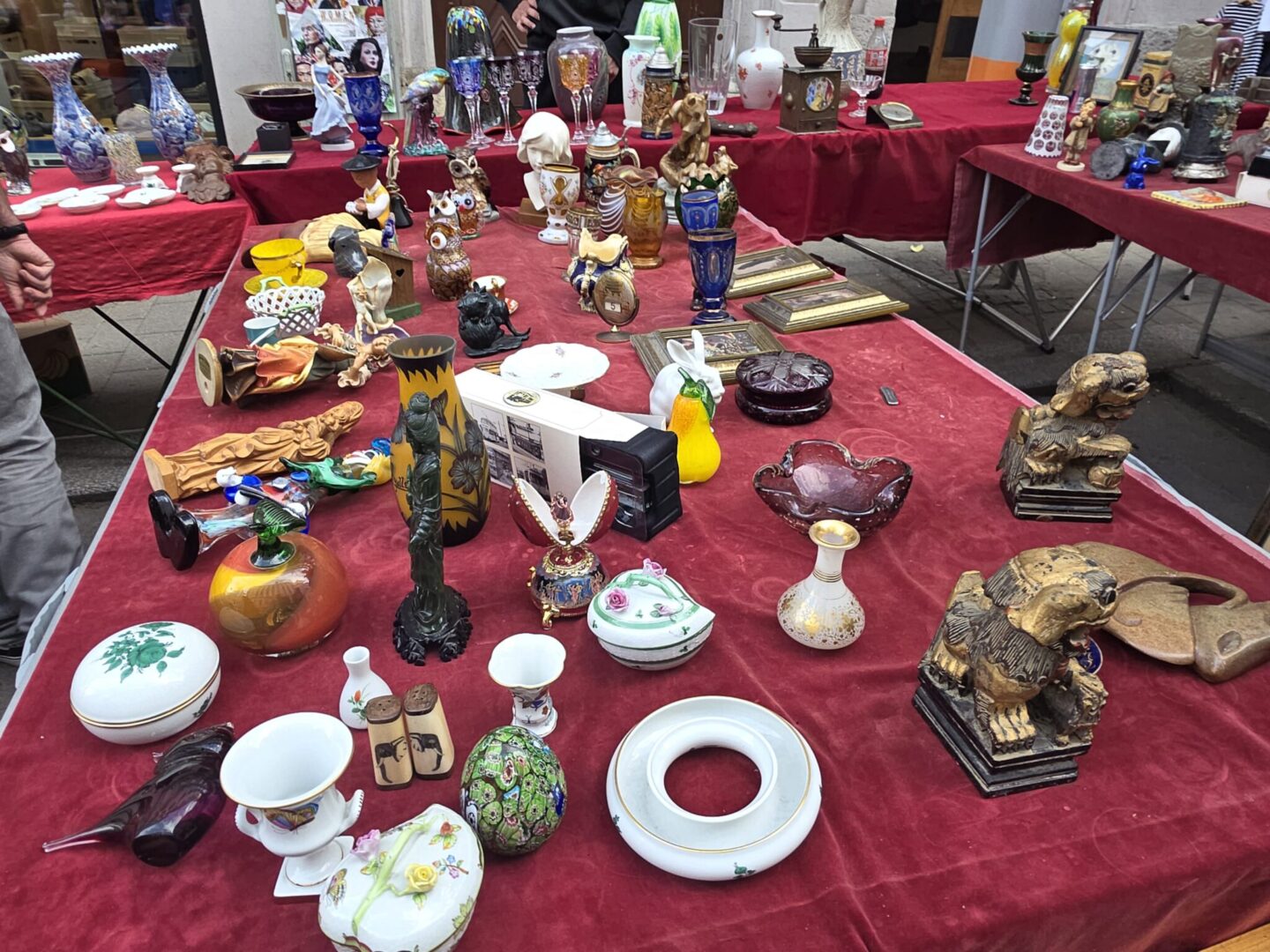
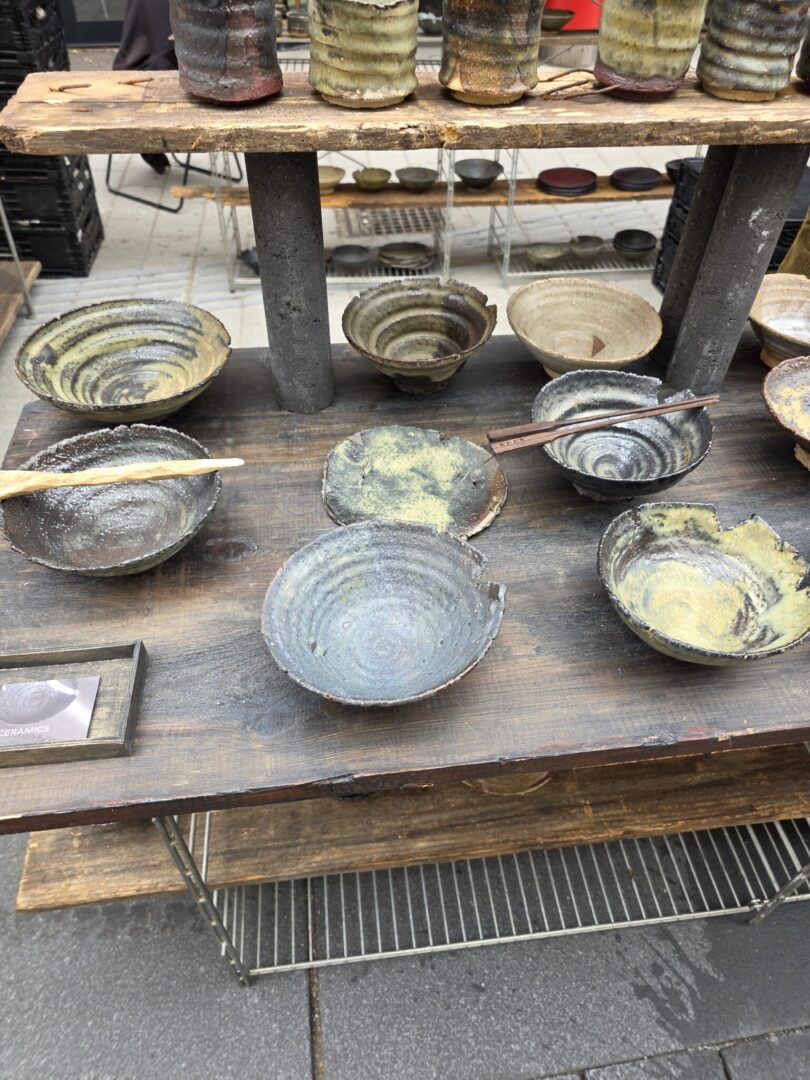
There was a lot of beautiful tableware. And next to each other you could see both new handmade pieces and truly old things where you immediately feel the age. Glasses, ashtrays, sugar bowls, small kitchen items, old books, magazines, household objects — you want to look at all of this almost like at a small museum of everyday history. Only in this museum, you are allowed to touch the objects, buy them, and take them home with you.
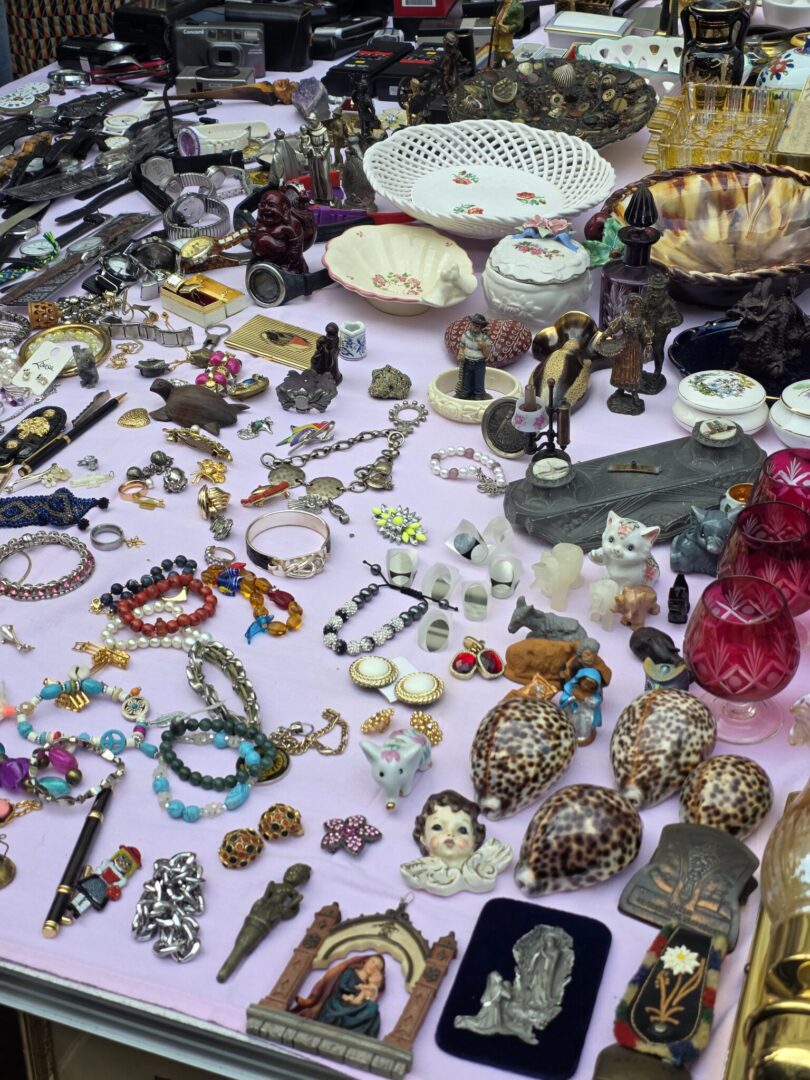
You can choose there endlessly. Almost certainly everyone can find something for the home, as a memory, or as a gift. It is difficult even to imagine how diverse a flea market in Vienna can be when it stretches across several blocks. Julia and I also became interested in this process quite quickly: we found small presents for each other, chose a few things for friends, and bought several pleasant little items for ourselves as memories.
The experience of looking through old things itself turned out to be a separate pleasure. You can look at beads, earrings, small bracelets, boxes, strange bottles, and objects whose purpose is not always immediately clear. At one point, we even found an old perfume. It really was a vintage scent. You could see that the bottle had lived a long life, but the smell itself had survived surprisingly well.
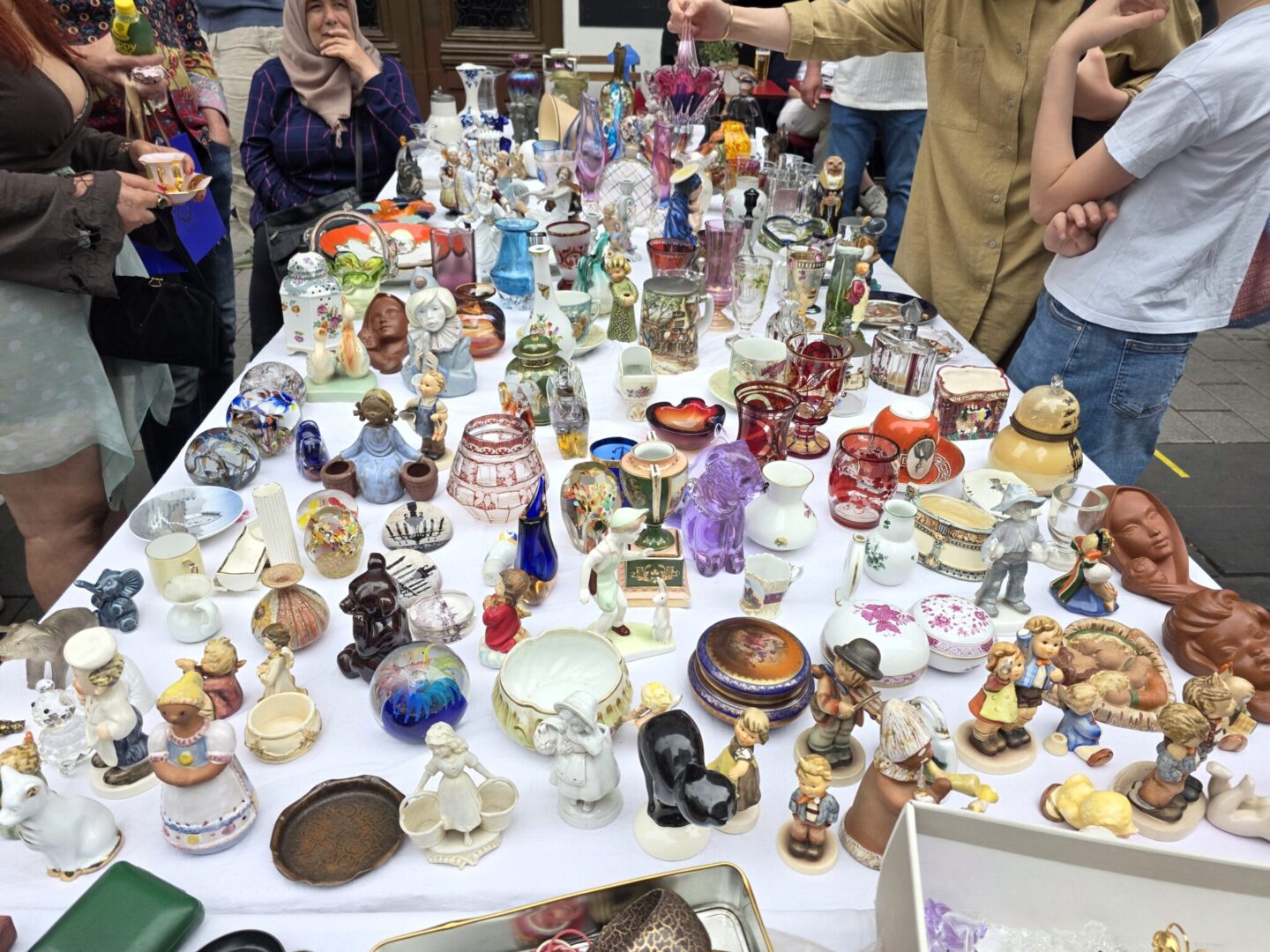
At the same time, it is important to note that the prices at the market were quite serious. Yes, some goods were sold almost in piles, and you could find discounts on some small items. But if you want to buy an old camera, beautiful tableware, or a piece of jewelry, the price can easily be several dozen euros. I did not get the feeling of a cheap market. Resale works, the economy works, there is demand, and there is supply too.
I wanted to buy some beautiful small porcelain object: something like a tiny shot glass, a miniature espresso cup, or simply a nice item for the home. I did not end up choosing the right thing that day. The things I liked cost noticeably more than I was ready to pay for a random purchase during a walk.
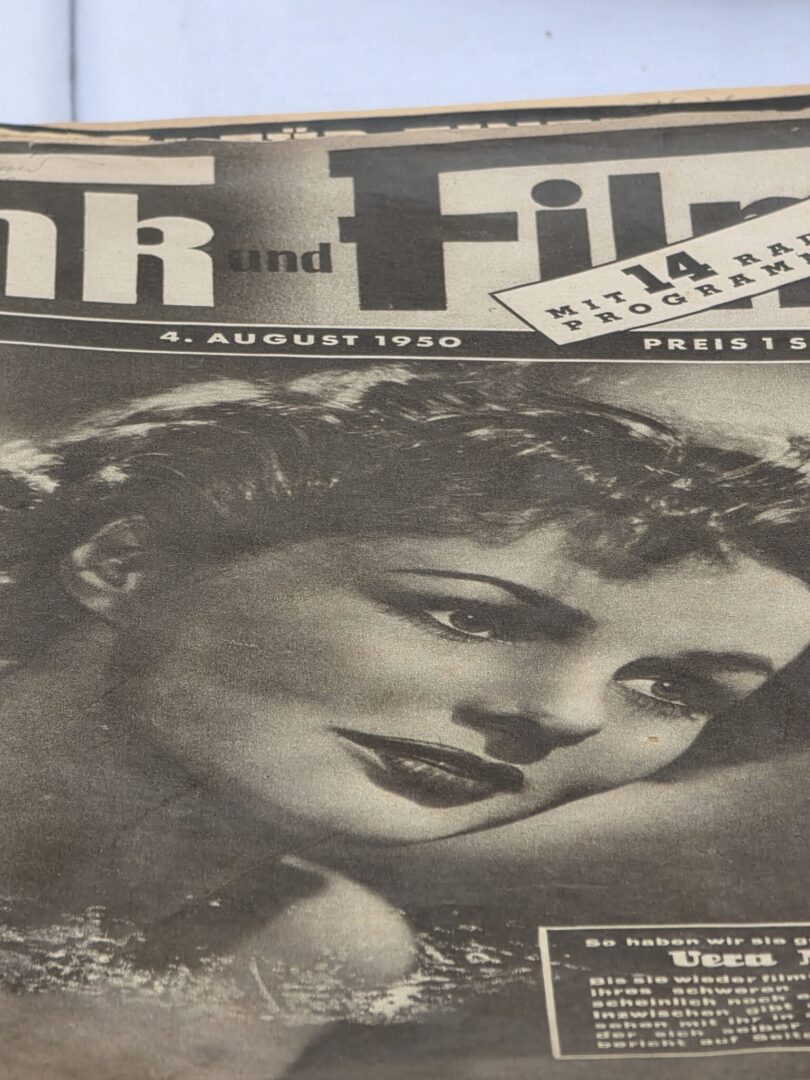
But we did find beautiful old postcards from the beginning of the last century. We decided to send some of them to friends and keep some for ourselves. In any case, these are pleasant little things to remember the day by, and they have exactly the thing for which people probably love flea markets. You hold in your hands a postcard that someone once sent from America to Vienna in 1910, and suddenly an ordinary purchase turns into a small meeting with someone else’s history.
It was especially surprising to find postcards from Russia. Moscow and St. Petersburg in this context are still understandable, but a postcard from Novorossiysk at a flea market in Vienna looked completely unexpected. In such moments, you start seeing things not as goods, but as traces of someone’s life, which in some strange way have reached you through decades.
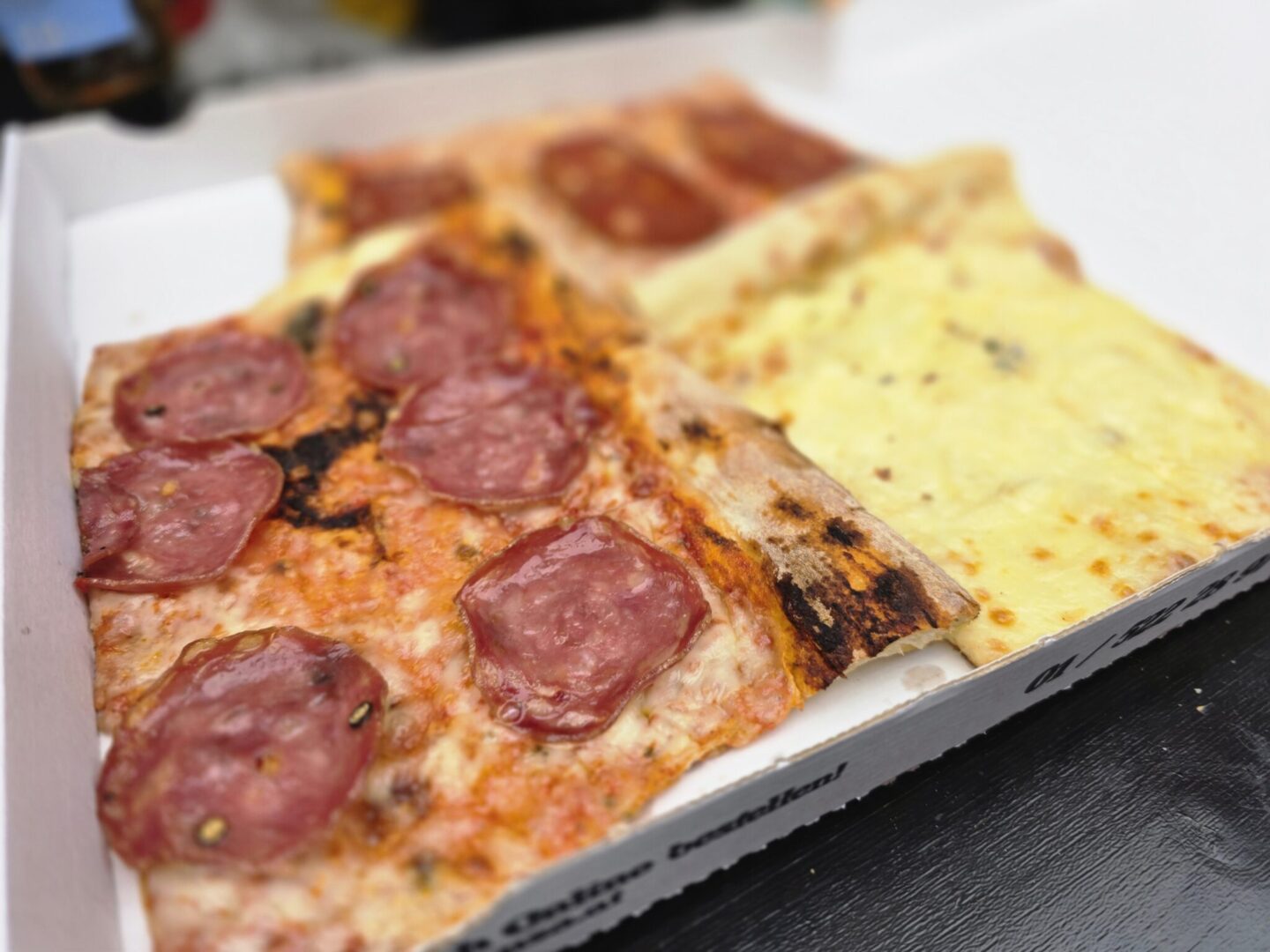
In the end, Julia and I had a great time. We walked a lot, looked at many things, received many new impressions, and even the crowd did not annoy us this time. After the market, we went to a place on the same Neubaugasse that we really love. They make Roman-style pizza there: thin, large, and cut into pieces. We took pizza, beer, and simply rested calmly after all this variety.
It turned out to be a really pleasant walk. The flea market in Vienna left a positive impression, and I think Julia and I will definitely visit others as well. How do you feel about buying things at flea markets? I would be interested to know your opinion. Share it in our Telegram group.
You may also like these articles:
- An Emigrant’s Observations: My Nine Years in Austria
- Photo Report from Donauinselfest 2026. Part Two: Giant Rooks and Another Evening on the Island
- Photo Report from Donauinselfest 2026. Part One: My Ugly Clementine
- An Emigrant’s Observations: The Russian Language Without the “Russian World”
- Marilyn Manson Live in Vienna: A Look Back at the Concert
- LP Live in Vienna: A Look Back at the Concert
- An Emigrant’s Observations: Anti-Putinism and the Imperial Lens
- It’s My Birthday Today!
- My Life in Austria: July 2026
- An Emigrant’s Observations: My Toxic Homeland —Yesterday, Today and Tomorrow
- Ricchi e Poveri Live in Vienna: A Night of Music and Memories
- An Emigrant’s Observations: Simple Ways to Support Your Emotional Well-Being
- Eisenstadt in Pictures: A Day in a Small Austrian City
- Exploring Vienna’s Neubaugasse Flea Market
- Sofia Isella Live in Vienna: A Concert Review
- An Emigrant’s Observations: When Mistakes Become Toxic While Adapting
- An Emigrant’s Observation: Extreme Heat in Europe and Austria in 2026
- My Emigration to Austria: June 2026 Recap