
In May 2026, a concert by the young American singer Sofia Isella took place in Vienna. The event was held at Arena Wien Open Air, and for me it became a continuation of a story that began back in the summer of 2025 at the Sziget festival. That was where I first heard Sofia Isella live. Her performance made a strong impression on me then, and I have already written about her work in a separate article. So today I do not want to explain again in detail who Sofia Isella is and why she has so quickly become a noticeable artist. It is much more interesting to share something else: how her solo concert in Vienna went — not as part of a festival schedule, but as a big personal evening.
It is funny, but Sofia Isella became, perhaps, the first artist who was basically recommended to me by a large American Big Tech company. Before that, new music came to me in very different ways. First there was the courtyard: whatever the guys near my building played on guitar, I could then love for months, and sometimes for years. Then came MTV, which strongly influenced my musical taste. I will always be grateful to it for that. Later came the internet, with forums, websites, music selections, and many passionate people who shared their discoveries. And by 2025, new recommendations were coming more and more often from services like Spotify. It analyzes what you like and gently offers you something similar.
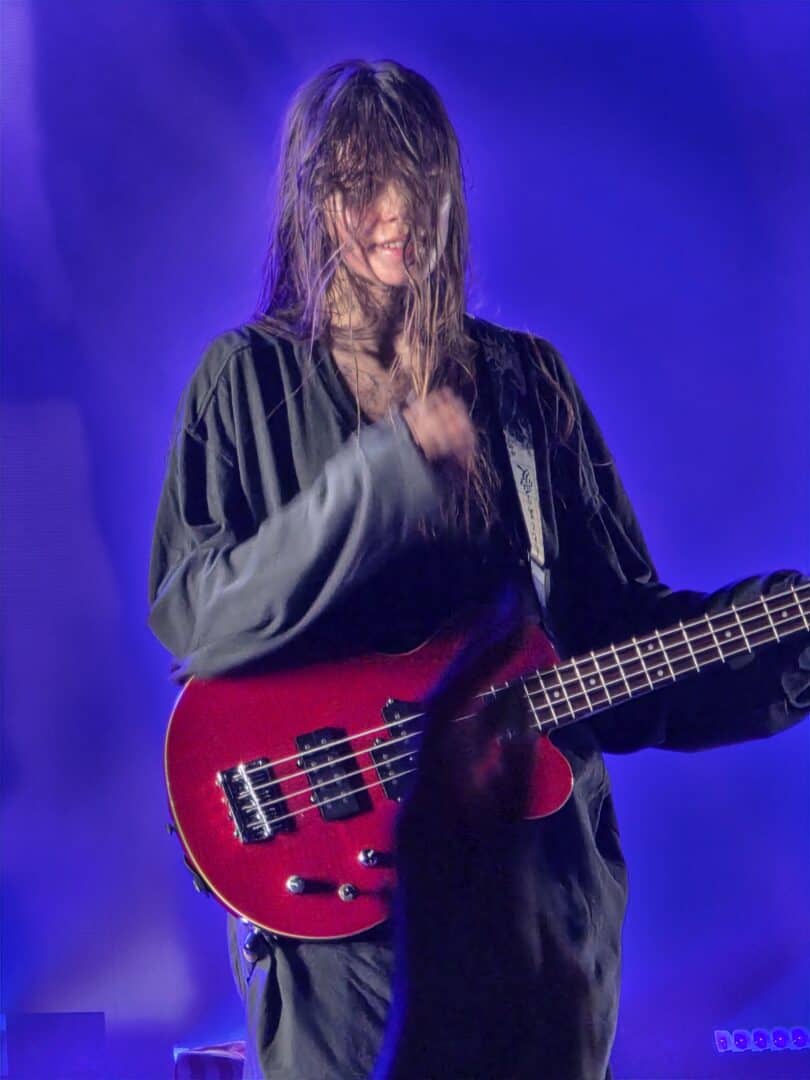
That is how I found Sofia Isella. Her music interested me, but I was especially caught by her lyrics and by the image she chose for herself. A very young woman created a role for herself where difficult topics, sharp emotion, and almost demonstrative anti-sexuality come together. Modern stars often actively play with sexuality, but Sofia Isella works differently. Even when her performance includes movements or images that may look sexual from the outside, they work as part of the performance, not as a normal attempt to please through attractiveness.
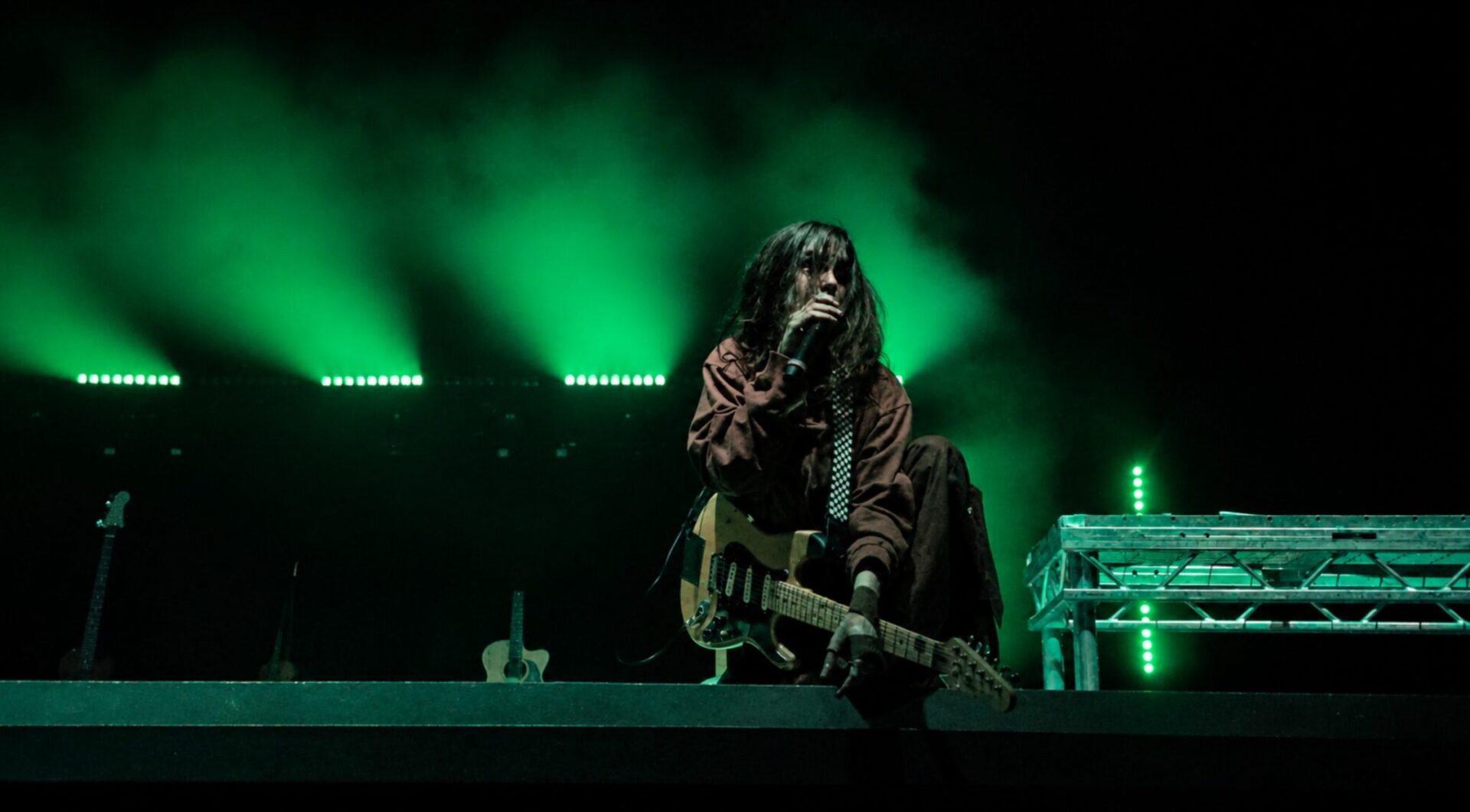
You might think that I had already seen Sofia Isella at Sziget and enjoyed her performance a lot. It was a powerful show, and I genuinely wanted to tell people about it. So why go again? But a festival concert is still a separate experience. The audience there is always very mixed. People come and go, someone just happens to be near the right stage by chance, someone is talking, someone has already drunk quite a lot or is in some other state.
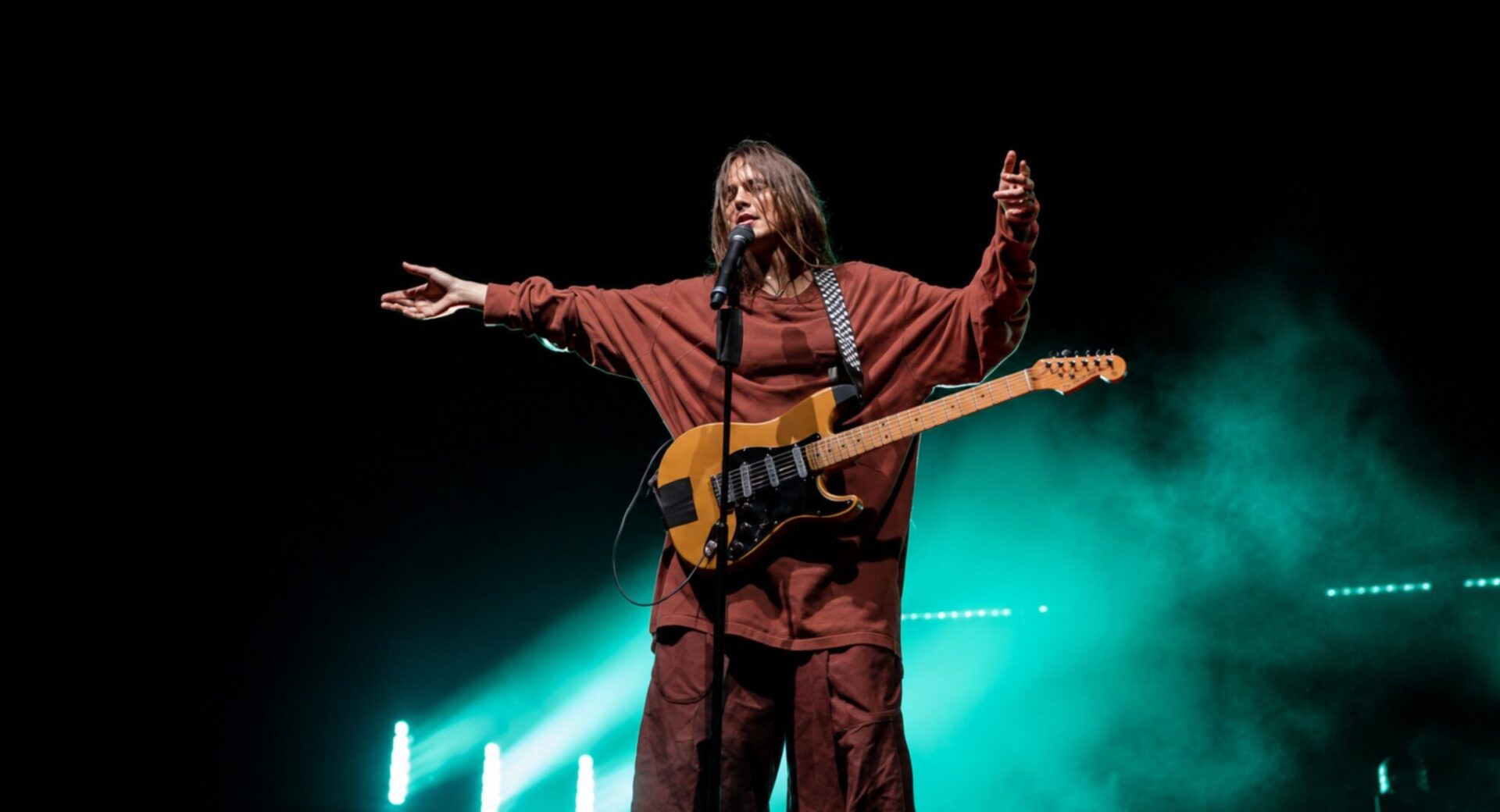
At Sziget, I could not fully sink into her performance. There were many noisy people around me, which distracted me, and my connection with this concert-performance slipped away from me in some moments. Sofia Isella still made a strong impression on me then, but I wanted to see her in a different situation: without the festival rush, without a random audience, without the feeling of ten other events happening around me at the same time.
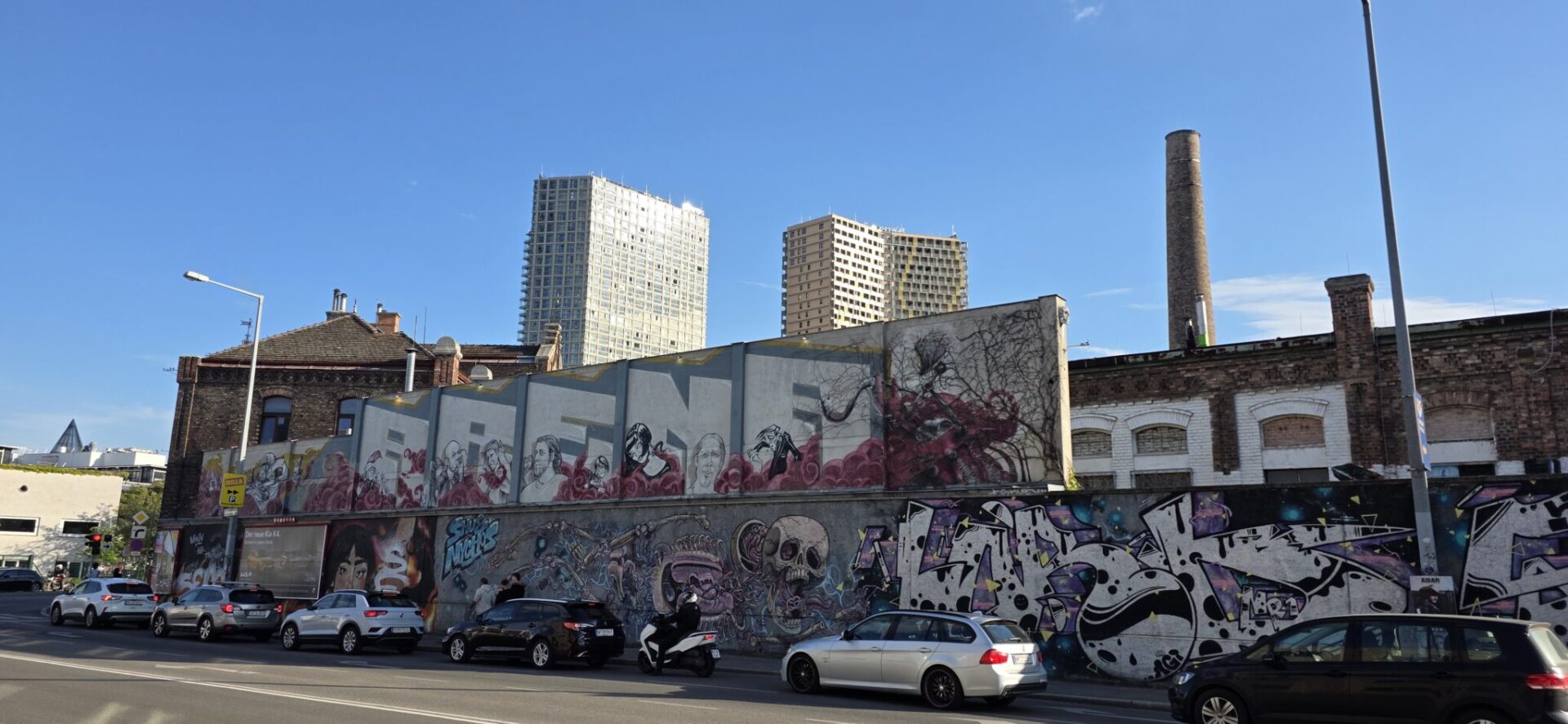
So when I saw that she was coming to Vienna with a concert, I was very happy. It also felt like a special plus that the concert was supposed to take place at Arena Wien. I love this venue, and the small hall seemed like the perfect option for such a concert: close enough, intimate, but still truly professional.
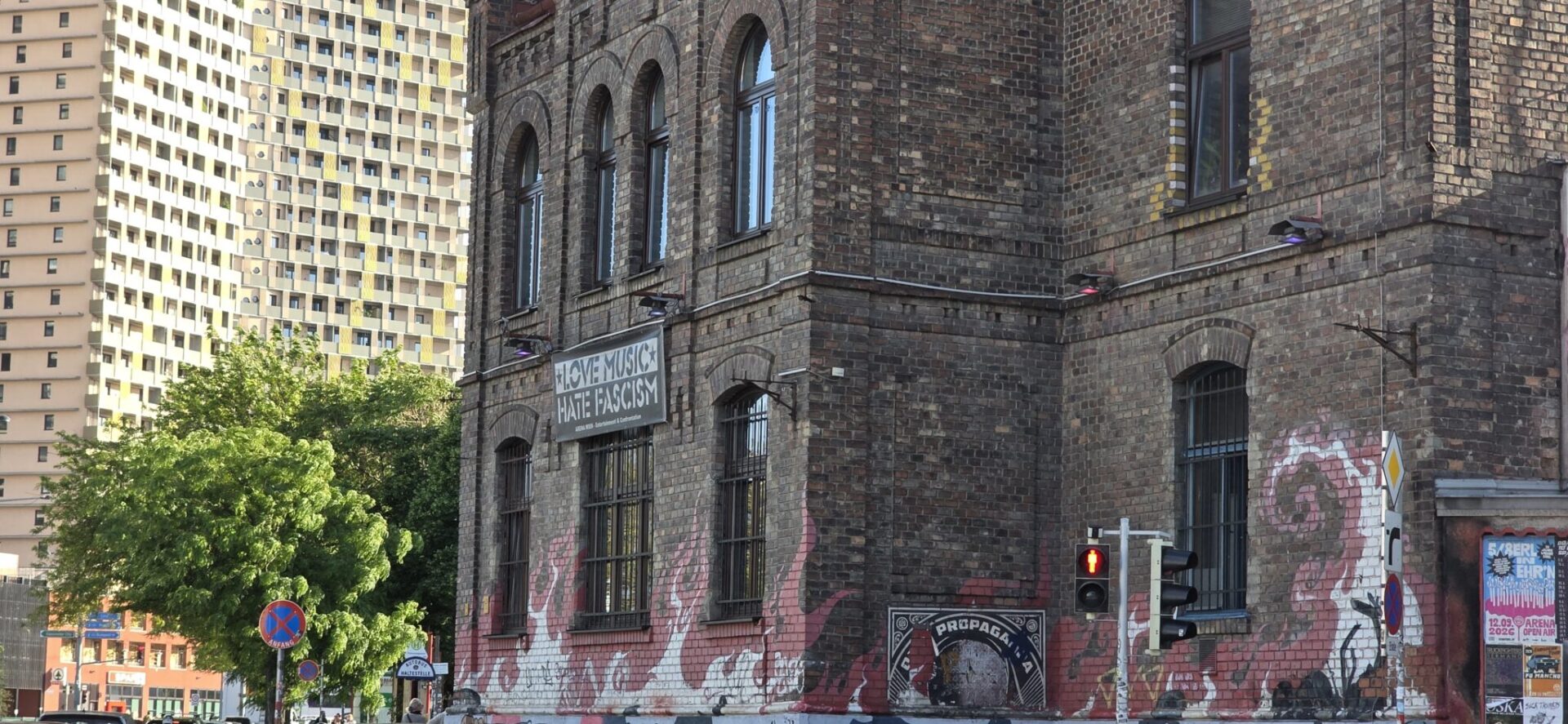
But literally a week or two after the European tour was announced, the Vienna concert was sold out. For me, this was unexpected. I was even a little upset, because I really wanted to attend this event and did not expect the demand to be so high. Later, the organizers decided to move the concert from the hall to the open-air area of Arena Wien. That alone said a lot about Sofia Isella’s popularity. A concert that first looked like a fairly intimate performance by a young artist turned into a big open-air evening for about 2,500 people.
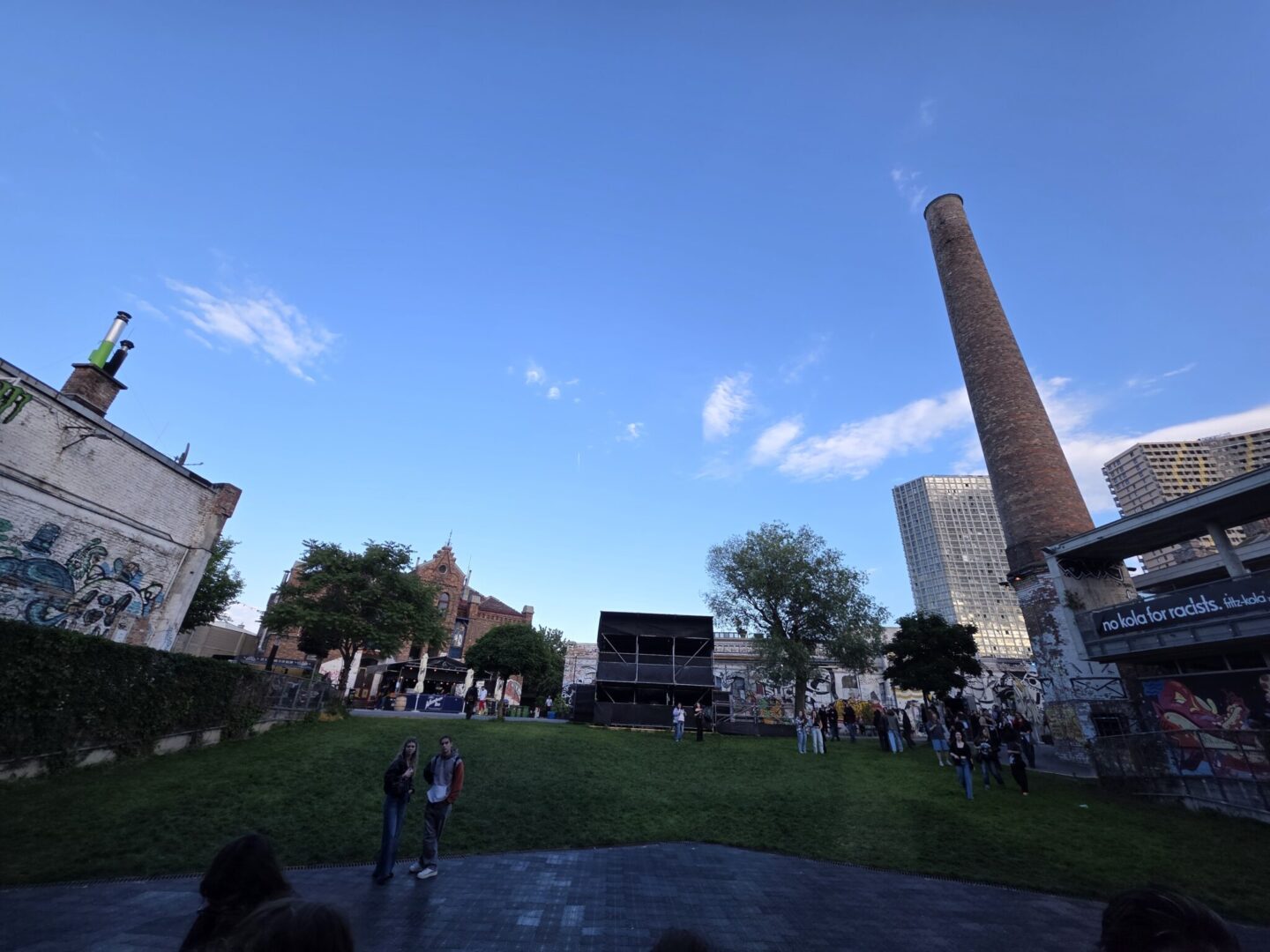
In a musical sense, Vienna often feels like quite a restrained city, where not every artist can quickly gather a large audience. But it turned out that Sofia Isella was really expected here. And personally, I was happy to see that a singer I had once found almost by accident through Spotify had, in such a short time, reached a large solo concert in Vienna.
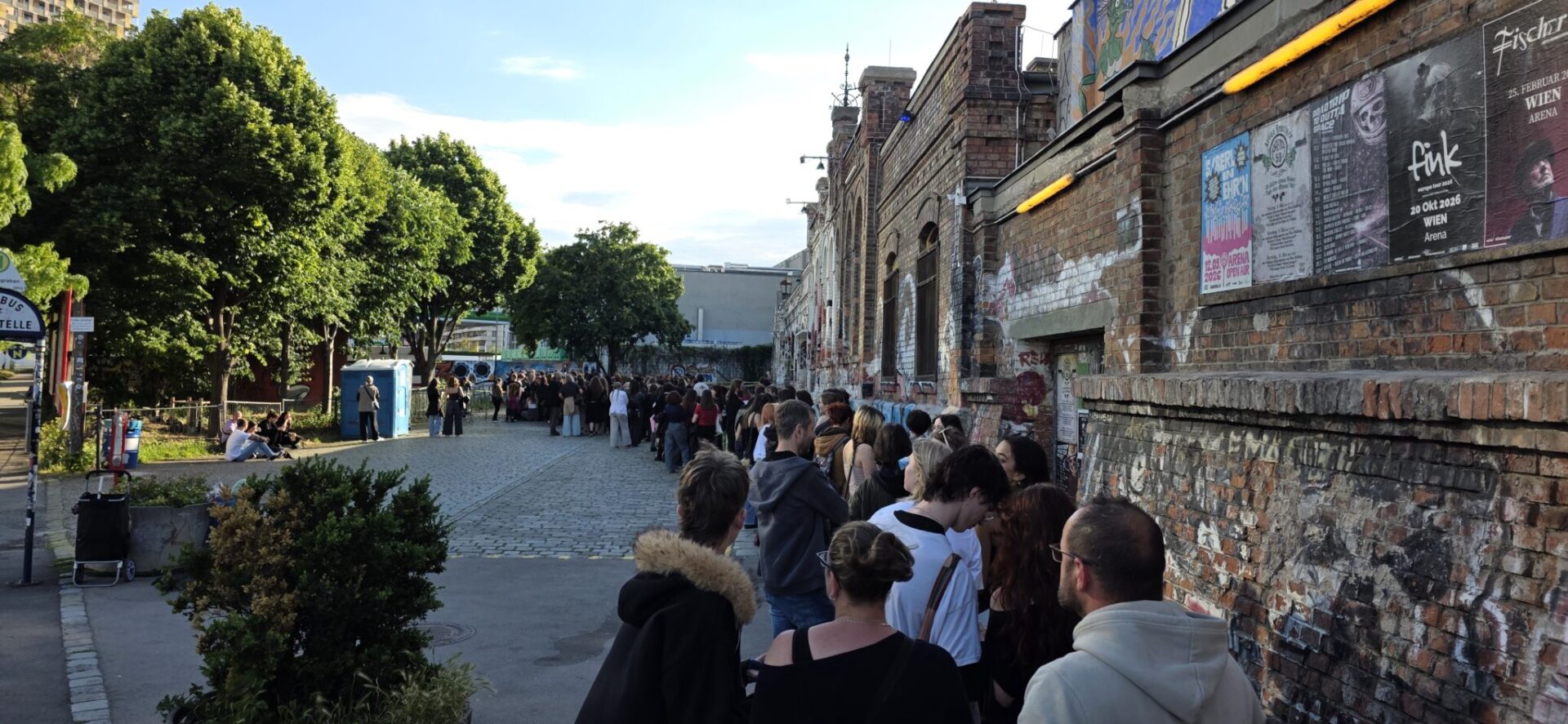
On the day of the event, I wanted to arrive early to get a place closer to the stage. Arena Wien is literally a couple of metro stations from our home, so it is very easy to get there: a few minutes on the metro, then a very short walk. About two hours before the doors opened, I was already ready and about to leave. But when I arrived, I was surprised: there was a large queue in front of the entrance. From what I could see, there were about 200 people there, and many had arrived even earlier — around three hours before the start of the concert. Almost the whole queue consisted of Sofia Isella’s female fans.
As I later understood, Sofia herself had invited people through an Instagram chat, where I am also a member. But before the concert I did not check it, simply because it did not occur to me. It turned out that she had gathered her most devoted fans and given them wristbands. After the concert, people with these wristbands could attend a meeting, take photos, talk to her, and possibly get something signed.
In my view, this is great work with the audience. You can see how a new generation of artists is growing — artists who know how to communicate with the audience not only from the stage, but also through social media. They gather around themselves not just listeners, but a community.
Of course, nothing terrible happened to me because of this queue. I simply stood there a little longer, then entered the venue, and in the end got a place quite close to the stage. It was not the first row, but roughly the second, and for me that was more than enough. I could see very well everything that was happening on stage, I could film normally, and I already understood in advance what kind of performance this would be.
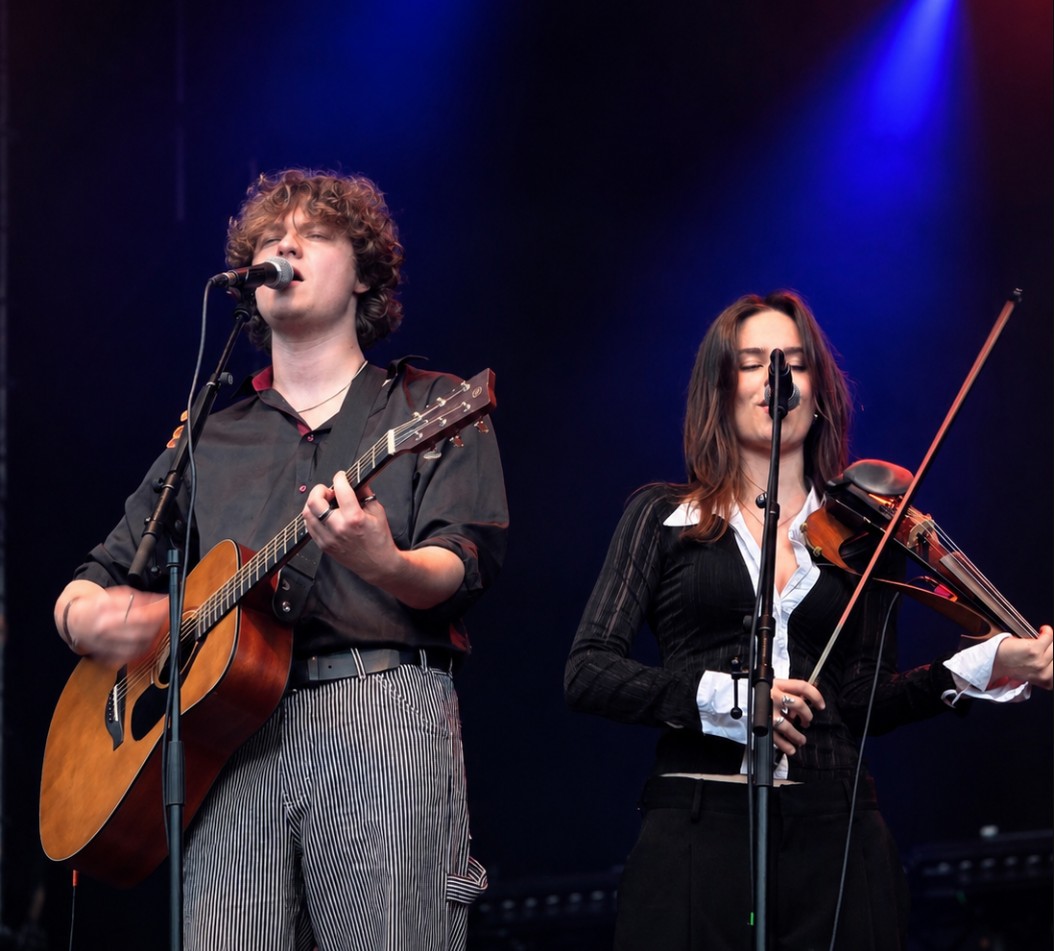
The evening began with two opening acts. The first was the British band Seb Lowe. On stage, it looked like a performance by young, ambitious people who are still only beginning a long journey. It was clear that they were nervous, excited, and possibly still getting used to large concert venues. But I really liked their songs, their energy, and the feeling I had from the performance. The guy played guitar, the girl played violin, and together they created a very pleasant impression. They were open, communicative, and alive. Their original songs touched on politics, relationships, and many different topics that matter to young people. I was especially happy to see that several people had come specifically for their performance and clearly knew the songs. They stood closer to the stage, sang along, supported the musicians, and after the opening set simply went somewhere further back, no longer taking the front places. In other words, these people had come exactly for Seb Lowe, and for me this was amazing. Even very young artists already have their own listeners, who are ready to come early and sing with them.
Seb Lowe said from the stage that this was their first trip to Vienna, that they had an album coming out, and that they were only beginning to tour actively. All of this sounded very warm and sincere. It was nice to watch people who are still at the very beginning of their path, but who already clearly want to speak with their audience seriously and honestly.
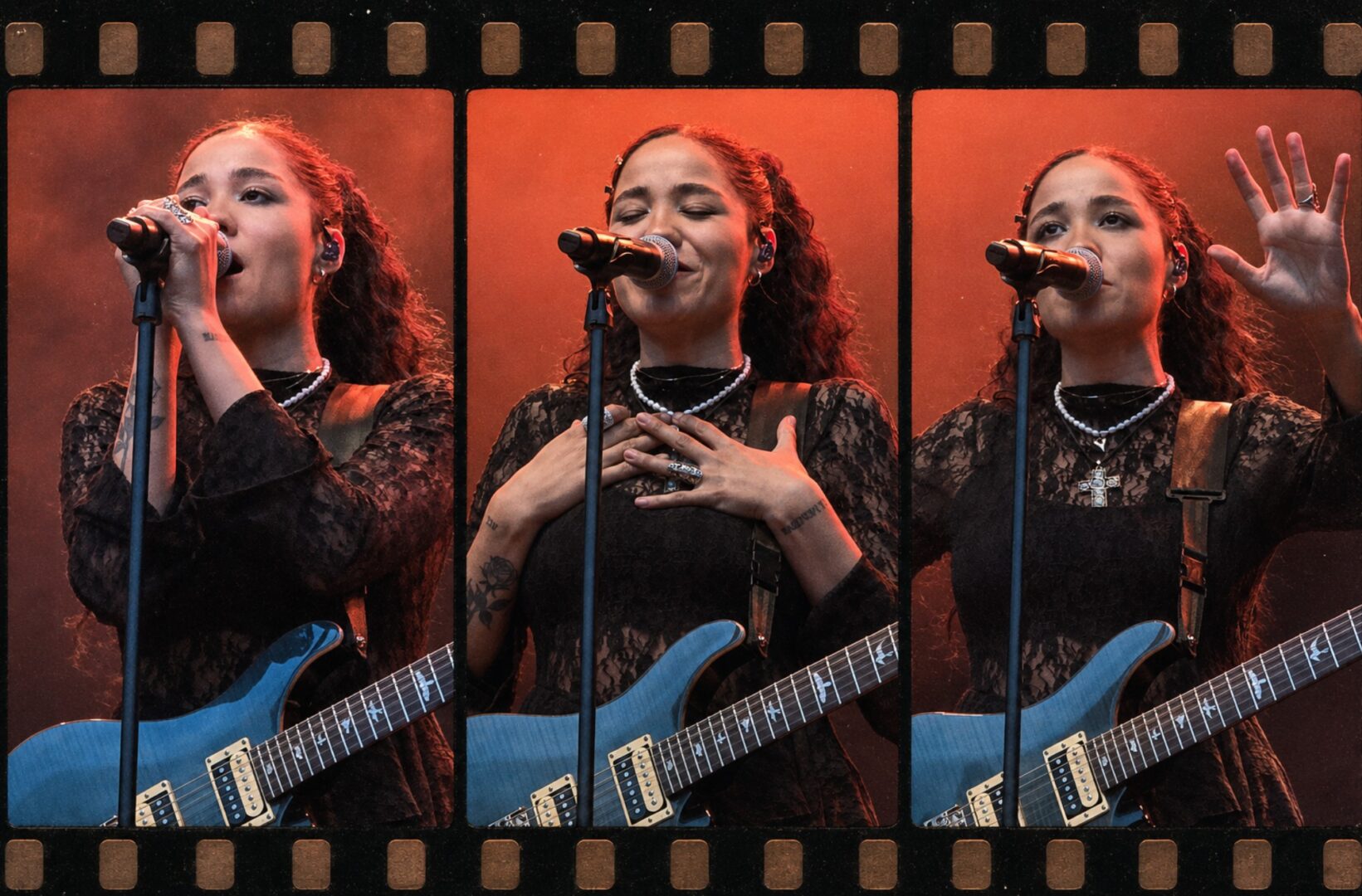
The second opening act was the German singer Cloudy June. I had already been to her concert and wrote a large article about it. Back then, her performance made an unforgettable impression on me. And now, by chance, I saw her again — this time at Sofia Isella’s concert, about two and a half years later.
It was interesting for me to see how Cloudy June had grown during this time. She had more confidence, more voice, and more musical charisma. I enjoyed hearing familiar songs and some new tracks that I had managed to miss. And once again I caught myself thinking that both Cloudy June and Sofia Isella had once been recommended to me by Spotify, and now they were performing on the same stage in Vienna. Is this a conspiracy? Of course, we can only joke about that.
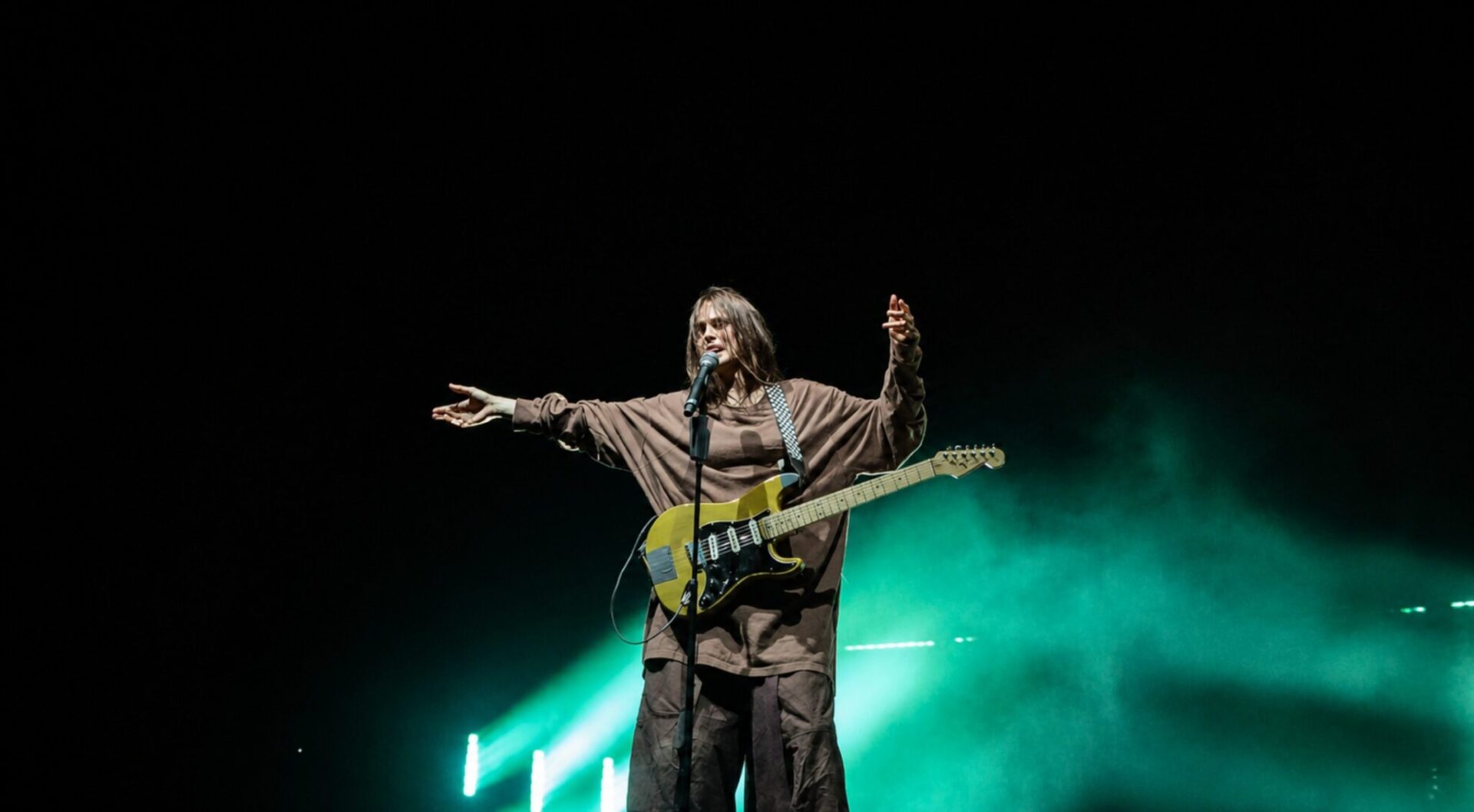
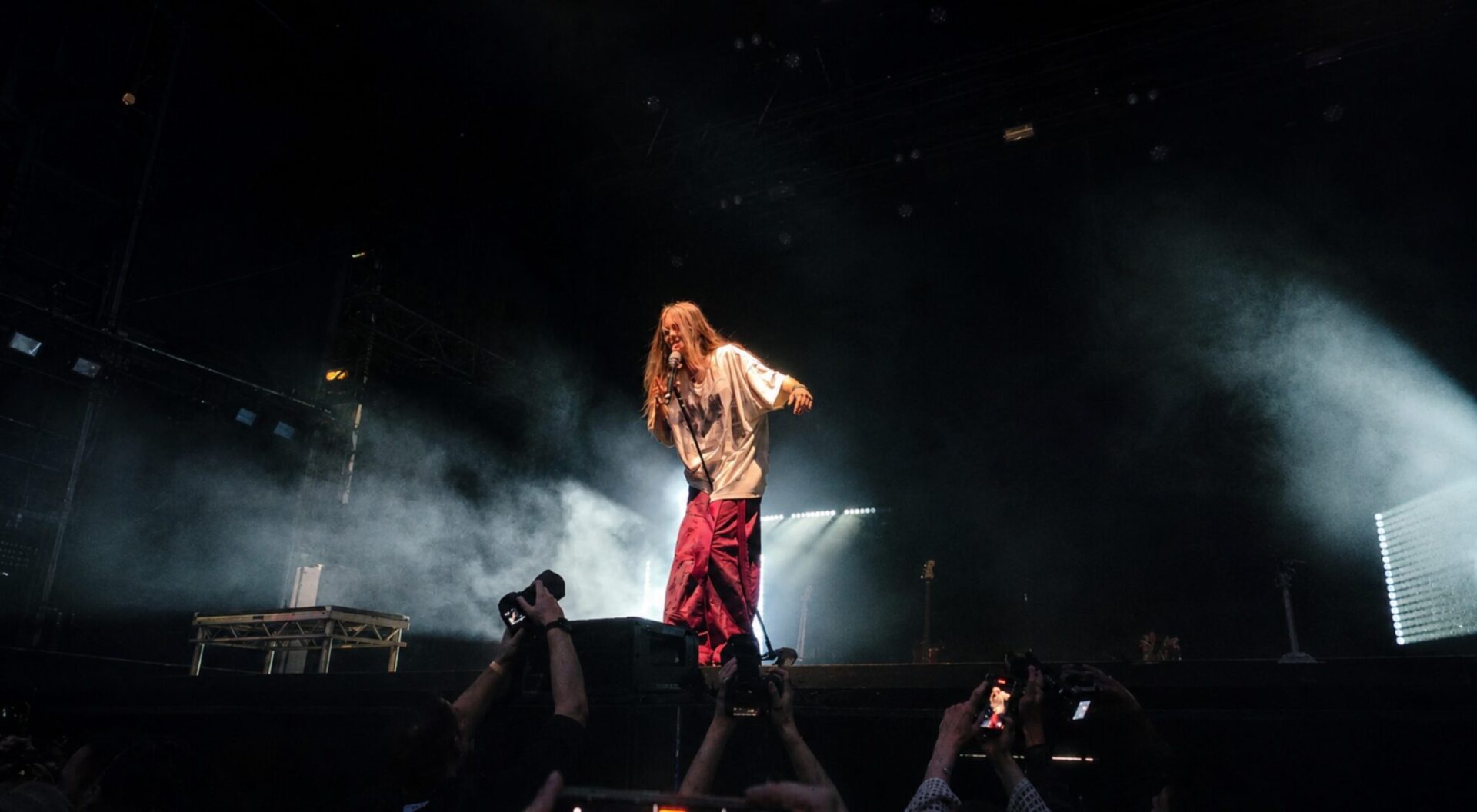
At 9 p.m., almost exactly on time, Sofia Isella appeared on stage. Her one-woman performance began — that same amazing show that I had already seen at Sziget from far away and not fully, and that I could now watch from the very first seconds and almost up close.
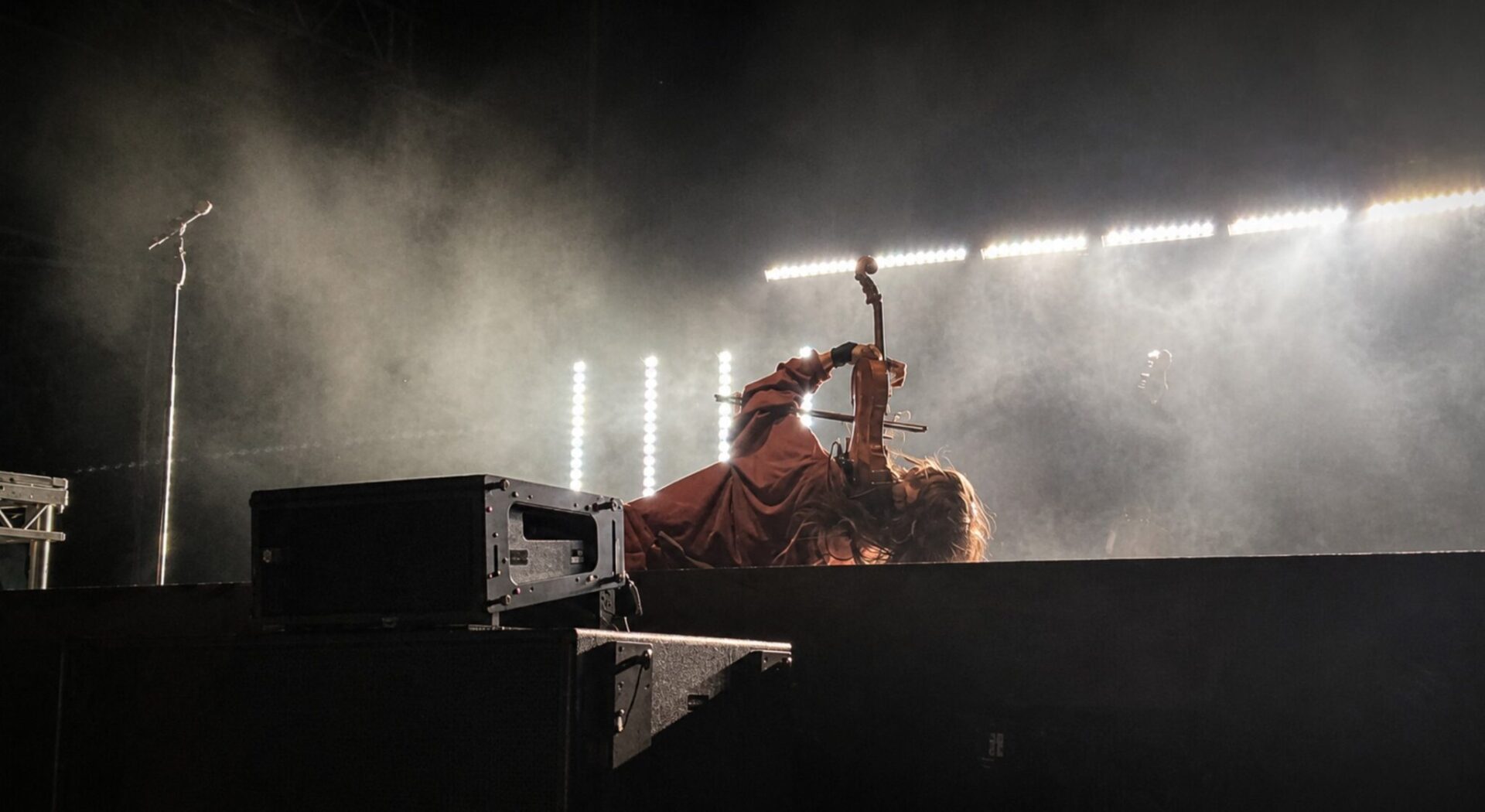
It really is an incredible show. On stage, Sofia Isella is alone almost all the time. With rare exceptions, for example during a more classical violin piece, the whole evening rests entirely on the artist. Her performance includes singing, modern movement, constant motion, changes of instruments, and a very precise feeling for the stage.
She plays several guitars, a banjo, a violin, and uses an amazing number of instruments for one solo concert. At the same time, everything looks natural. She does not simply move from one song to another. Each time, it feels as if she is opening a new act of her own play. Every song has its own mood, gesture, pose, movement, and inner turn.
It is very pleasant to watch. Sofia Isella is incredibly expressive in movement, she has strong charisma, and she knows how to hold the attention of everyone in the audience. It is difficult to choose one special moment, because the whole show feels complete, finished, bright, and interesting. You watch it in one breath.
At the same time, she interacts a lot with the audience. During one of the songs, Sofia invited two young girls from the audience to join her. They sat next to her, held the microphone, and she played guitar. Such moments always make a concert warmer and closer. They create a feeling of real contact, and this is exactly why people go to live shows.
As I have already said, I really liked Sofia Isella because of her original songs and complex lyrics, where there is a lot of pain, suffering, loss of rights, female experience, and struggle. I was truly glad to see a young performer who looks at these topics in such a mature and complete way, sees the root of evil, notices injustice, and speaks about it openly.
What is especially important to me is that Sofia Isella almost does not sexualize this topic. Rather, the opposite is true: her image contains a mixture of performance, sharpness, and a kind of almost demonstrative rejection of the usual pretty picture.
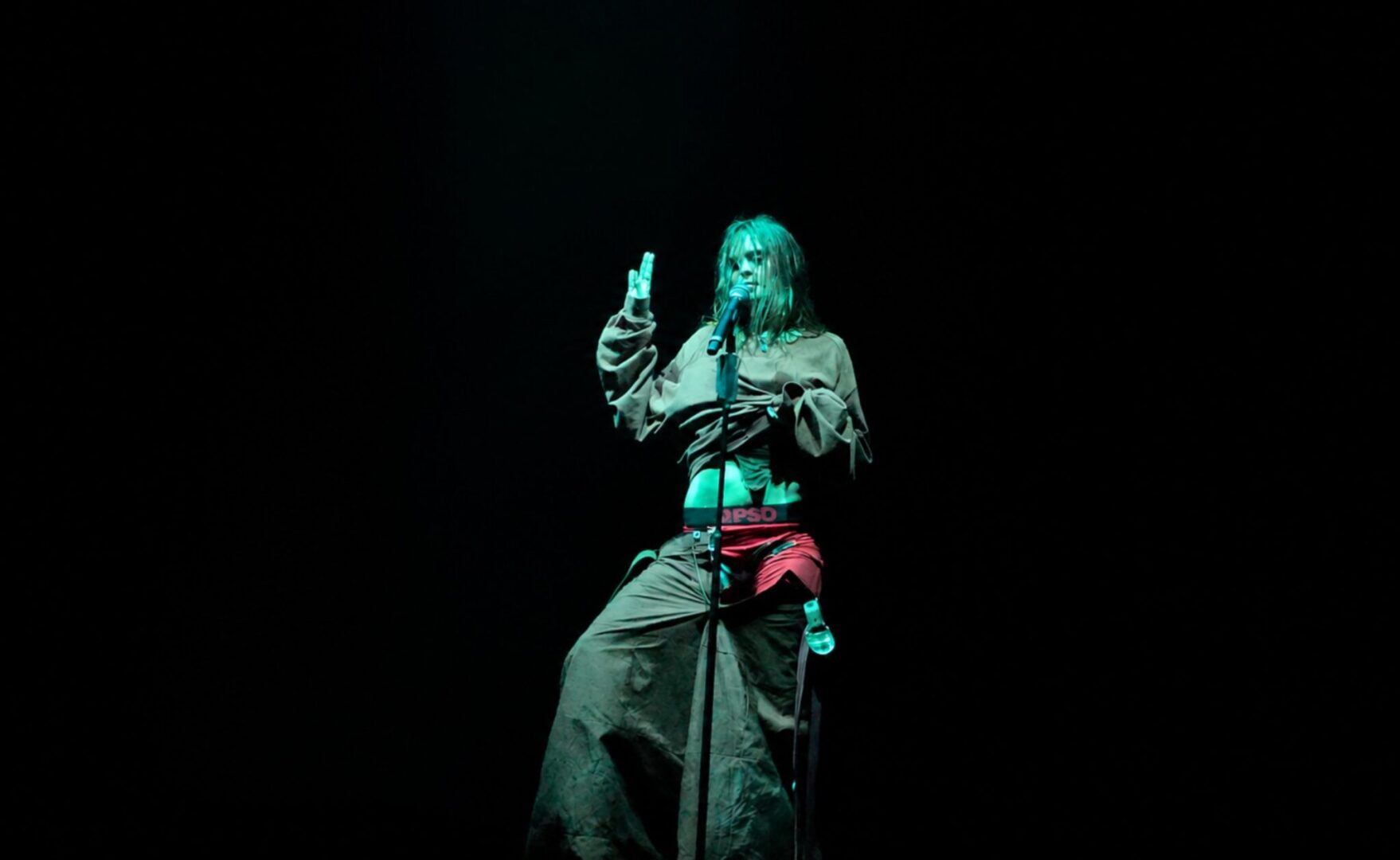
Most of the time she performs in loose clothes, with her face deliberately stained with black paint, and with messy hair. All of this is part of the image and part of the message. In her case, the body, movement, and strangeness work as a language of expression, not as a sale of attractiveness.
This was important to me when I listened to her music and when I first saw her at Sziget. I came to the Vienna concert with the same interest. But at this concert I felt a different atmosphere.
Real fans gathered at Arena Wien — more precisely, mostly female fans. The average age of the audience, as it seemed to me, was around 20. There were also very young spectators. Girls made up about 90 percent of the audience.
And this is where I felt a lot of youthful maximalism and aggression, which surprised me a lot — not toward me personally, but inside the themes of Sofia’s songs. It was not anxiety, fear, or caution. I felt a large amount of aggression and negative emotion that young women experience when they face the injustice Sofia Isella sings about.
It seemed to me that the way part of the audience understood these topics moved them away from a desire to discuss and speak things through, and toward a desire to attack, defend themselves, and attack again. For me, this is a serious problem. The fight for women’s rights, the protection of women, and the conversation about violence are very important topics. But this is a complex and sensitive question. If any male person is seen in advance as an enemy, any guy as a possible danger, and any gesture as criminal intent, society does not become healthier. It becomes angrier and more divided.
Maybe as a white man over 40, I am not allowed to speak about this at all. Maybe someone will say that I have no right to judge the emotions of young women. But I am not trying to judge their lives. I am describing what I saw and felt at one specific concert. And what I felt was the growth of a serious problem: the problem of communication between genders, trust, interaction, and the ability to reach agreements through dialogue.
Women’s rights must be real. Women’s safety must be real. These rights must not turn into a piece of paper that works only when it is convenient for men or for society. Women must be protected, heard, and respected. But setting the sexes against each other also leads in a dangerous direction. At some point, it seemed to me that society was moving from the protection of women and women’s rights toward simple and understandable hatred. That is exactly what frightens me.
I remember myself and the people around me at the age of 16 to 18. At that age, a person wants close people, friends, recognition, relationships, falling in love, mistakes, attempts, breakups, and new experience. They want to be liked, needed, and loved. Youth is hard in itself: hormones, fears, insecurity, the desire for closeness, and the feeling of your own vulnerability.
If at that moment a person is constantly told that the opposite sex is dangerous, that any man is a potential rapist, murderer, aggressor, and enemy, this does not create freedom inside. It creates even more tension. The world becomes smaller. Possibilities become smaller. A person closes off, starts seeing a threat where they could have seen another human being. And this is in Austria, where men and women are already quite asexual in their behavior.
It is important that hatred always creates even more hatred. I have always believed that in this world it is important to educate sons — those very boys who could become a threat tomorrow. I would really not want the new generation to close off inside themselves and see the world only in hostile colors. Because when you look at another person as an enemy, you begin to search for criminal intent in every action. And then it becomes almost impossible to build normal relationships, trust, friendship, love, and human closeness.
That is why it seemed important to me to record this. At Sziget, I did not feel this atmosphere. There, it was a festival environment: drunk and cheerful people, different stages, a random audience, a mixed flow of spectators. But at Arena Wien, it was Sofia Isella’s fans who came. The energy was much denser, more concentrated, and because of that the aggression felt much stronger. For me, this is a dangerous direction for the future of humanity. This is my perception of one concert and one audience. But I believe it is necessary to say it.
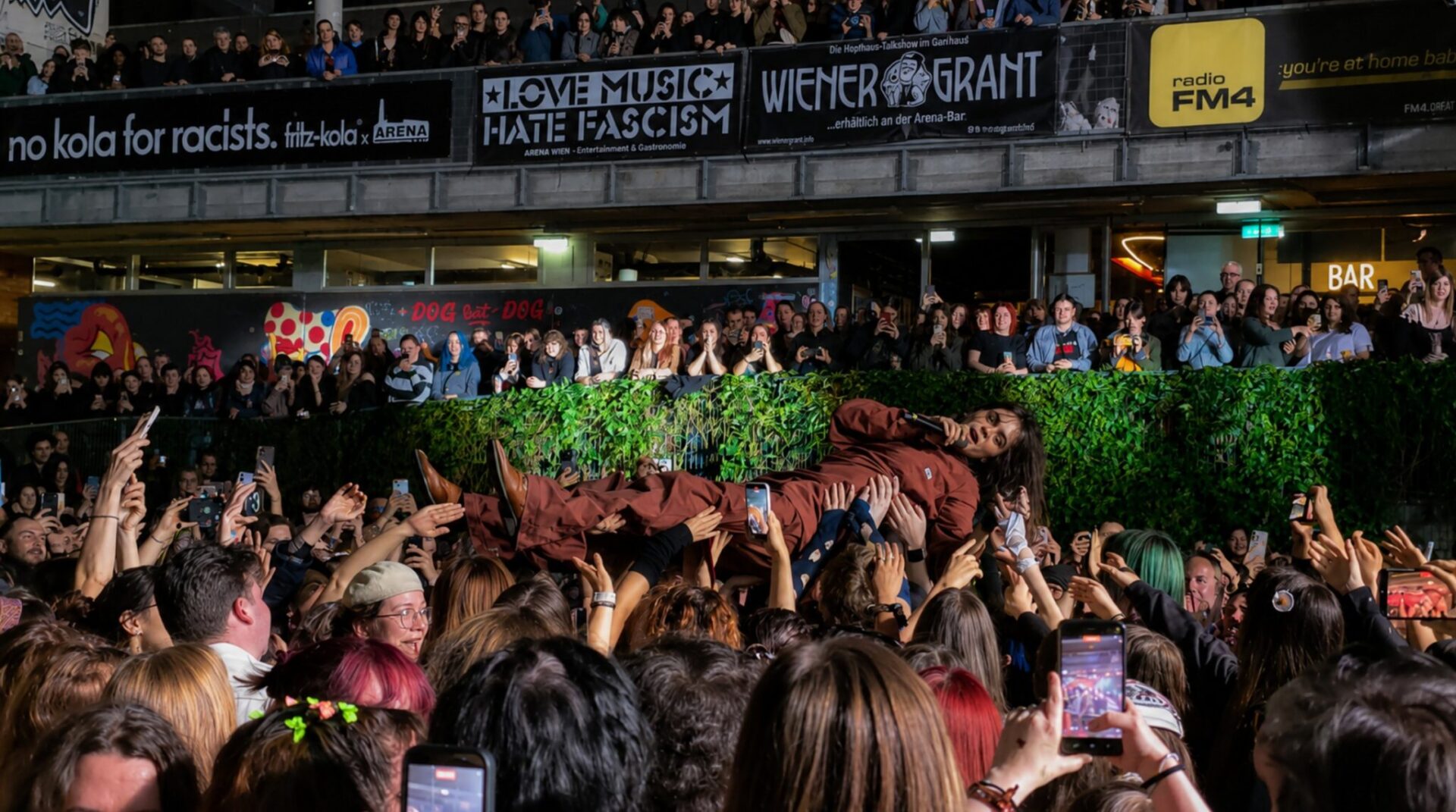
In general, the concert was incredible. And the emotional intensity of what happened at Arena Wien Open Air was not accidental. Sofia Isella created a truly powerful performance, where the stage and the audience were in live contact all the time. At one point, she suggested a format where fans carried her through the audience on their hands. It looked amazing. And closer to the end, during the last song, she decided to walk through the whole area in front of the stage on foot, through the crowd, without visible security, alone. Sofia Isella kept trying to interact with the people who had come to her concert, and it felt very alive.
I even managed to shake the singer’s hand. From her side, there was a strong feeling of openness and gratitude that so many people had come to support her. She herself said from the stage that she was still not used to being the headliner of such large venues, where she was the main star of the evening. There was something touching in this. I was also glad to be at such a show. Sofia Isella managed to give a truly incredible concert in Vienna, and I am very grateful to her for this evening.
Sofia Isella is an endlessly talented performer, and her show worked. It is difficult to deny that. Austrian media that wrote about the concert also responded positively to how she passed this live test and managed to hold a large open-air venue.
I am glad that new stars gather real fans around them, and that there are people for whom the topics Sofia Isella sings about are important. Despite all my thoughts, worries, and concerns about the future of our society, the concert itself felt very strong to me. I liked everything: from the opening acts to the merchandise, from the songs to the small surprises that appeared during the evening. Every moment was done masterfully. It was a large, complete, and living concert.
And still, after such an evening, I want to believe that in the end love must win — only love, kindness, the wish to understand and hear each other, the wish to open up, the wish to remain vulnerable, to be yourself, and not to be afraid to speak the truth. I believe in this and thank Sofia Isella for the few hours she gave to Vienna.